
Most parrot welfare problems trace back to one bad decision. The wrong cage. Either too small or wrong bar spacing or built from the wrong material. And honestly the pet store doesn’t help because they sell undersized cages with the wrong species labels every single day.So this bird cage size guide parrot owners can actually use breaks down what each species needs by dimensions bar spacing and material. Plain and simple no fluff. In most cases choosing the right cage size is one of the most important decisions you’ll make after picking the bird itself.ird Cage Size Guide by Parrot SpeciesHere’s the thing. A good cage isn’t just a box. It’s where your feathered friend spends most of their life. So size recommendations matter and they’re different for every species.
Written by Moaz at Dallas Parrots
I’m Moaz and I’ve spent over 3 years setting up cages for parrots at Dallas Parrots. That includes hands-on experience with stainless steel and powder-coated and full indoor aviary builds across more than 20 parrot species. Everything in this article comes from real setups. Not specs copied from product listings.
- 3+ years setting up cages for 20+ parrot species daily
- Hands-on experience with stainless steel powder-coated and aviary builds
- Works with avian vets on enclosure welfare standards
Why Cage Size Matters More Than You Think
The cage’s size directly affects your bird’s health behavior and lifespan. For a lot of people the cage is the first thing they get wrong. Undersized cages cause feather plucking screaming aggression and muscle atrophy. On the other hand the right cage lets your bird stretch climb forage and turn around freely. Also the bird needs to be able to flap its wings without hitting the bars. So the cage should provide enough room to move comfortably during the hours your bird is inside.Here’s a rule of thumb most pet bird owners haven’t heard. The minimum width of a cage should be at least twice the width of the bird’s wingspan. Length should be 2-3 times the bird’s wingspan in length. Then use the height to give the bird climbing room. So width and height matter together.A few problems show up fast in undersized cages. Feather plucking from frustration muscle weakness and joint stiffness aggressive territorial behavior repetitive head bobbing or pacing and a shortened lifespan over time. As a result your bird suffers in ways you might not even notice at first.
So the larger the cage the better. Always.
Bird Cage Size Guide by Parrot Species
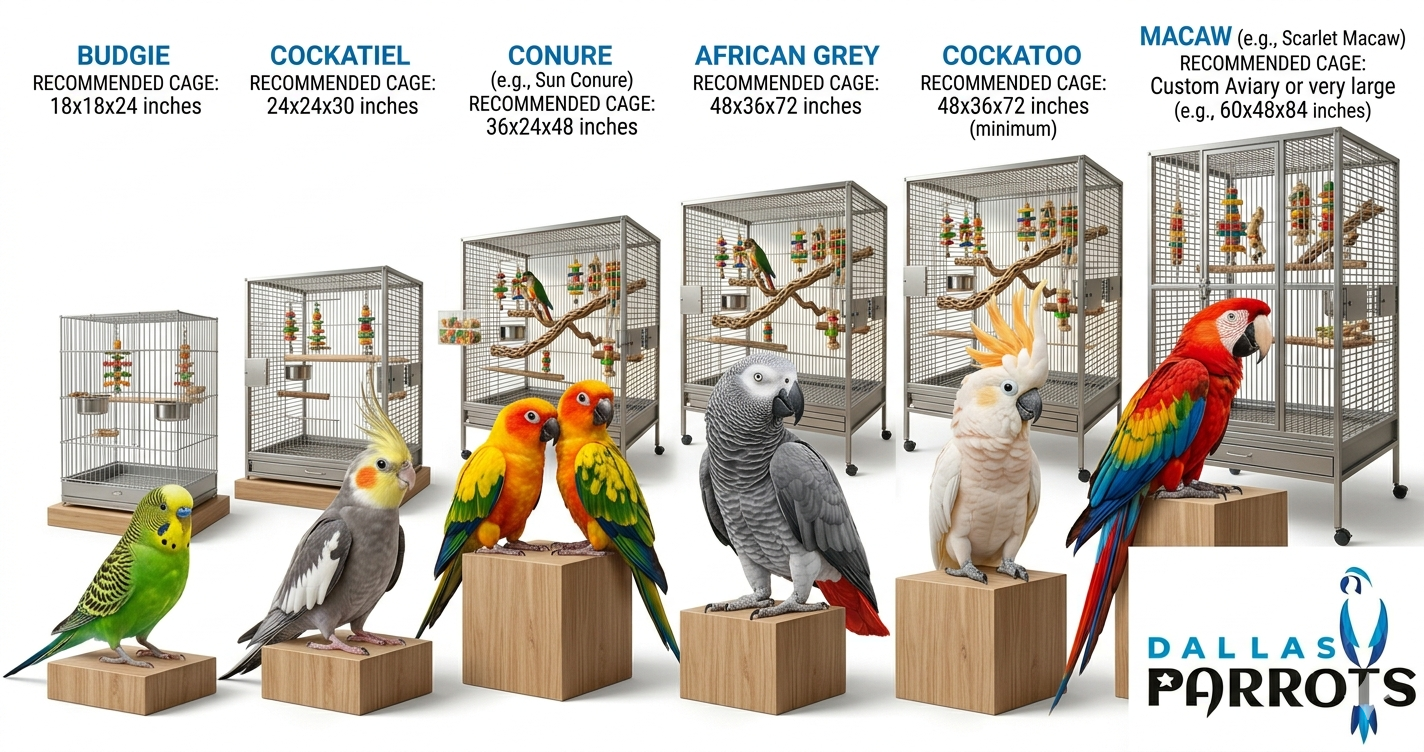
Different parrots need different cage sizes. There’s no one cage that fits every bird and that’s why species-specific size recommendations exist. Below is a master chart that I use when helping new pet parrot owners pick a cage.
| Species | Min cage size (W×D×H) | Bar spacing | Material |
|---|---|---|---|
| Parakeet (budgie) | 18×18×24 in | 3/8 to 1/2 in | Powder-coated |
| Cockatiel | 24×18×24 in | 1/2 to 5/8 in | Powder-coated |
| Conure | 24×24×30 in | 5/8 to 3/4 in | Powder-coated |
| Caique | 24×24×30 in | 5/8 to 3/4 in | Powder-coated |
| Pionus | 30×24×36 in | 3/4 in | Stainless steel |
| African grey | 36×24×48 in | 3/4 to 1 in | Stainless steel |
| Amazon | 36×30×48 in | 3/4 to 1 in | Stainless steel |
| Cockatoo | 40×30×60 in | 1 to 1.25 in | Stainless steel |
| Macaw (small) | 36×30×60 in | 1 in | Stainless steel |
| Macaw (large) | 48×36×72 in | 1 to 1.5 in | Stainless steel |
These are minimum cage size starting points. Of course bigger is always better.
Macaw Cage Dimensions
Macaw cage dimensions should start at 36 by 30 by 60 inches for smaller macaws like a Severe or Hahn’s. On the other hand large macaws including blue and gold green wing or hyacinth need a minimum cage size of 1.5 to 2 times that. So picture a cage 48 by 36 by 72 inches at minimum. Bar spacing should be 1 to 1.5 inches. Also stainless steel construction is the only safe option because macaws are powerful chewers and softer metals release toxic substances when chewed.A few essentials for any macaw cage include a heavy-duty stainless steel frame double locks because macaws figure out simple latches multiple thick perches at varied heights a big play stand on top and a removable cage bottom that’s easy to clean.If you’re shopping then check our macaw for sale options to match the bird with the right setup.
African Grey Cage Size
African grey cage size should be at least 36 by 24 by 48 inches for a single bird. Bar spacing of 3/4 to 1 inch keeps african greys safely contained without trapping a head. Also african greys are one of the most intelligent parrots and they need horizontal space to climb forage and play with bird’s toys throughout the day.
Why Bigger Is Better for African Greys
Bigger is always better for this species. In most cases they get bored fast in tight spaces and that boredom turns into feather plucking. So add multiple natural wood perches foraging puzzles built into the cage and a cuttlebone clip. Then place the cage where the bird can see family activity without being right in the foot traffic zone.
Material Choice for African Greys
Stainless steel beats powder-coated for african greys because their beak strength is no joke. Also they chew everything within reach. For more on the species check our congo african grey page.
Conure Cage Size
Conure cage size should be at least 24 by 24 by 30 inches for one bird. Bar spacing of 5/8 to 3/4 inch works for most conures including green cheek sun jenday and black capped. Since conures are active little parrots horizontal space matters more than tall narrow height because they spend their time climbing and playing across the cage living area.What conures need beyond size includes active climbing space multiple perches at varied diameters foraging toys rotated weekly and easy door access for daily bonding time. Also skip round cages because corners give birds a sense of security and round designs can stress them out. For more conure info our types of conures page covers the differences.
Cockatiel Cage Size and Parakeet Cage Size
Cockatiel cage size starts at 24 by 18 by 24 inches with 1/2 to 5/8 inch bar spacing. On the other hand budgie cage size starts at 18 by 18 by 24 inches with 3/8 to 1/2 inch bar spacing. Both species need horizontal width to flap wings more than tall narrow height. Even though they’re smaller birds they still need spacious horizontal layout to stay healthy.Cockatiels and budgies are small but active. Also they climb a lot and they bathe in food and water bowls if you let them. So set the cage up with bowls placed away from perch zones to keep waste out of the food. Then add a cage bottom grate that’s removable for easy cleaning. For cockatiel buying info our cockatiel for sale page is a good start. For other small species check types of small parrots.
Cage Sizes for Caiques Pionus and Other Mid-Sized Parrots
Caiques and pionus parrots need a minimum cage of 24 by 24 by 30 inches with 5/8 to 3/4 inch bar spacing. Both species are active climbers that need plenty of toys for enrichment and mental stimulation. While pionus tend to be quieter caiques are bouncy clowns that benefit from extra play space outside the cage every day.
| Species | Min cage size | Bar spacing | Notes |
|---|---|---|---|
| Caique | 24×24×30 in | 5/8 to 3/4 in | Active climber |
| Pionus | 30×24×36 in | 3/4 in | Quieter species |
For more on these mid-sized parrots see our pionus parrots page.
Cockatoo Cage Size
Cockatoo cage size should be at least 40 by 30 by 60 inches with 1 to 1.25 inch bar spacing. Of course larger cockatoos like Moluccan or Umbrella need bigger. Since cockatoos are powerful chewers stainless steel is the only material that holds up long-term. Also they figure out simple latches in minutes so double-locking or triple-locking doors are required.What every cockatoo cage needs includes a stainless steel frame with no soft metals double or triple locks heavy chew-proof toys and a wide door for easy out-of-cage access. So browse our cockatoo for sale page if you’re considering one of these big personalities.
Bird Cage Bar Spacing Why It Matters
Bird cage bar spacing prevents head trapping and escape. If the spacing is too wide the bird gets stuck or slips through. On the other hand if it’s too narrow feet can catch in the bars. So match the cage size and bar spacing to the species size. There’s no one-size-fits-all here.
| Species size | Recommended bar spacing |
|---|---|
| Small (parakeet) | 3/8 to 1/2 inch |
| Small-medium (cockatiel) | 1/2 to 5/8 inch |
| Medium (conure caique) | 5/8 to 3/4 inch |
| Large (african grey amazon) | 3/4 to 1 inch |
| Extra large (cockatoo macaw) | 1 to 1.5 inch |
The avian community has accurate data on this from years of vet records. For example Dr. Scott McDonald and other board-certified avian veterinarians have documented countless emergency cases tied to wrong bar spacing. Some of those required birds to be anesthetized just to free a stuck head. So don’t take chances with this number.
Best Bird Cage for Parrot Material and Build Quality
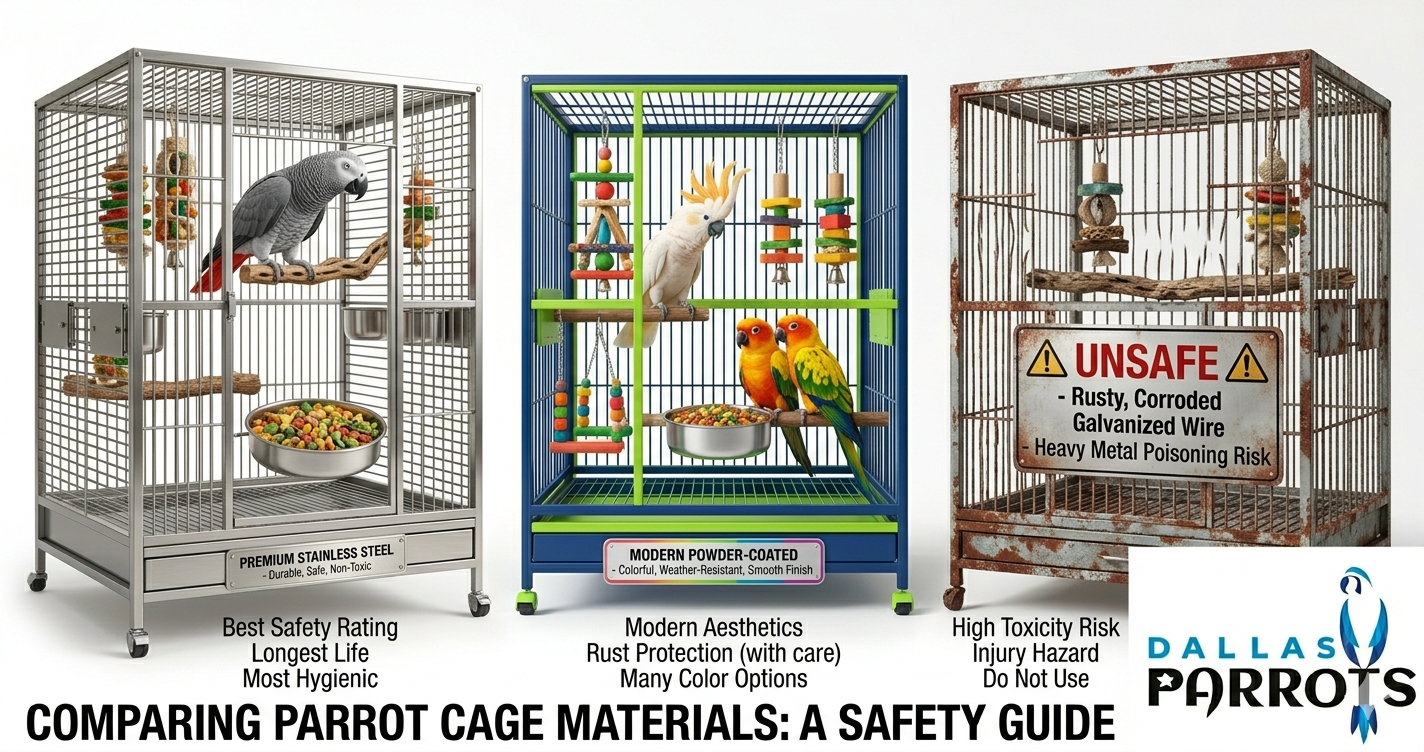
The best bird cage for parrots uses stainless steel for medium and large species and powder-coated steel for smaller birds. Since stainless steel won’t rust or chip it survives heavy chewing from cockatoos and macaws. Also avoid galvanized wire because zinc is toxic when ingested. A large bird cage stainless steel build costs more upfront but lasts decades.
| Material | Best for | Pros | Cons |
|---|---|---|---|
| Stainless steel | Medium to large parrots | Durable rust-proof bird-safe | Expensive |
| Powder-coated steel | Small to medium birds | Affordable colorful | Coating can chip |
| Galvanized wire | Avoid | Cheap | Zinc toxicity |
| Wrought iron | Small parrots | Sturdy | Heavy and rusts |
Why Material Matters More Than Pet Stores Tell You
Cage materials matter more than most pet store staff will tell you. For example cheap material chipping into a bird’s diet is a real problem. So is paint flaking from low-quality powder-coated frames. Spending more upfront on a quality cage saves you vet bills later. For top picks check our parrot cages and top parrot cage pages.
Cage Shapes to Avoid
Also avoid round cages and any cage with sharp edges. While round designs look pretty they lack corners which birds use for security. Sharp metal edges can cut a foot or beak.
Bird Cage Placement Home Setup
The best bird cage placement at home is a quiet corner of an active family room away from the kitchen and drafty windows and direct sunlight. While birds need to feel part of family activity they also need a wall behind them for security. So avoid the bedroom for permanent placement because morning calls will disrupt sleep.Where to put it includes a family room or living room corner against at least one solid wall near family activity but not in a walkway and a stable temperature range of 65 to 80 degrees.On the other hand where not to put it includes the kitchen because nonstick cookware fumes are fatal to birds drafty windows or AC vents direct full-day sun exposure and high-traffic doorways. The kitchen rule trips up so many new bird owners and it’s the most preventable cause of sudden bird death I’ve seen. So just don’t do it.A separate sleeping cage in a quieter room is also worth considering for owners who keep different schedules. For example some birds settle better with a sleep-only space.
Indoor Bird Aviary Size for Multiple Birds
Indoor bird aviary size depends on how many birds and what species you’re housing. For instance a small flock of finches or budgies starts at 6 by 3 by 6 feet. On the other hand medium parrots like conures need 8 by 4 by 7 feet. Since aviaries let birds fly they dramatically improve bird’s health and happiness compared to standard cages.A few aviary planning notes worth knowing. One bird flight space should be a minimum of 8 feet length to allow real flapping room. Then use multiple perches and play areas spread across the interior living space. Also build in an easy human-access door so cleaning is simple. Pick a floor surface that’s easy to wipe down. As a final step run an avian vet checkup before mixing different species in the same enclosure because some pairings cause aggression.
How to Choose the Right Cage Step by Step
Picking the right cage isn’t complicated once you know the framework. So here’s how I walk new bird owners through it.
- First identify your parrot species and adult size before you even shop
- Then check the bar spacing requirement for that species against the chart above
- After that buy the biggest cage your space and budget allow ideally all birds get more than the minimum
- Pick stainless steel for medium and large parrots and powder-coated for small birds
- Also look for a removable bottom grate and pull-out tray
- Confirm the door is large enough for hands and a play stand
- Finally set up perches at varied heights and diameters before the bird arrives
For a deeper checklist our 10 things when selecting the right bird cage article covers everything else worth knowing.
Common Mistakes Bird Owners Make
A few patterns show up over and over.
- Buying a cage based on price instead of size
- Wrong bar spacing for the species
- Galvanized wire because of zinc toxicity risk
- Round cages because birds need corners for security
- Putting the cage in the kitchen
- Sandpaper perches that wear down feet
That last one surprises a lot of first-time pet bird owners. Although sandpaper perches are sold everywhere they’re rough on the bird’s feet and cause sores over time. So natural wood perches with varied diameter are way better.
Pro Tips From Dallas Parrots
A few small habits that make a big difference for cage living areas.
- Buy one size up from the minimum if budget allows
- Add at least 3 perches at different heights and diameters
- Keep one perch under the food bowl and one near the top for sleeping
- Cover the cage at night with a breathable cover
- Replace toys every 7 days to prevent boredom
If you want a serious upgrade option then check our massive parrot cage options for owners who want to give their feathered friend a favor and skip the minimum entirely.
Why Choose Dallas Parrots for Cage Setup Help
We don’t just sell birds. We help you set them up right.
- Cage recommendations matched to your bird’s species
- Hands-on testing of major cage brands
- Avian vet partnerships
- Lifetime setup support
- Verified breeder reputation
- Help with setup before your bird arrives home
Benefits of Working With Dallas Parrots
- Custom cage size recommendations with every bird placement
- Setup checklists by species
- Care sheet covering bird cage placement home setup
- Avian vet referrals nationwide
- Lifetime support for cage and setup questions
- Help sourcing stainless steel cages and accessories
Real Customer Stories
Dallas Parrots told me my macaw cage was way too small before I even brought him home. So they saved me from a huge mistake and a stressed bird. Brian K. Houston Texas
They walked us through cage placement bar spacing and perch setup over text. As a result our african grey settled in within a week. Lisa M. Atlanta Georgia
We bought our first cockatiel from them and the cage size guide they sent was way more useful than any pet store advice. Jamie T. Denver Colorado
These stories are why we keep doing the work.
Frequently Asked Questions