Introduction
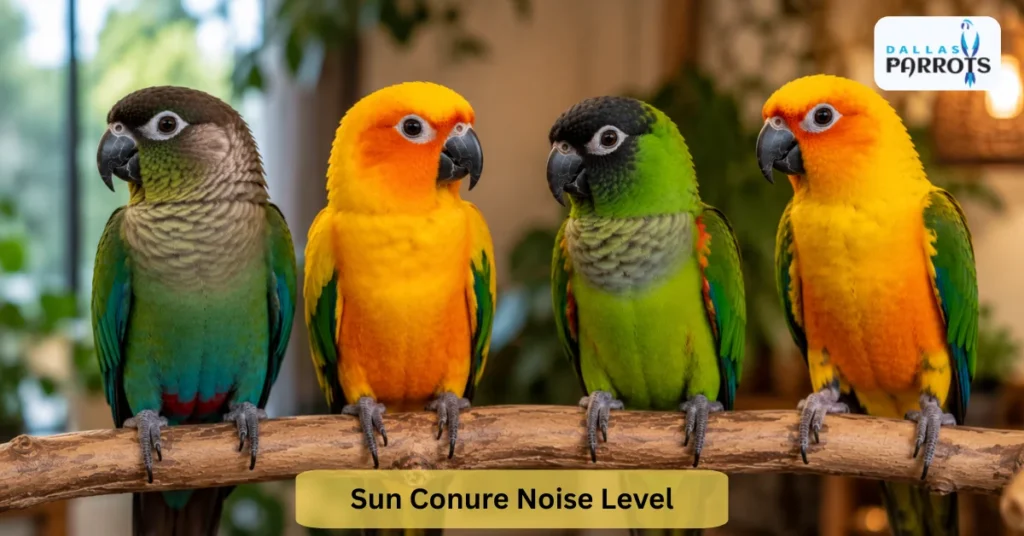
Let us be honest right away — the sun conure noise level is one of the most searched topics for a reason. These brilliantly colored little parrots are famous for two things: their stunning sunset plumage and their incredibly loud voices. Sun conures can reach up to 120 decibels at their loudest — roughly equivalent to a chainsaw or a thunderclap. That is not a small detail you want to discover after bringing one home. However, noise alone should not scare you away from this remarkable bird. Sun conures are also deeply affectionate, wildly entertaining, and capable of forming bonds that last decades. So before you make your decision, here is the complete truth about what living with a sun conure actually sounds like — and what you can realistically do about it.
How Loud Is a Sun Conure Compared to Other Birds
To truly understand the sun conure noise level, it helps to compare it to birds you may already know. A budgie typically reaches around 65 to 70 decibels — roughly the level of a normal conversation. A cockatiel sits around 70 to 80 decibels. An African Grey rarely exceeds 70 decibels during regular chatter. Now consider that a sun conure regularly hits 100 to 120 decibels at full scream. Furthermore, 120 decibels is the same level as a rock concert or a jackhammer. That is not background noise — that is the kind of sound that physically rattles windows. Additionally, their screams are high-pitched and piercing, which makes them feel even louder than the numbers suggest. Consequently, sun conures consistently rank among the loudest small parrots in the world. Understanding this comparison upfront is essential before you commit.
Why Sun Conures Scream So Much
Understanding why sun conures are noisy makes managing the sun conure noise level far more achievable. In the wild, these birds live in large, constantly moving flocks across South America. Loud vocalizations keep the flock connected across dense rainforest canopies. Therefore, screaming is not a behavioral problem — it is deeply hardwired survival behavior. In captivity, the same instincts drive their vocalizations daily. Sun conures typically scream most at dawn and dusk — mirroring their natural flock contact calls. Moreover, they scream when they feel lonely, bored, scared, or ignored. Attention-seeking is one of the biggest triggers in pet birds. Additionally, sudden changes in environment, new people, loud household noises, or even television volume can all trigger vocal outbursts. Knowing the specific trigger behind each scream helps owners respond correctly rather than accidentally reinforcing the behavior with immediate attention every time it happens.
When Are Sun Conures the Loudest
Timing matters enormously when it comes to the sun conure noise level. Most owners report two predictable peak periods every single day. The first is early morning — usually within the first hour after sunrise. Sun conures wake up vocal and energetic, calling out to establish contact with their flock, which in captivity means you. The second peak happens around dusk, typically in the hour before dark. These contact calls are natural and cannot be fully eliminated. Furthermore, excitement triggers sharp bursts of screaming at any time of day. New visitors, other pets, sudden movements, or even the sight of food can all produce brief but intense vocal episodes. Additionally, birds left alone for long periods tend to scream more consistently throughout the day. Therefore, owners who work long hours at home report fewer noise issues than those who leave their bird alone for extended periods without enrichment or company.
The Difference Between Normal Noise and Problem Screaming
Not all sun conure noise is equal, and recognizing the difference is a critical ownership skill. Normal vocalizations include contact calls at dawn and dusk, chattering during playtime, and short excited bursts during interaction. These are healthy, natural sounds that every sun conure owner simply accepts as part of daily life. Problem screaming, however, is different. It is persistent, relentless, and happens outside the typical peak windows throughout the day. Furthermore, problem screaming almost always has a root cause — boredom, loneliness, insufficient stimulation, or an unmet need. Additionally, sudden changes in screaming frequency or intensity can sometimes signal a health issue rather than a behavioral one. Therefore, owners should always rule out illness first when a bird’s vocal patterns change dramatically. Consequently, learning to read your sun conure’s different vocal cues early on makes you a far more effective and confident owner over the long term.
Practical Ways to Manage Sun Conure Noise
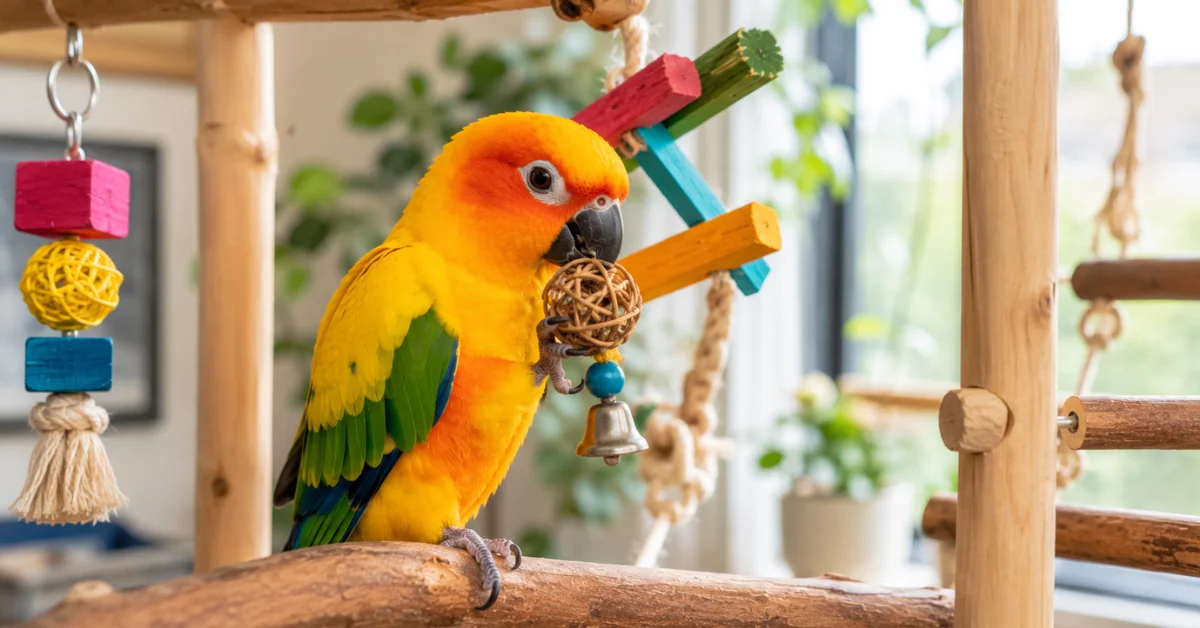
Managing the sun conure noise level does not mean silencing your bird — that is neither realistic nor kind. It means creating conditions where excessive screaming becomes less frequent and less intense over time. The most effective strategy is simply meeting their social and mental needs consistently every single day. Provide at least two to three hours of out-of-cage time and direct interaction daily. Furthermore, rotate toys regularly to prevent boredom — a mentally engaged sun conure screams far less than a bored one. Establish a consistent daily routine for feeding, playtime, and sleep. Additionally, never reward screaming with immediate attention, as this teaches the bird that noise equals results. Instead, reward calm and quiet behavior with treats and interaction. Furthermore, background sounds like soft music or nature sounds can help keep a sun conure calm during quiet periods in the home throughout the day.
Is a Sun Conure Right for Your Living Situation
This is the most important question every potential buyer needs to answer honestly before searching for a sun conure. Apartment living with thin walls and close neighbors is genuinely challenging with a sun conure. The noise level can and does create conflict with neighbors, and some apartment leases specifically restrict loud pets. Moreover, households with babies, shift workers, or people sensitive to loud sounds may find the daily noise genuinely stressful over time. However, detached homes with reasonable space between neighbors are much more manageable environments for these birds. Furthermore, if you work from home and can provide consistent daily interaction, a sun conure will be significantly calmer and quieter overall. Additionally, families with children often find that the activity and noise of a busy household actually helps keep a sun conure calm and entertained throughout the day. Be honest with yourself about your living situation before you decide.
What Makes the Sun Conure Worth It Despite the Noise
After everything said about the sun conure noise level, it is worth spending time on why millions of owners still choose this bird with zero regrets. Sun conures are extraordinarily affectionate — they love cuddling, riding on shoulders, and being physically close to their owners every moment they can. They are playful, acrobatic, and endlessly entertaining to watch throughout the day. Moreover, they are highly intelligent birds that can learn tricks, respond to names, and communicate their moods in surprisingly clear ways. They form deep, lasting bonds with their owners that genuinely rival those of much larger parrots. Furthermore, their striking orange, yellow, and green plumage makes them one of the most visually beautiful pet birds in the world. Consequently, for the right owner in the right living situation, the noise is simply the price of admission for one of the most rewarding bird relationships possible.
Contact Us
Thinking about bringing home a sun conure? We are here to help you every step of the way. At Dallas Parrots, every sun conure is hand-raised with love, fully socialized from day one, and ready to bond deeply with your family.
Whether you have questions about noise, care, or availability, our team genuinely loves talking birds and helping new owners prepare. Get in touch today — we will get back to you as quickly as possible.
Conclusion
The sun conure noise level is real, significant, and something every potential owner must take seriously before buying. These birds can hit 120 decibels at full scream, and their daily contact calls at dawn and dusk are simply non-negotiable parts of ownership. However, with consistent daily interaction, mental enrichment, a solid routine, and the right living situation, the noise becomes manageable and even predictable. Sun conures are not for apartment dwellers with thin walls or households that need consistent quiet throughout the day. However, for owners who can meet their needs and embrace their bold personality, a sun conure delivers decades of joy, loyalty, and entertainment unlike any other small parrot. At Dallas Parrots, our sun conures are hand-raised, fully socialized, and ready to meet your family. Reach out today to learn about availability.