Why Macaw Toys Matter More Than You Think
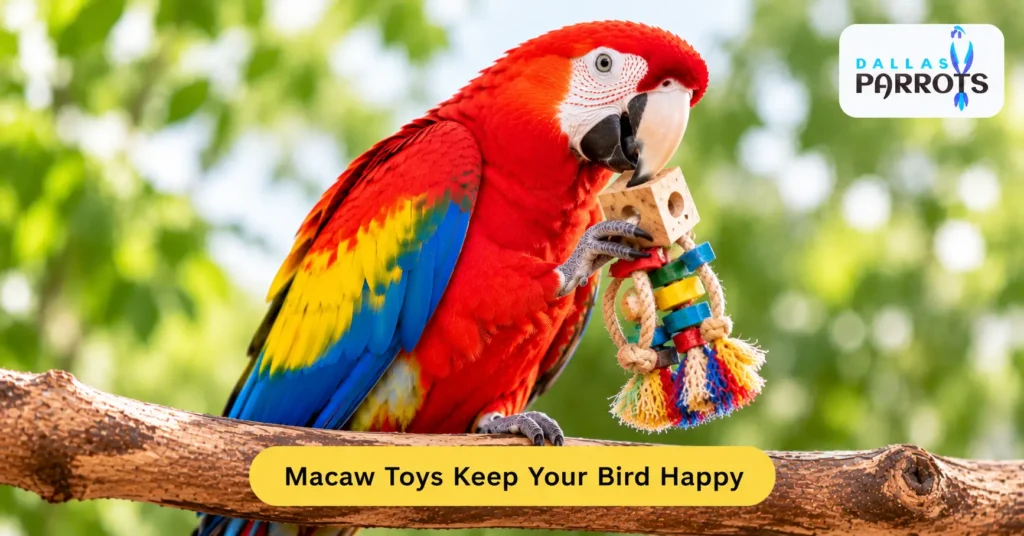
If you think macaw toys are just a nice extra, think again. A macaw without proper toys heads toward serious behavioral problems. These birds exert over 200 pounds of pressure per square inch through their beaks. They need constant mental and physical stimulation to stay balanced. Furthermore, boredom leads directly to feather plucking, excessive screaming, and aggression. These habits are genuinely difficult to reverse once they start. Additionally, the right macaw toys maintain beak health, satisfy foraging instincts, and reduce daily stress. Consequently, investing in safe macaw toys from day one saves owners from expensive vet visits. It also prevents heartbreaking behavioral crises later. Think of enrichment as a daily health requirement rather than an optional extra. Moreover, a stimulated macaw bonds more deeply with its owner and stays calmer at home.
The Biggest Buying Mistake With Macaw Toys
Most owners buy macaw toys based on color rather than construction. That approach consistently fails. The biggest mistake is choosing toys labeled large parrot without checking durability. A toy built for an African Grey disappears in minutes under a macaw’s beak. Furthermore, zinc-plated hardware is dangerous. Zinc causes severe neurological damage when a bird swallows it while chewing. Additionally, thin rope toys create choking and intestinal impaction risks. Macaws shred the fibers and often swallow them. Moreover, small bells become hazardous once a macaw cracks them open. Therefore, always check size ratings, hardware material, and build quality before buying. Price and brand name tell you very little about real safety. Consequently, a careful five minute inspection in the store prevents most emergency vet visits.
Macaw Toys and Beak Health
A macaw’s beak never stops growing. Daily chewing keeps it trimmed, strong, and properly shaped. Without suitable macaw toys, the beak can overgrow or wear unevenly. This leads to eating difficulties and expensive vet trimming. Furthermore, chewing satisfies a deep biological drive. In the wild, macaws crack hard nuts and strip bark constantly. Captive birds need a safe outlet for the same behavior. Additionally, a bird without chewing options often turns to furniture, cage bars, or its own feathers. Therefore, offering several textures every day protects both your home and your bird. Soft woods, hard woods, and fibrous materials each work the beak differently. Moreover, healthy beak wear is one of the easiest wins in macaw care. It costs very little when you provide the right toys consistently.
Macaw Chew Toys Your Bird Needs Daily
Chewing is not destructive behavior in macaws. It is essential daily maintenance. The best macaw chew toys use untreated hardwoods that break into large, safe chunks. Furthermore, balsa suits gentle chewers while pine and manzanita handle heavy destroyers. Additionally, natural cork and bamboo offer satisfying textures that hold attention for long periods. Avoid soft plastics entirely. They crack into sharp fragments that injure the beak and digestive tract. Moreover, choose pieces large enough that your macaw cannot swallow them whole. Replace worn chew toys promptly because splintered wood becomes a hazard. Consequently, rotate macaw chew toys every one to two weeks. Fresh textures keep your bird interested and prevent rapid boredom. Many owners also keep a spare stash on hand so a replacement is always ready.
Foraging Toys for Macaws and Mental Health
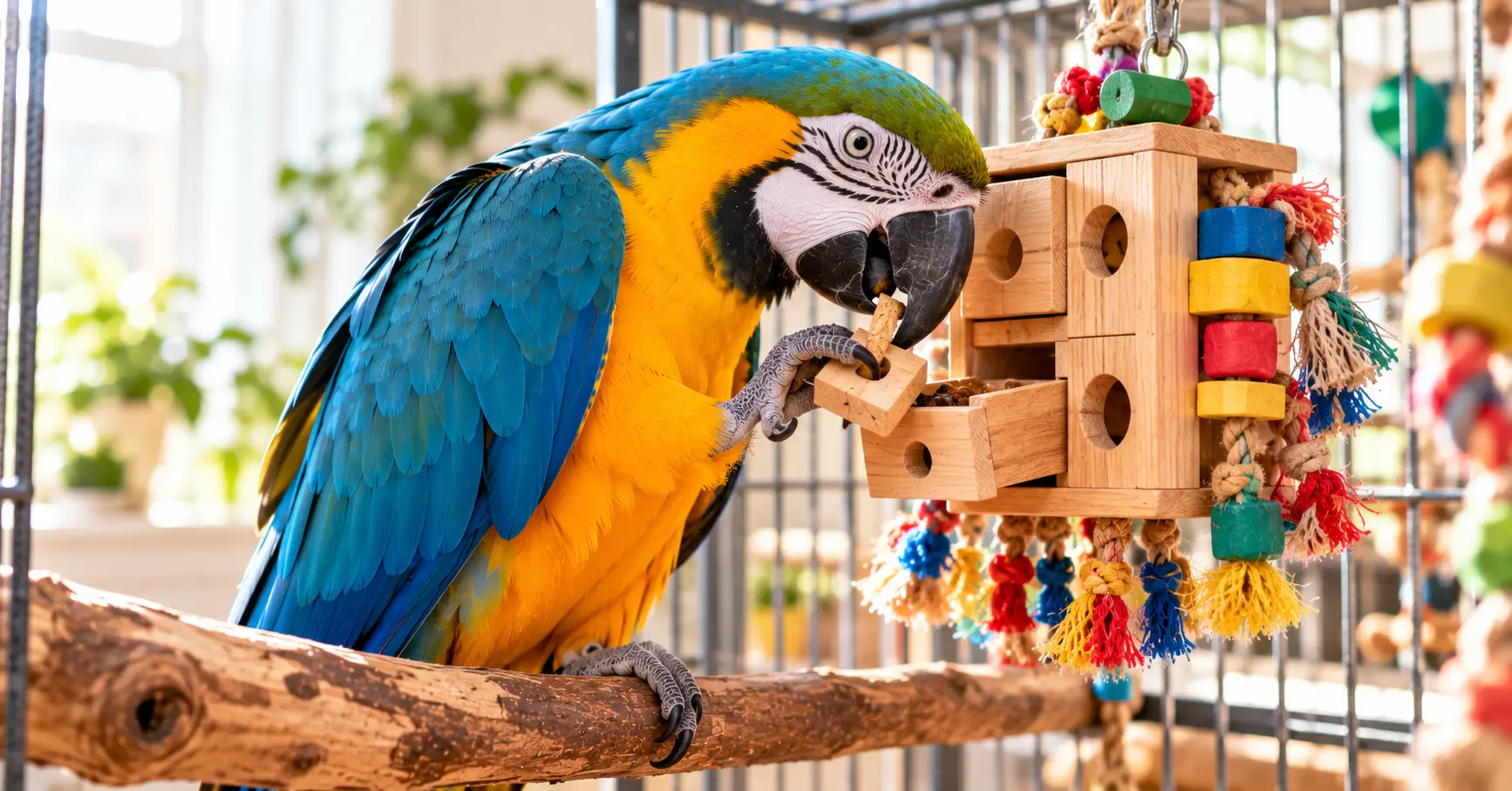
Foraging toys for macaws are the most overlooked enrichment category. In the wild, macaws spend four to six hours every day searching for food. In captivity, food arrives in a dish within seconds. That leaves hours of the day completely unfilled. Foraging toys for macaws fix this by turning meals into mental challenges. Hide pellets, nuts, or vegetables inside puzzle feeders, paper wraps, or stacked wooden boxes. Your macaw will stay busy far longer than with any standard hanging toy. Furthermore, foraging slows eating, which improves digestion. Additionally, a busy bird screams less because it has a productive outlet for its energy. Start with easy challenges so your bird gains confidence quickly. Then increase the difficulty gradually as it learns new skills.
Shredding Macaw Toys Owners Overlook
Shredding is a favorite macaw pastime that many owners never plan for. Shreddable macaw toys let your bird destroy something completely without any safety risk. Palm leaves, corn husks, cardboard, and plain paper all work well. Furthermore, these toys cost very little and disappear fast, so keep a good supply. Additionally, shredding satisfies the nesting instinct that drives much of a macaw’s chewing. Many frustrated birds finally calm down once they have something safe to tear apart. Moreover, you can hide treats inside shreddable wraps to combine foraging and destruction. Avoid anything with glue, staples, or glossy ink. Plain brown paper and unbleached materials are the safest choices. Consequently, a shredding toy belongs in every macaw cage, every single week.
Foot Toys and Puzzle Macaw Toys
Macaws use their feet like hands. Foot toys give them a chance to grasp, toss, and examine objects independently. Small wooden blocks, large acrylic rings, and sturdy balls all make great options. Furthermore, puzzle macaw toys challenge problem solving skills. Look for sliding doors, rotating drums, and nesting boxes that hide treats. Additionally, these toys build coordination and confidence. Intelligent birds enjoy figuring out a puzzle on their own. Moreover, puzzle toys keep your macaw occupied while you work or leave the room. Choose pieces large enough that a macaw cannot swallow them. Always supervise the first few sessions with a new puzzle. Consequently, you will learn quickly which designs your bird loves and which ones it ignores completely.
Climbing Macaw Toys and Parrot Towers
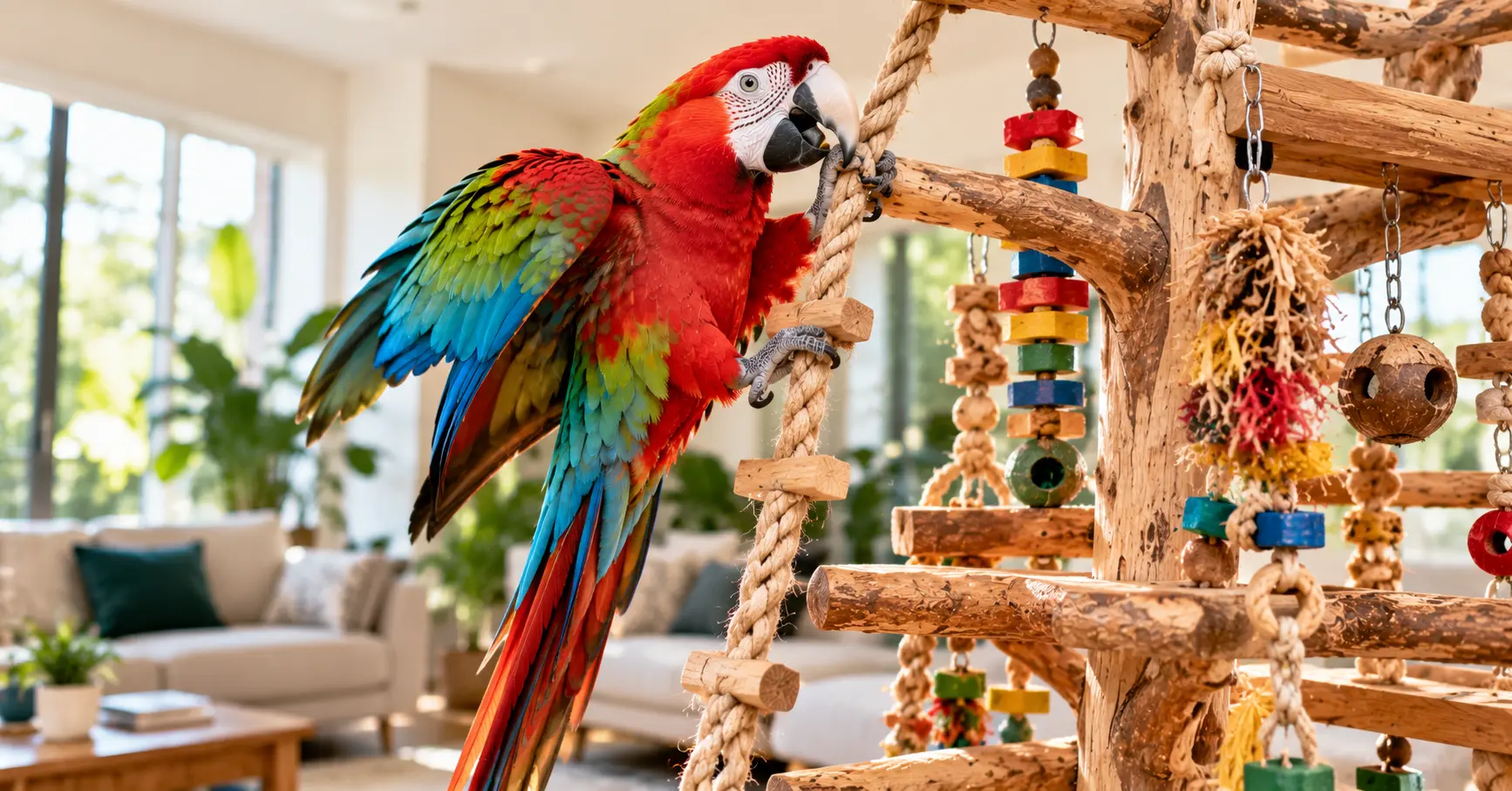
Climbing builds strength and keeps joints healthy. Macaws love ropes, ladders, nets, and wooden swings. A sturdy play tower gives your bird a rewarding space outside the cage. Furthermore, towers combine perches, feeding stations, and hanging toys in one place. Additionally, they encourage out-of-cage exercise, which every macaw needs daily. Look for strong frames with thick perches that suit a macaw’s large feet. Moreover, avoid thin dowels that strain the foot joints. Natural wood branches offer varied diameters that exercise the feet naturally. Check ropes often for fraying because loose threads can tangle toes. Consequently, replace worn climbing macaw toys before they become a hazard. A good climbing setup also burns energy that might otherwise turn into noise or destructive behavior.
Safe Macaw Toys and Material Rules
Choosing safe macaw toys comes down to materials and construction. Natural untreated wood is the gold standard. Look for pine, birch, balsa, eucalyptus, or manzanita without coatings or chemical treatments. Furthermore, stainless steel is the only acceptable metal for any part a macaw can reach. Avoid zinc, lead, and plated metals completely. Additionally, thick sisal and vegetable-tanned leather are acceptable with close monitoring. Moreover, bright colors are fine when the supplier confirms bird-safe dyes. Ask for that confirmation in writing when possible. Consequently, buy from sellers who document their material sourcing clearly. Inspect every toy at home before use. Check for loose parts, sharp edges, and strong chemical smells. If something seems off, do not give it to your bird. Trust your instincts.
Natural Versus Synthetic Macaw Toys
Natural materials usually win for macaws, but synthetic options still have a place. Wood, cork, palm, and bamboo mimic what macaws chew in the wild. They break down safely and satisfy instinct. Furthermore, natural macaw toys rarely contain harmful chemicals when sourced properly. Additionally, they cost less to replace. Synthetic toys, such as thick acrylic beads and hard bird-safe plastics, last longer. Therefore, they suit foot toys and puzzle pieces well. However, never use soft plastic that cracks into shards. Moreover, avoid anything your macaw can crush into swallowable pieces. A smart mix works best. Use natural materials for chewing and shredding. Use durable synthetics for foot play and puzzles. Consequently, you get both safety and long lasting value in your toy collection.
Best Macaw Toys by Type
Finding the best macaw toys means thinking in categories rather than products. Every macaw needs at least one toy from each of five groups. First, a macaw chew toy from natural hardwood for daily beak care. Second, foraging toys for macaws that hide food and reward problem solving. Third, a climbing toy such as a rope ladder or wooden frame. Fourth, a foot toy your macaw can grasp and toss. Fifth, a shreddable toy made from palm, corn husk, or paper. Furthermore, rotating all five groups prevents boredom. Additionally, this simple checklist stops you from overbuying one type. Many owners discover their bird has plenty of chew toys but no foraging options. Consequently, a quick weekly category check keeps the cage balanced and engaging.
Macaw Toys Rotation Strategy
Owning the best macaw toys means nothing if the same toys stay in the cage permanently. Macaws lose interest in static environments within days. A simple rotation strategy solves this problem. Keep four to six toys in active rotation. Place two or three in the cage while storing the others safely. Every two to three days, swap one toy for a stored option. Furthermore, returning a familiar toy after a short absence creates renewed excitement. Additionally, introduce one completely new toy every one to two weeks. This keeps novelty alive alongside the familiar favorites. Moreover, watch which toy types your macaw loves most and weight the rotation toward them. Consequently, you spend less money and your bird stays far more engaged week after week.
How to Introduce New Macaw Toys
Even safe macaw toys can stress a bird when they appear in the cage without warning. Macaws are naturally cautious, and some show real fear of unfamiliar objects. The correct approach is simple. Place the new toy outside the cage within clear view for one to three days. Let your macaw observe it calmly during normal activity. Furthermore, offer a treat near the toy to build a positive association. Additionally, many macaws accept new items faster after watching their owner handle them first. Move the toy closer gradually, and only place it inside once your bird looks relaxed. Moreover, never force interaction. Consequently, patience now makes every future toy introduction faster and easier for both of you.
Macaw Toys Budget and Durability
Quality macaw toys cost more upfront, but they often save money. A cheap toy that dies in ten minutes needs constant replacing. Furthermore, thick hardwood blocks and heavy gauge hardware survive far longer. Additionally, buying in bulk from reputable suppliers lowers the cost per toy. Many owners also make their own using safe materials. Plain wood blocks, paper, and cardboard cost almost nothing. Moreover, you can refill foraging toys again and again instead of replacing them. Set a monthly enrichment budget and stick to it. Consequently, you always have fresh options without overspending. Remember that destruction is the goal. A toy your macaw completely shreds has done its job well. Therefore, judge value by hours of engagement rather than how long the toy survives.
Signs Your Macaw Toys Are Working
Happy, stimulated macaws show clear signs. They play actively, chew regularly, and explore new items with curiosity. Furthermore, their feathers stay smooth and intact. Additionally, a well-enriched bird screams less and rests calmly during quiet hours. Watch your macaw’s body language around each toy. Bright eyes and playful vocalizing signal real enjoyment. Moreover, you will find shredded remains on the cage floor every morning. That mess is a good sign. In contrast, a bird that ignores toys, plucks feathers, or screams constantly needs a new approach. Therefore, change the toy types, add foraging challenges, and increase out-of-cage time. Consequently, tracking behavior weekly helps you adjust the setup before small problems grow into serious habits.
Contact Us
Looking for expert guidance on macaw toys and enrichment for your bird? The Dallas Parrots team is here to help. Every macaw we raise receives daily enrichment, suitable toys, and hands-on socialization from infancy.
Whether you are setting up for a new bird or improving an existing setup, we gladly share practical advice based on real daily experience with these remarkable birds.
Conclusion
Choosing the right macaw toys is one of the most impactful daily decisions you make for your bird. Safe macaw toys made from natural materials prevent injuries and toxin exposure. Macaw chew toys protect beak health and satisfy essential instincts. Foraging toys for macaws replace the long hours of searching your bird would spend in the wild. The best macaw toys combine all of these types with a steady rotation routine. At Dallas Parrots, every macaw we raise receives daily enrichment and hands-on socialization from infancy. Reach out today and our team will help you plan the exact setup your bird needs at home.