
Why Caique Food Matters So Much
Choosing the right caique food is the most important health decision you make for this bird. Caiques hop, wrestle, and bounce through the day, so many owners assume they can eat anything. They cannot. Underneath that athletic body is a species that gains fat easily. Obesity and fatty liver disease rank among the most common problems in pet caiques. Furthermore, a poor diet can shorten the life of a bird that may live 25 to 40 years. Therefore, good caique food must fuel high energy without adding extra fat. This guide shows exactly what to feed a caique, what to avoid, and how to track results. At Dallas Parrots, we handle these birds daily, so every tip here is practical and honest.
Wild Diets Behind Modern Caique Food
Wild caiques live in the Amazon Basin canopy. They spend their days foraging through a shifting menu of fruit, seeds, flowers, buds, and tender vegetation. Furthermore, they chew bark and explore wood for insects and sap. That variety is the model for every healthy caique diet. However, we cannot copy a rainforest in a kitchen. We can copy its variety, its foraging effort, and its mix of textures. Additionally, wild caiques burn huge amounts of energy climbing and flying every day. Captive birds often burn far less. Therefore, the wild menu works best as a guide rather than a recipe. Avian vets generally recommend a formulated pellet base plus fresh vegetables. Moreover, they suggest keeping fatty seeds and nuts as occasional rewards.
The Daily Caique Food Plate
Think of caique food as a plate with four clear parts. The best food for caiques follows a simple split that keeps energy high and fat low. Pellets form the base, while vegetables supply vitamins and fiber. Furthermore, fruit and nuts play small supporting roles. Adjust portions slightly for your bird’s age, weight, and activity level. Additionally, ask your avian vet to confirm the split for your individual caique.
Food group | Share of diet | Examples |
Pellets | 60 to 70 percent | Harrison’s, Roudybush, TOP’s, Lafeber |
Vegetables and greens | 20 to 30 percent | Broccoli, kale, bell pepper, squash |
Fruit | About 5 percent | Berries, papaya, mango, apple without seeds |
Seeds and nuts | About 5 percent | Almond or walnut slivers as treats |
Pellets as the Base of Food
Pellets should anchor every caique food plan. They deliver balanced nutrition in every bite, so your bird cannot pick out only its favorite fatty bits. The best pellets for caiques come in a small to medium size that a caique can hold in its foot. Furthermore, plain pellets beat brightly dyed ones when you have the choice. Popular options include Harrison’s, Roudybush, TOP’s, and Lafeber. Additionally, many caiques love to dip pellets in water before eating them. That habit is normal and harmless. Moreover, you can grind a few pellets coarsely to vary the texture and keep mealtimes interesting. Pellets alone are not enough, though. Fresh food adds enrichment and extra vitamins.
Fresh Vegetables in Food
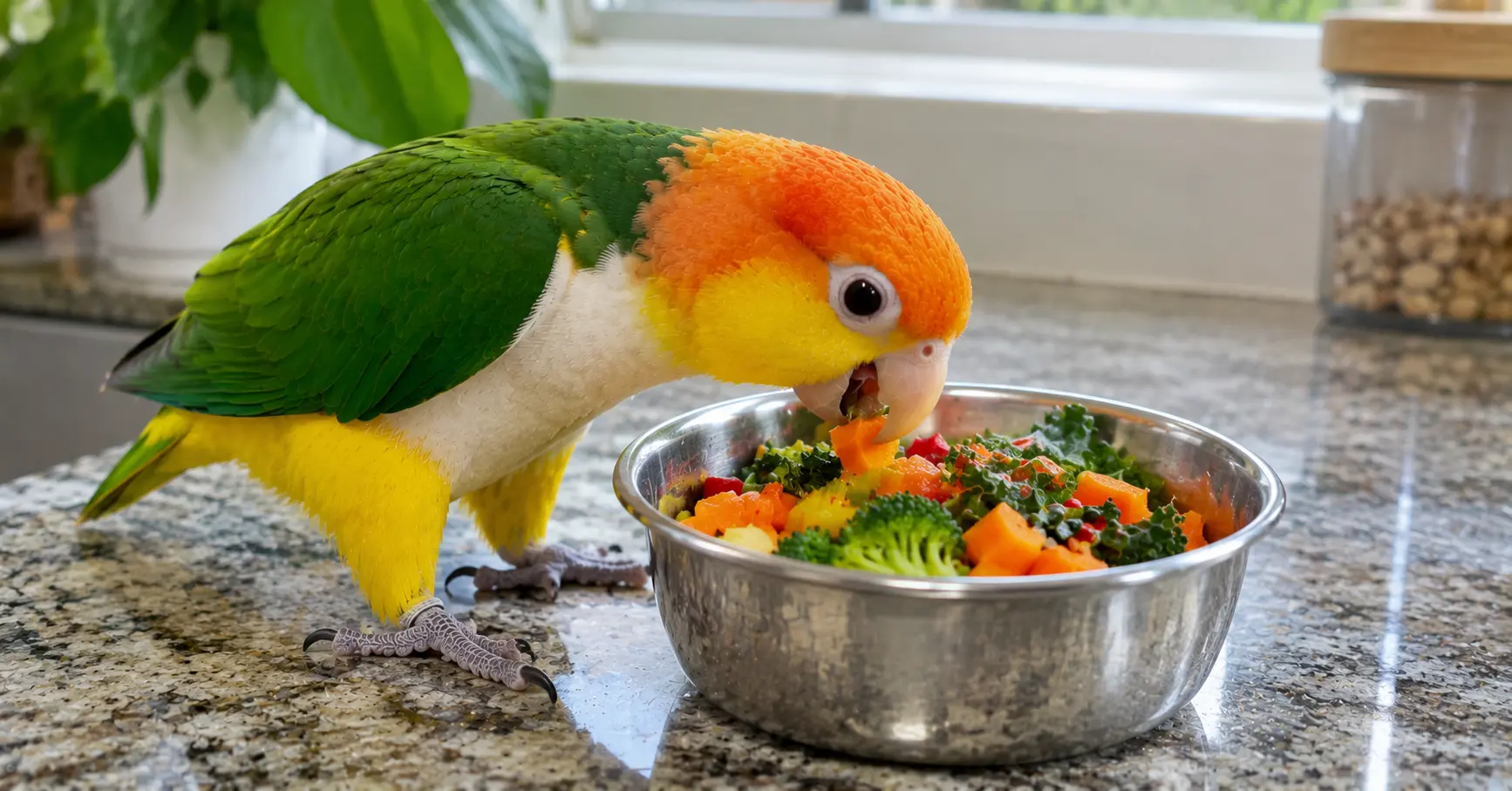
Fresh vegetables are the backbone of the fresh portion of caique food. Dark leafy greens and orange vegetables supply vitamin A, which pet parrots often lack. Offer broccoli, kale, collard greens, bell pepper, carrot, squash, and green beans. Furthermore, cooked sweet potato is a favorite with many birds. Additionally, vary the vegetables through the week so your bird meets new tastes and textures. Serve fresh vegetables in the morning because appetite is strongest then. Moreover, wash everything well and chop pieces to a bird-friendly size. If your caique rejects a food, try again later in a different form. Persistence usually wins with fussy eaters.
Fruit in Caique Food Plans
Fruit makes caique food fun, but moderation matters. Fruit is high in natural sugar, and caiques gain weight easily. Aim for roughly five percent of the daily diet. Good choices include blueberries, raspberries, papaya, mango, apple, and pomegranate. Always remove apple seeds before serving. Furthermore, serve fruit chopped in a bowl or on a skewer for extra fun. Additionally, remove uneaten fruit after a couple of hours so it does not spoil. Moreover, use fruit as a bridge food when you introduce vegetables. A tiny bit of mango beside broccoli often tempts a cautious bird. Consequently, fruit becomes a helpful tool rather than the main course.
Seeds and Nuts in Food
Seeds and nuts belong in caique food as treats, not staples. Nuts are nearly pure fat, so they quickly push a caique toward obesity. Seeds are tasty but fatty, and birds often pick out only their favorites. However, a few pieces still have real value. Use almond or walnut slivers as training rewards. Furthermore, soaked or sprouted seed offers extra nutrition and a fun foraging challenge. Additionally, hard nuts such as walnuts may need cracking before a small beak can manage them. Moreover, cedar nuts and macadamias are rich, so offer them rarely. Keep seeds and nuts to about five percent of the daily diet. Consequently, your bird enjoys the treat without paying a health price.
Toxic Foods to Keep Out of Food
Some human foods are dangerous or fatal to birds. Keep every item below out of your caique food routine.
Food | Why it is dangerous |
Avocado | Persin can cause fatal heart and breathing failure |
Chocolate | Theobromine harms the heart and nervous system |
Coffee, tea, energy drinks | Caffeine overstimulates the heart |
Alcohol | Even a taste can kill a small bird |
Onion and garlic | Damage red blood cells and cause anemia |
Fruit pits and apple seeds | Contain compounds that release cyanide |
Table salt | Causes dehydration and electrolyte problems |
Uncooked beans | Contain a toxin that only cooking destroys |
Mushrooms | Can upset digestion or damage the liver |
If your bird eats avocado or chocolate, call an avian vet immediately.
Caique Food and Fatty Liver Risk
Fatty liver disease is the biggest danger hiding behind poor caique food. Too much fat and too little exercise stress the liver slowly and quietly. Furthermore, signs often appear late, when damage is already serious. Watch for weight gain, lethargy, and poor feather quality. Additionally, seed-heavy diets raise the risk dramatically. This is why the pellet base matters so much. Moreover, regular flight, climbing, and play help burn calories. Caiques love physical activity, so give them space and time out of the cage. Therefore, combine smart caique food with daily exercise. Together, they protect the liver and keep your caique lean, active, and healthy for decades.
Weigh Your Bird to Judge Caique Food
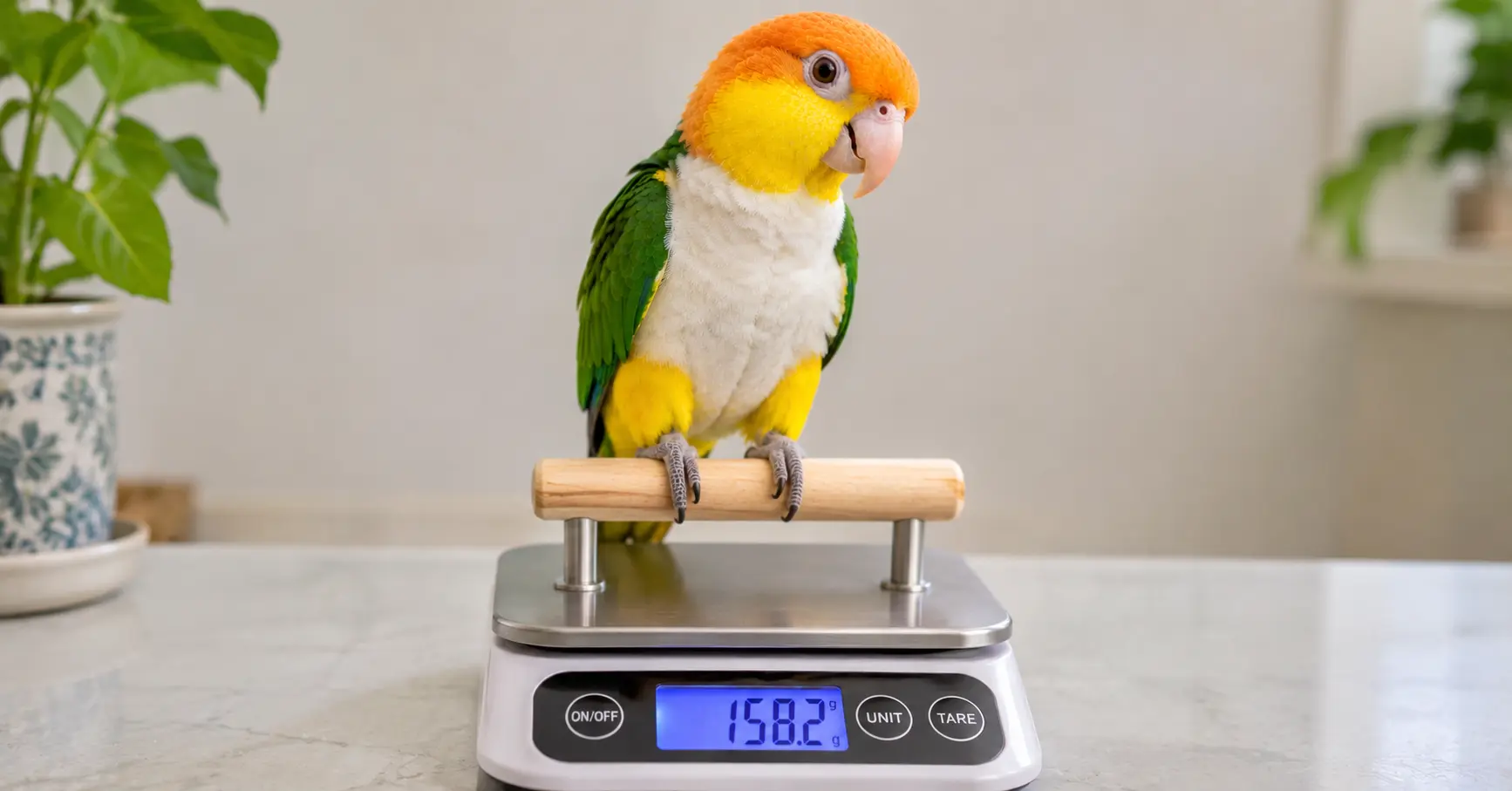
A gram scale is the best tool for judging caique food portions. A healthy adult caique usually weighs around 150 to 170 grams. Weigh your bird once or twice a week at the same time of day. Furthermore, write the numbers down so trends stand out. A steady climb of 10 to 15 percent above your bird’s normal weight is an early warning sign. It shows on the scale long before it shows on the perch. Additionally, trim treats and fruit first if weight creeps up. Then check portions and exercise time. Moreover, a sudden drop also needs attention, especially during diet changes. Call your avian vet if weight falls quickly.
Caique Food Prep With the Chop Method
Chop makes healthy caique food realistic for busy households. Finely chop or grate a rainbow of safe vegetables and a smaller amount of fruit. Furthermore, mix in a spoonful of cooked grain, such as quinoa or brown rice. Portion everything into daily servings and freeze the extras. Additionally, vary the texture. Offer some pieces shredded, some in chunks, and some lightly warmed. Caiques are curious and love a mess, so texture changes boost interest. Moreover, serve chop in the morning when appetite peaks. Remove leftovers after a few hours, especially in warm weather. Consequently, one prep session can cover a whole week of fresh meals.
Switching Seed Eaters to Caique Food Pellets
Many caiques arrive addicted to seed. Converting them is a marathon, not a sprint. First, add pellets in a separate dish beside the seed. Second, serve fresh chop every morning. Third, reduce seed gradually over several weeks. Never cut it off suddenly because a bird may refuse unfamiliar food and lose weight. Fourth, weigh your caique weekly to confirm it keeps its weight. Fifth, stay patient. A full switch can take weeks or even months. Furthermore, mixing finely chopped vegetables into warm, damp pellets helps many birds accept them. Consequently, steady persistence nearly always wins, and your caique diet improves without stress.
Water and Supplements With Caique Food
Fresh water is part of every caique food plan. Provide clean water at all times and change it at least twice daily. Many caiques dunk their food, which dirties the bowl quickly. Furthermore, a second water bowl beside the food dish helps keep one source clean. A water bottle adds another clean option. Additionally, a bird eating balanced pellets and vegetables usually needs no extra vitamins or minerals. Over-supplementing can cause harm. Moreover, never add powdered vitamins to the water because they spoil fast and encourage bacteria. If you suspect a deficiency, ask an avian vet to confirm it. Guessing can hurt more than it helps.
Foraging Makes Caique Food Fun
Caiques are natural foragers, so foraging turns caique food into enrichment. Hide pellets, small chunks of vegetable, or a few nuts inside paper wraps, puzzle feeders, or foraging boxes. Furthermore, scatter some food across a shallow tray instead of using only an open bowl. Your caique must work for its meal, which burns calories and calms boredom. Additionally, foraging slows eating and improves digestion. Moreover, bored caiques often develop feather plucking and loud screaming. A busy beak prevents both. Start with simple challenges and raise the difficulty slowly. Consequently, mealtime becomes a daily game that supports both mental health and a lean body.
A Daily Routine for Caique Food Safety
A steady routine makes caique food safer and easier. Offer fresh chop in the morning, and keep pellets available through the day. Furthermore, introduce new foods gradually and in small amounts. Buy the smallest pack of a new pellet or treat first to test your bird’s taste. Additionally, wash the bowls daily. Remove uneaten fresh food within a few hours to prevent bacteria. Moreover, store pellets in sealed containers and check expiry dates. Keep nonstick cookware away from your bird because its fumes can kill birds. Consequently, a clean, predictable routine protects your caique and removes daily guesswork from feeding time.
Baby Caique Food Before Going Home
Baby caiques have special needs before they ever reach your home. At Dallas Parrots, we hand feed every baby from infancy and wean each one onto a balanced diet. Furthermore, ask any breeder what a baby eats right now, and follow that plan at first. Additionally, change the diet slowly because sudden changes upset young birds. Moreover, weigh a new baby often during the first weeks to confirm steady eating. A healthy baby caique is alert, active, and keen to eat. Therefore, hand-raised birds from a careful breeder settle into new caique food routines much faster. Ask your breeder for a written feeding plan before pickup day.
Contact Us
Looking for guidance on caique food or a healthy baby caique for your home? The Dallas Parrots team is here to help. Every caique we raise is hand fed from infancy, socialized daily, and ready to thrive with the right diet.
Conclusion
The right caique food keeps your bird lean, active, and healthy for decades. Build the plate around quality pellets, add fresh vegetables, and keep fruit, seeds, and nuts small. Avoid every toxic food on the list. Weigh your bird weekly, and give it plenty of foraging and exercise. Furthermore, switch diets slowly and ask your avian vet to guide any major change. At Dallas Parrots, every caique we raise starts life with careful nutrition and daily handling. Reach out today to check availability and ask our team for a feeding plan that fits your home.