
There’s something different about an African Grey. You can feel it the first time one looks at you. They study faces. They wait for the right moment to copy a sound. And they remember what you said two weeks ago even when you wish they wouldn’t. So if you’re thinking about bringing one home or you already have one sitting on your shoulder right now this guide walks through everything that actually matters for african grey parrot care without the fluff. Plain and simple. These birds aren’t starter pets. But for the right person they’re the best companion bird on the planet.
Who We Are and Why This Matters
At Dallas Parrots we’ve spent years working with the african grey parrot up close. Hand feeding chicks. Watching adults bond with new families. Talking with avian vet partners about diet swaps and feather plucking cases. That experience shaped everything you’ll read here.We work with both congo african greys and timneh african greys and we’ve seen what proper care looks like when it goes right. We’ve also seen what happens when people skip steps. The truth is most problems with these birds come down to a few small mistakes early on.
A Quick Look at the Psittacus Erithacus Family
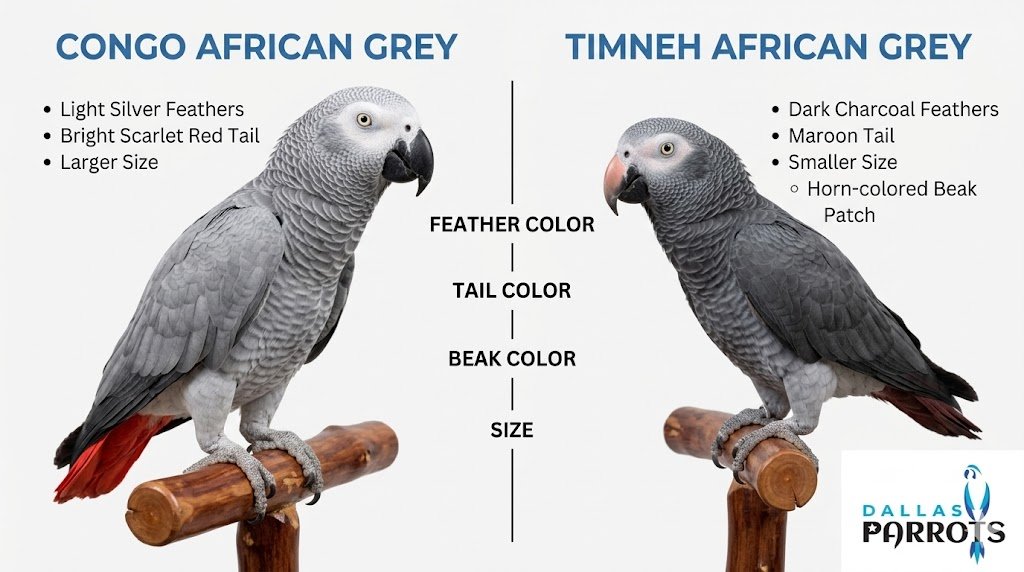
The african grey parrot belongs to the species psittacus erithacus. There are two subspecies you’ll come across when you start shopping around. The bigger one is the congo and the smaller one is the timneh. Both come from west and central Africa and both are highly intelligent.Here’s a side by side breakdown so you can see how they compare.
| Feature | Congo African Grey | Timneh African Grey |
|---|---|---|
| Size | Around 13 inches | Around 9 to 11 inches |
| Body color | Light silvery grey | Darker charcoal grey |
| Tail | Bright red tail | Maroon tail |
| Beak | Solid black beak | Horn-colored upper beak |
| Native range | Central Africa and the Congo basin | Ivory coast and parts of west Africa |
| Talking starts | Around 12 to 18 months | Around 6 to 12 months |
Most people picture the congo when they hear african grey. That bright red tail is hard to miss. But timneh greys have a quieter personality and they often start talking sooner which is why some first time owners actually prefer them.
Origin and History
The african grey parrot has been kept by humans for thousands of years. Egyptian hieroglyphs show them. Greek and Roman writers wrote about their talking ability. King Henry VIII reportedly had one. So this isn’t some new exotic pet trend. In the wild congos live in dense rainforest across countries like Cameroon and the Democratic Republic of Congo. The timneh sticks closer to the ivory coast and Sierra Leone.Both feed on palm nuts seeds fruits and leafy greens. They roost in massive flocks and pair bond for life. That last part is worth holding onto. African greys are deeply social. When you bring one into your home you’re stepping into the role of flock. They expect that bond.
African Grey Temperament and Personality
The african grey temperament is calm watchful and a little reserved. These aren’t the loud party birds you see with macaw or conure species. A grey will sit and observe a room for an hour before it decides what it thinks of a new person.The african grey parrot personality usually shows up in layers. Curious. Sensitive. A bit stubborn. They thrive on routine and they don’t love big changes in environment. Move the cage to a new room and you might get a week of grumpy silence.
Some quirks you’ll notice early on:
- They bond hard with one or two people but can stay friendly with the whole household if you socialize them young
- They pick up on your mood and react to it
- They get bored fast without mental stimulation
- They can be jealous of new pets or babies
Here’s the thing. Their sensitivity is part of what makes them magical. It’s also what makes them tricky.
African Grey Talking Ability
This is what most people come for. The african grey talking ability is the best documented in the parrot world. A well socialized bird can pick up hundreds of words and sounds and use them in context. Not just repeat them. Actually use them. The famous research bird Alex worked with Dr. Irene Pepperberg for thirty years and could identify colors shapes and quantities.That wasn’t a fluke. Most pet greys land somewhere between fifty and two hundred words with some going way beyond that. But not every grey talks. Some prefer whistles or environmental sounds like the microwave beep or your phone ringtone. Don’t pick one of these birds purely for the talking. Pick one because you want the bird.
African Grey Lifespan and How Long Do African Greys Live
Here’s where new owners often underestimate the commitment. The african grey lifespan in captivity can stretch past fifty years. So if you’re asking how long do african greys live the honest answer is longer than most marriages. In the wild they live about twenty to thirty years. In a home with proper diet good veterinary care and enough enrichment you’re looking at forty to sixty years on average. Some have been documented past seventy. That means a young adult who buys a baby bird today is making a decision that runs into retirement. Plan for it. Talk to your family about who takes the bird if something happens to you. This is a real conversation people skip.
The Cage Setup That Actually Works
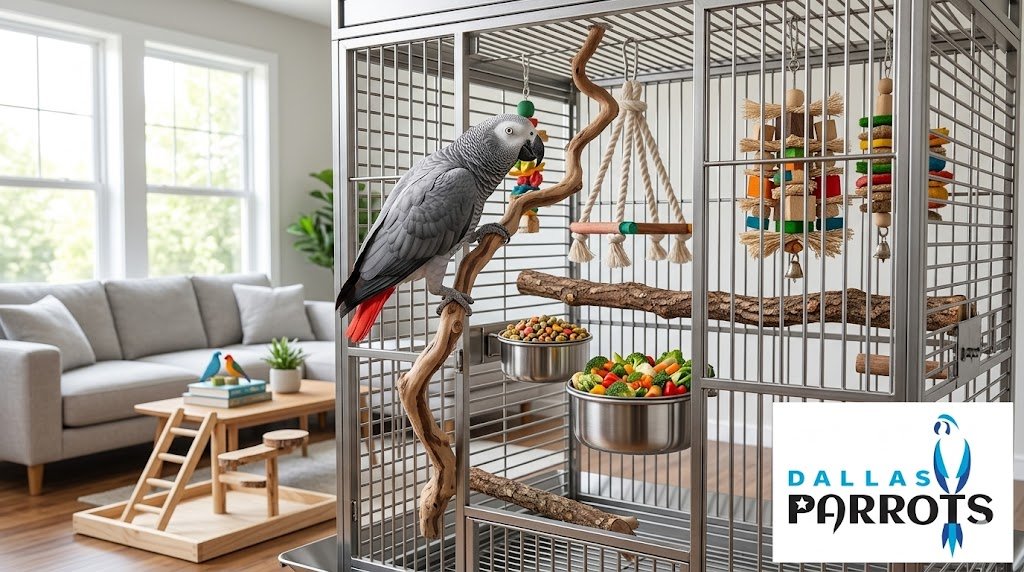
A bad cage causes more behavior problems than almost anything else. The cage size needs to be big. Bigger than you think. These are intelligent birds that need room to climb stretch and play. Minimum cage size for one african grey is 36 inches wide by 24 inches deep by 48 inches tall. Bigger is better. Bar spacing should be 3/4 inch to 1 inch so they can’t get a head stuck.
What goes inside matters as much as the box itself.
- Three to four perches at different heights and made from safe branches with varied diameter so their feet stay strong
- A rotating set of parrot toys including chew toys foraging puzzles and shreddable items
- Stainless steel bowls for food and water that can’t be tipped easily
- A separate play stand outside the cage for out-of-cage time
If you want a head start on picking the right setup our top parrot cage guide walks through size and bar spacing for different species. Bird toys aren’t optional for greys. A bored grey starts to pluck their feathers and once feather plucking starts it’s hard to reverse. Rotate toys weekly so the bird doesn’t get tired of the same options.
Best Food for African Grey Parrots
Diet is where I see the most owner mistakes. People feed seed mixes and call it a day. That leads straight to nutritional deficiencies and especially calcium deficiency which greys are prone to.A proper diet looks like this. Pellet should be the base around sixty to seventy percent of daily intake. Then fresh vegetables and fruits and vegetables fill the rest. Seeds and nuts are treats not meals.
What to feed daily:
| Food group | Examples | Portion guide |
|---|---|---|
| Pellet base | High quality formulated parrot pellet | About a quarter cup |
| Leafy greens | Kale spinach romaine dandelion | Two tablespoons |
| Fresh vegetables | Bell peppers carrot broccoli sweet potato | Two tablespoons |
| Fruit | Apple berries papaya mango | One tablespoon |
| Protein and calcium | Cooked egg cuttlebone | A few times a week |
| Treats | Almonds walnuts pumpkin seeds | Small amount |
Foods that are toxic and you should never offer include avocado chocolate caffeine onion garlic and anything salty or sugary. Avocado in particular can kill a bird within hours. Calcium and vitamin balance matters a lot for this avian species. Bell peppers and leafy greens like kale help. So does direct sunlight or a proper full spectrum bulb because vitamin D helps them absorb calcium properly. For a deeper look at what works across species check our parrot food guide. Sweet potato cooked and cooled is one of those foods almost every grey loves. Mine used to wait by the bowl when she heard the microwave beep.
Daily Routine and Out-of-Cage Time
African greys thrive on routine. They like knowing what comes next. A predictable rhythm reduces stress and stress is the root of half the behavior problems people deal with. A solid daily flow looks something like this. Morning means fresh food and water and a quiet hello. Mid morning is two to four hours of out-of-cage time on a play stand or shoulder. Afternoon brings a training session and some independent playing with toys. Evening is quiet bonding time and then twelve hours of dark sleep in a covered cage.Greys are sensitive to stress and even small disruptions can throw them off. New furniture loud guests a different work schedule. They notice everything. Keep the basics consistent and they’ll handle the small changes fine.
Mental Stimulation and Enrichment
A grey without mental stimulation is a grey heading for trouble. Their brains run hot. They need puzzles to solve and things to forage through and reasons to think.
Some enrichment ideas that work:
- Wrap a treat in paper and let them tear it open to forage
- Hide pellet pieces in a foraging toy with multiple compartments
- Teach a new trick or word every couple of weeks
- Play music or leave a talk radio station on when you’re out
- Trade out toys every seven days so nothing gets stale
Training sessions don’t have to be long. Ten minutes twice a day beats one long session. Keep it positive with treat rewards and stop before the bird loses interest. For broader training principles our how to train a parrot article is a good place to start.
Veterinary Care and Signs of Illness
Find a board-certified avian vet before you bring a bird home. Not a regular dog and cat vet. A real avian veterinarian who handles parrots regularly. This matters because birds hide illness as a survival instinct and by the time you notice signs of illness things are usually already serious. Annual wellness exams are the baseline. Your vet will check weight feather quality beak condition and run bloodwork to catch issues like calcium deficiency early.
Watch for these signs of illness at home:
- Fluffed up feathers for long stretches
- Sitting on the cage floor
- Loss of appetite or sudden weight drop
- Discharge from nose or eyes
- Changes in droppings that last more than a day
- Tail bobbing while breathing
Wing clipping is a personal choice. Some owners do it to keep the bird from flying into windows or out open doors. Others let the bird stay flighted because flight is mental and physical exercise. Talk to your avian vet about what fits your home setup.
Hand Raised African Grey vs Other Sources
Where you get your bird shapes everything that comes next. A hand raised african grey from a reputable breeder is a different animal than one from a chain pet store or a backyard seller. Hand fed babies are socialized to humans from day one. They’re used to being handled and they trust people. A captive bird that was parent raised and then sold young can still bond but takes more patience.Parrot rescue is another path worth considering. Many adult greys end up needing new homes because their first owners didn’t understand the commitment. These birds often come with baggage but with proper care they can settle into wonderful pets. If you’re shopping our african grey parrot for sale page explains what to look for and what red flags to avoid.
African Grey Parrot Price Breakdown
The african grey parrot price is one of the first questions everyone asks. There’s a wide range and the cheapest option is almost never the best deal.
| Bird type | Typical price range |
|---|---|
| Congo grey baby hand fed | 2500 to 4000 dollars |
| Timneh grey baby hand fed | 1800 to 3000 dollars |
| Adult rehome through rescue | 500 to 1500 dollars |
| Unweaned chick from breeder | 1500 to 2500 dollars |
For a deeper price comparison and what affects cost we cover it in our african grey parrot price article. Add in cage setup toys vet visits and food and your first year easily runs another 1500 to 2500 dollars on top. Budget honestly before you buy.
Common Mistakes New Owners Make
A few patterns come up over and over with new owners. Catching them early saves the bird stress and saves you frustration.
- Feeding mostly seeds which leads to nutritional deficiencies
- Buying a cage that’s too small
- Skipping the avian vet for the first year
- Letting the bird shoulder ride constantly which builds dominance issues
- Punishing screaming which usually makes it worse
- Using nonstick cookware near the bird which releases fumes that kill parrots fast
- Keeping the bird isolated in a back room away from family activity
That last one is huge. African greys are deeply social and need to be where the action is. A grey alone in a quiet room develops behavioral issues fast.
Why People Choose Dallas Parrots
We’re not the biggest breeder out there and we don’t try to be. What we focus on is doing right by every bird we hand raise. That includes congos timneh greys and a handful of other parrot species that match the right family. Every bird leaves us socialized and weaned and on a proper diet. We don’t ship unweaned chicks. We don’t push birds onto people who haven’t thought it through. And we stay available after the sale for questions about diet behavior or vet referrals. You can see what we currently have at our parrots page or browse other species like the congo african grey and timneh african grey parrot.
Benefits of Working With Dallas Parrots
A few things set our birds apart and it shows up in how they settle into new homes.
- Hand fed and weaned before they go home so the transition is smooth
- Health checked by a board-certified avian before placement
- Started on a quality pellet and fresh food rotation
- Diet sheet and care notes go home with every bird
- Lifetime support if you have questions later
We also help connect new owners with avian vets in their area which matters because finding good veterinary care is half the battle.
Real Owner Stories
One family in Texas took home a young congo named Olive last spring. They’d never owned a parrot before and were nervous about the talking part. Six months in Olive says hello good morning and the names of both kids. She also learned to mimic their dog barking which they didn’t ask for but love anyway.Another customer adopted a timneh from us after losing his older grey of forty-two years. He told us the new bird helped him through grief in a way he didn’t expect. They watch baseball together now. Stories like that are why we keep doing this work. These birds change lives.