
There’s a reason the green cheek conure has quietly become one of the most loved small parrots in homes across the country. They’re funny. They’re cuddly when they want to be. And they don’t shriek the house down like some of their louder cousins.If you’ve been thinking about bringing one home or you’ve got one already and want to do right by them this conure care sheet walks through everything that actually matters. Diet. Cage. Personality. Biting. Lifespan. The lot. Plain and simple. These birds aren’t hard to keep happy. But you do need to know what you’re doing.
A Quick Word About Who’s Writing This
At Dallas Parrots we’ve spent years hand raising conure species and watching them settle into new homes. That includes standard greens yellowsided green cheek babies pineapple mutations and turquoise variants too.We work closely with avian veterinarian partners and we’ve handled enough behavior questions and feather plucking cases to know what works and what doesn’t. Everything in this conure care guide comes from that hands-on experience.
Green Cheek Conure Overview
The green cheek conure is part of the Pyrrhura family and they come from South America. Their natural range stretches across bolivia and parts of argentina and paraguay. In the wild they live in forest canopy and travel in small flocks.They’re one of the smallest in the conure family which is part of why they fit so well into apartments and smaller homes. A grown bird sits around 10 inches long from beak to tail feathers and weighs between 60 and 80 grams. So we’re talking about a parrot that’s only a bit bigger than a parakeet but with way more personality packed in.
You’ll see them in a few different mutations these days. Standard green is the original look with that soft grey chest and bright wing feathers. Then there’s the yellowsided green cheek with bright yellow flanks. The pineapple is a cinnamon and yellowsided cross. Turquoise birds carry a beautiful blue-green tone. The variety of color options is one reason people fall for this specific species.
Pineapple Conure vs Green Cheek
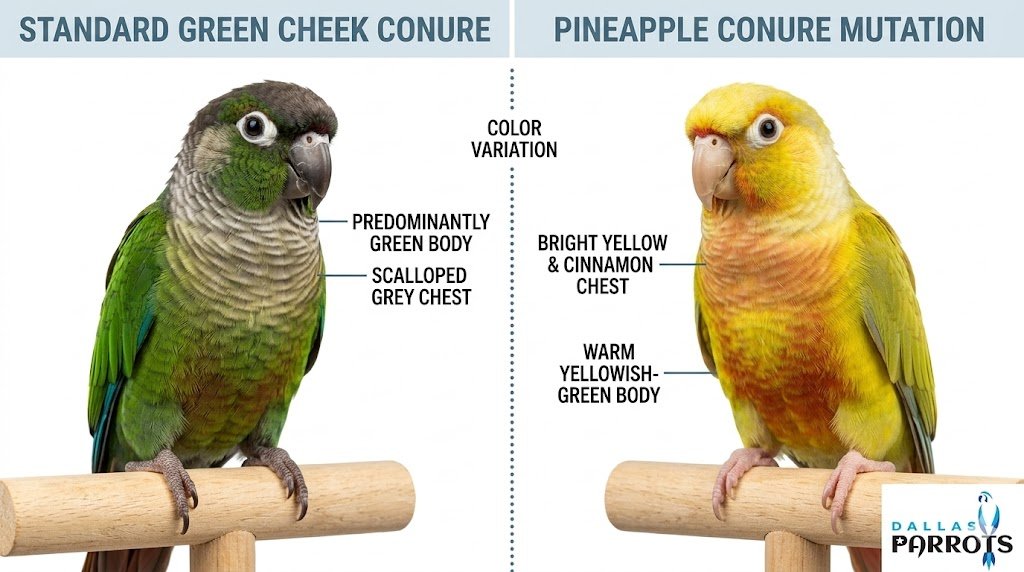
This question comes up a lot and the answer is simpler than people think. The pineapple isn’t a different species. It’s a color mutation of the green-cheeked conure. So when you compare pineapple conure vs green cheek you’re really comparing two versions of the same bird.
Here’s how they stack up.
| Trait | Standard Green Cheek | Pineapple |
|---|---|---|
| Body color | Green back grey chest | Lighter cinnamon tones |
| Personality | Playful and a bit cheeky | Slightly calmer in most cases |
| Price range | 300 to 500 dollars | 500 to 800 dollars |
| Availability | Common | Moderate |
Behavior wise the differences are subtle. Some breeders swear pineapples are sweeter. Others say it depends entirely on how the bird was raised. The truth is that hand raising and human interaction matter way more than mutation when it comes to temperament.
Green Cheek Conure Personality
Here’s where these birds win hearts. The green cheek conure personality is best described as clownish and affectionate. They love hanging upside down. They love tucking under your shirt collar. They love stealing your jewelry and refusing to give it back.They’re highly social birds and they need real human interaction every day. A green cheek left alone for ten hours with no toys or attention will start picking up destructive behaviours fast.
Most birds bond closely with one person but stay friendly with the rest of the household if you put in the work early. They’re also one of the easier conure species to read. Watch the eyes and the flared tail feathers because both tell you exactly how the bird is feeling.A small thing I’ve noticed over the years. The ones raised around kids tend to handle noise and chaos way better than birds raised in quiet single-person homes. So if you’ve got a busy family don’t write off this bird as too sensitive. They often make great family pets when introduced young.
Green Cheek Conure Lifespan
Now for the part most new owners underestimate. The green cheek conure lifespan with proper care runs 20 to 30 years. That’s a long time to commit to a bird that fits in your hand. In most cases birds that live shorter lives don’t die of old age. They die from preventable issues. Bad diet. No vet visits. Cages that are too small. Toxic kitchen fumes. Stress from being kept alone with no enrichment. A healthy green-cheeked conure in captivity that gets a nutritious diet regular vet checkups and daily mental stimulation can easily hit 25 years. Some make it past 30. Plan accordingly.
Cage and Enclosure Setup
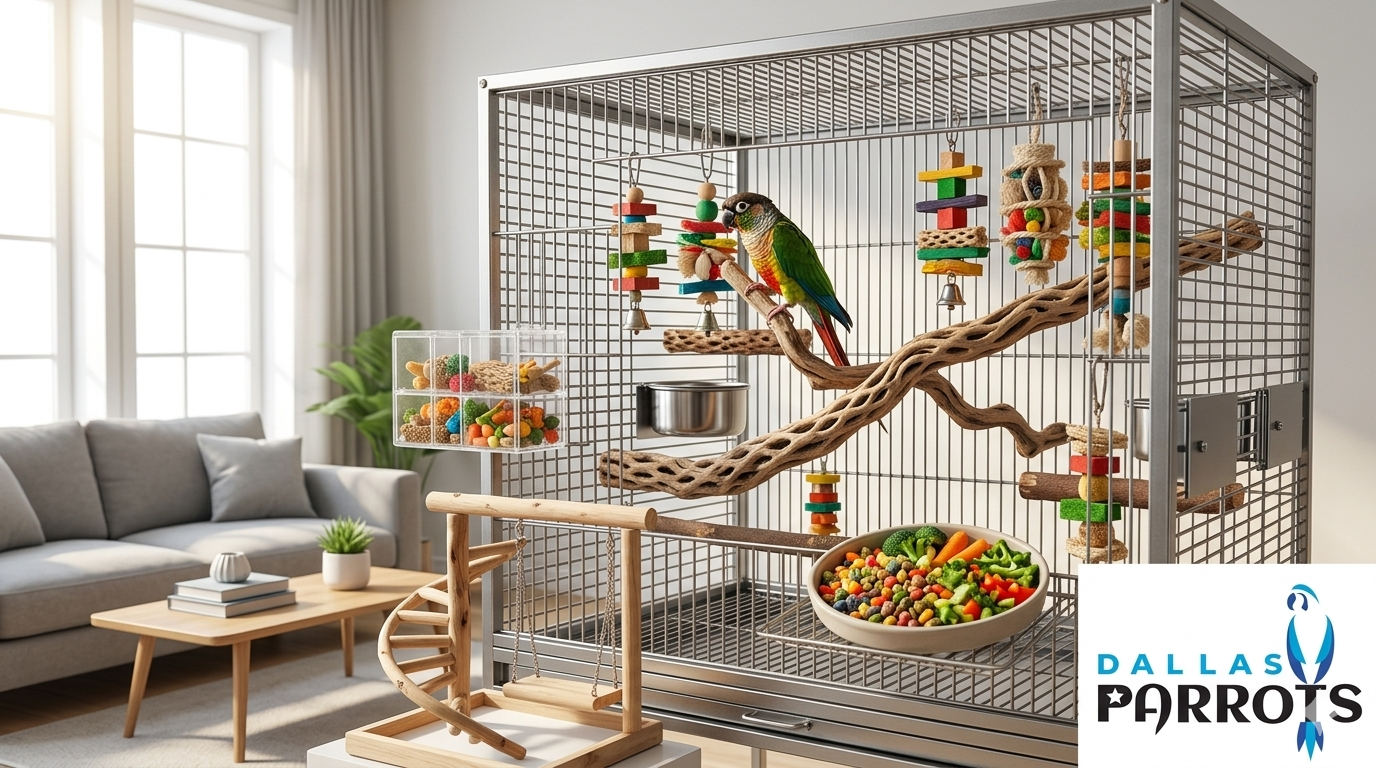
A bad cage is the root of so many problems. Feather plucking. Biting. Screaming. Most of it comes back to the bird not having enough space or stimulation. For one bird the minimum cage size is 24 inches wide by 24 inches deep by 30 inches tall. Bigger is better. Bar spacing should sit at half an inch up to five eighths so they can’t slip a head through. The enclosure should have a removable metal grate at the bottom of the cage so droppings collect underneath and the bird stays clean.Inside the cage you want a perch setup that gives them options. Different diameters. Different textures. Natural wood branches let them exercise their feet and keep nails worn down. Avoid sandpaper perches because they wear down the skin instead. Toys matter just as much as the cage itself. A cage with toys arranged for foraging and chewing keeps the bird busy. Stick to a variety of toys and rotate them weekly so nothing gets boring. Foraging puzzles where they have to work for treats are gold for mental stimulation.
You also want stainless steel water and food bowls because plastic harbors bacteria over time. A separate feeding station outside the cage is great for training meals too. For a wider look at choosing the right setup our parrot cages article covers what to look for across species.
Green Cheek Conure Diet and Conure Food Guide
This is where I see the most owner mistakes. People grab a bag of seed mixes from the pet store and call the diet handled. That kind of seed diet leads straight to malnutrition and a shorter life.A real conure food guide looks like this. Pellet should make up about 60 to 70 percent of daily intake. The rest comes from fresh fruit and vegetables with the occasional seed or nut as a treat.Here’s a daily breakdown that works for green cheek conure diet planning.
| Food group | Daily amount | Examples |
|---|---|---|
| Pellet base | 1 to 2 tablespoons | High quality formulated pellet |
| Fresh vegetables | 1 tablespoon | Kale spinach bell peppers carrot broccoli |
| Fruit | 1 teaspoon | Apple berries papaya mango |
| Cooked grains | 1 teaspoon a few times a week | Quinoa brown rice |
| Seeds and nuts | Small pinch 2 to 3 times a week | Sunflower seeds almonds |
Foods to never offer include avocado chocolate caffeine onion garlic and anything heavily salted or sugared. Avocado especially can kill a small bird within hours.Conures benefit from variety so don’t feed the same vegetables every day. Mix it up. Sweet potato cooked and cooled is a favorite. So is corn on the cob in small chunks.You also want them getting some direct sunlight when possible because it helps with vitamin D and calcium absorption. If your bird lives indoors most of the time consider a full spectrum bird-safe lamp.For more on what to feed across parrot species check our parrot food guide.
Daily Routine for a Healthy Conure
Here’s what a solid day looks like for one conure in a typical home.
- Morning means cleaning food and water bowls and serving fresh food along with pellets
- Mid morning is one to two hours of time outside the cage on a play stand or shoulder
- Afternoon brings a short training session of five to ten minutes plus foraging time
- Evening is family bonding and a small snack
- Night means covering the cage and giving the bird 10 to 12 hours of dark uninterrupted sleep
You should clean the cage daily by swapping out the paper liner and wiping down the grate. A deeper clean with a bird-safe cleaning agent should happen weekly. Skip anything with bleach or strong chemicals because the fumes are dangerous.Time out of the cage is non negotiable for these birds. They need it for exercise and bonding. Always supervise though because curious conures get into everything from electrical cords to houseplants. If you want them outside in an escape-proof cage or harness for fresh air even better.
Green Cheek Conure Biting and Behavior
Let’s talk about the part that scares new owners. Green cheek conure biting is a real thing and it usually has a clear cause.Young birds bite because they’re exploring with their beak. Hormonal birds bite because their bodies are confusing them. Scared birds bite because they feel cornered. Territorial birds bite when you reach into their cage too fast.The fix isn’t punishment because that just makes things worse. The fix is reading body language and responding before the bite happens. Watch for flared tail feathers a stiff posture or rapid eye pinning. Those are warning signs.When a bite does happen don’t pull away dramatically and don’t yell. Both reactions teach the bird that biting gets attention. Stay calm put the bird back on its perch and walk away for a minute. They learn fast.Time and patience are what build a tame bird. So is consistent positive training. They’re easy to train when you reward what you want and ignore what you don’t.If you want a deeper look at this our article on how to train a green cheek conure not to bite goes into more detail.
Veterinary Care and Health
Find a real avian vet before you bring the bird home. Not your regular dog and cat veterinarian. An actual avian veterinarian who handles parrots regularly. This matters because birds hide illness as a survival instinct and by the time you spot something wrong things are usually serious.An annual veterinary exam should be the baseline. Your vet checks weight feather condition beak and feet droppings and bloodwork. Catching issues like calcium deficiency or early infections early saves the bird’s life.Keep an eye out for these warning signs at home. Fluffed feathers for hours. Sitting on the bottom of the cage. Loss of appetite. Discharge from the nose or eyes. Strange droppings that last more than a day. Tail bobbing while breathing.Feather plucking is one of the trickiest issues to deal with. Sometimes it’s medical like mites or skin infections. Sometimes it’s behavioral from boredom or stress. A good avian veterinarian can help figure out which one you’re dealing with and the proper care to follow.
Conure Care for Beginners
If this is your first bird here’s what most newcomers get wrong with conure care for beginners.People feed only seed mixes which leads to nutritional gaps. They buy a cage that’s too small thinking the bird won’t notice. They skip the first vet visit. They keep the bird isolated in a back room. They use Teflon cookware in the kitchen which releases fumes that kill parrots within minutes.That last one is huge. Anything with nonstick coating overheating in your kitchen can kill a parrot before you even smell smoke. Switch to stainless steel or cast iron if you’ve got a bird in the house.Another beginner mistake is rushing the bond. Some birds are likely to bond fast and others need weeks. Don’t force handling. Let the bird come to you. Once they eat from your hand and step up willingly you’ve earned the trust.
Pro Tips From Dallas Parrots
A few things we’ve picked up over years of raising and placing these birds.
- Mist bathe two to three times a week for healthy feathers and skin
- Schedule the first avian vet exam within 30 days of bringing the bird home
- Give the bird at least one new toy or foraging puzzle each week
- Cover the cage at the same time every night so sleep stays consistent
- Talk to the bird through the day even when you’re not handling them
Small habits add up. The birds we hear back about years later from happy owners almost always have these basics dialed in.
Green Cheek Conure Price
People always ask about cost up front and that makes sense. Here’s how green cheek conure price tends to break down.
| Bird type | Typical price |
|---|---|
| Standard green cheek hand fed | 300 to 500 dollars |
| Yellowsided green cheek | 400 to 600 dollars |
| Pineapple mutation | 500 to 800 dollars |
| Turquoise mutation | 600 to 1000 dollars |
| Adult rehome through rescue | 150 to 300 dollars |
The bird itself is just the starting cost. Cage food vet visits and toys easily add another 800 to 1200 dollars in the first year. Budget honestly and the rest of the experience goes way smoother. For more on price details check our pages on the yellowsided green cheek and turquoise green cheek conure.
Why Choose Dallas Parrots
We’re not the biggest breeder out there and that’s by design. We focus on doing right by every bird we raise. That means hand feeding socializing and weaning before any chick goes home.Every bird leaves us on a real pellet diet with fresh food experience. We don’t rush placements. We don’t ship unweaned babies to first time owners. And we stay in touch after the sale for diet questions training help or vet referrals.You can browse what we currently have on our green cheek conure page or look at the broader types of conures we work with.
Benefits of Going With Dallas Parrots
A few things that set our birds apart from pet store options.
- Hand fed and fully weaned before placement so the transition is calm
- Avian vet health checked before they leave us
- Started on quality pellet and fresh food rotation
- Care notes and a conure care sheet go home with every bird
- Lifetime support if you have questions years down the road
We also help connect new owners with avian veterinary specialists in their region because finding a good vet is half the battle.
Real Owner Stories
A young couple in Houston took home a pineapple from us last year. Neither had owned a parrot before and they were nervous about biting. Six months later their bird steps up to both of them happily and rides on the boyfriend’s shoulder while he cooks. They send us videos every few weeks.Another customer adopted a yellowsided green cheek after losing an older bird. She told us this little one helped her through grief in a way she didn’t expect. The bird now greets her with a soft chirp every morning and waits by the food bowl for breakfast.One more story worth sharing. A retired teacher took home a standard green that had been returned by another family because of biting issues. With time and patience and consistent training the bird is now a calm tame companion who hasn’t bitten in over a year. These stories are what keep us doing this work.