How to Train Green Cheek Conure Not to Bite Step by Step Positive Reinforcement Guide
How to Train Green Cheek Conure Not to Bite is something many owners search for when their green cheek conure or pineapple green cheek conure starts biting hands fingers or even ears. Biting can turn fun moments into painful ones but the good news is most conures can learn to stop biting or at least keep it very gentle with the right approach. This guide shows you simple clear steps using positive reinforcement parrot methods like green cheek conure clicker training parrot target training treat training conure and conure step up command. You will also learn green cheek conure recall training green cheek conure shoulder training and ways to fix aggressive conure behavior.
How to Train Green Cheek Conure Not to Bite Your Playful Lifelong Companion Awaits at Dallas
How to Train Green Cheek Conure Not to Bite (Complete Guide)
Many people who own a green cheek conure face the same issue. Their bird starts biting and they want to know how to train green cheek conure not to bite. This happens a lot with pineapple green cheek conure too. The good news is you can stop conure biting fast with the right steps. Use positive reinforcement parrot methods like green cheek conure clicker training and parrot target training. Teach the conure step up command and work on green cheek conure recall training. Add treat training conure to make things easier. Watch conure behavior training videos for ideas. Focus on positive non biting actions. Build trust so the bird does not feel inclined to bite. With time and patience most birds learn to stay gentle. This makes a better experience for everyone and keeps hands safe.
Why Green Cheek Conures Bite
Green cheek birds bite for clear reasons. They use their beak to explore touch and communicate. Sometimes birds bite because they feel scared or cornered. Other times it comes from excitement or wanting attention. A nippy bird might lunge or chomp when overstimulated. Attention seeking behavior shows up if the bird gets a big reaction to every bite. Fear makes them defensive especially when someone puts hands inside the cage too fast. Hormones play a part too and some birds become more inclined to bite during certain times. They might want to bite to say back off or I need space. Watch body language closely. Fluffed feathers pinned eyes or a raised foot signal trouble. Learn these signs so you can interrupt the behavior before actual biting happens. Avian experts say most biting starts from fear or poor handling not meanness.
Is Biting Normal Behavior
Yes some biting is normal for conures. Young birds test everything with their beak just like puppies chew. They preen gently or give light nips during play. Conures would explore your finger or ear this way. Doesn’t bite hard at first but learns bite pressure training from your reaction. A soft nip is part of how they interact. Don’t bite hard becomes the goal. Many owners deal with nippy phases especially when the bird is young or excited. Positive reinforcement helps shape it early. Gentle scritches or scritch sessions build trust so the bird stays calm. It is common but not something to ignore. With training tips and consistency the bird learns softer ways to interact without biting.
When Biting Becomes a Serious Problem
Biting turns serious when it draws blood or happens often. If the bird starts biting hard every time you put my hand near or approach his cage it needs attention. Lunge at hands chomp during step up onto your finger or refuse to step up command show a real biting problem. Aggression inside the cage or when you try putting him back in his cage means something is wrong. Fix aggressive conure behavior fast before it gets worse. Time out in a quiet spot can help but use it carefully. Putting hands in wrong ways or sudden moves make it worse. Cage time alone does not fix it. Lot of training with treat training conure clicker training and target training works better. If it stays bad see an avian vet or bird behaviorist. Proactively teach positive reinforcement so the bird feels safe. This stops the cycle and gives you both a calmer life around each other.
Common Reasons Behind Green Cheek Conure Biting
Green cheek conure owners notice biting more often than they expect. The bird might give a quick nip or even a hard chomp that hurts. Most times birds bite because something feels wrong to them. They do not bite just to be mean. Watch body language closely to spot early signs. Pinned eyes fluffed feathers or a raised foot often mean the parrot wants space. Learn these clues so you can step in before the beak comes out. Positive reinforcement helps change the pattern over time. Training tips focus on calm handling and trust building. This makes the bird less likely to lunge or bite in the first place. Many owners share stories on parrot forum about the same issues. With steady work the biting problem gets much better.
Fear and Lack of Trust
Fear causes a lot of biting in green cheek birds. New owners or sudden moves make the bird feel unsafe. If someone puts hands too fast inside the cage or near the cage door the conure might lunge to defend itself. Approach his cage slowly and speak softly every time. Sudden grabs or loud noises scare them. Establish trust by sitting quietly near the cage and offering treats without forcing contact. Let the bird come to you first. Time and patience turn a scared bird into one that steps up willingly. Green cheek conure recall training and conure step up command work well once trust grows. A bird that feels safe doesn’t bite as much. Try not to react strongly when a nip happens because big reactions teach the bird that biting gets attention.
Hormonal Behavior
Hormones play a big role especially during breeding seasons. Green cheek conure or pineapple green cheek conure can get moody when hormones rise. The bird might become more protective or inclined to bite. Males and females both show this. They guard their cage more fiercely or get nippy during handling. Shoulder training becomes harder because the bird wants to stay close to its favorite spot. Cage time alone does not fix it. Keep routines steady and avoid petting the back or belly too much. These spots can trigger mating behavior. Offer toys in his cage for chewing to redirect energy. Positive reinforcement parrot methods with treat training conure help calm things. Hormonal biting usually eases after the season passes but gentle handling keeps it mild.
Territorial Aggression
Conures get very attached to their space. Territorial aggression shows up when you reach into the cage or try putting him back in his cage. The bird sees the cage as its home and defends it. Inside the cage biting happens more often than outside. Way to approach matters a lot. Open the cage door slowly and let the bird step up onto your finger or a stable perch first. Do not force hands in for food and water if the bird looks tense. Move the perch outside sometimes so the bird gets used to handling away from its territory. Parrot target training teaches the bird to move where you want without feeling threatened. Green cheek conure shoulder training starts outside the cage to build good habits. Consistent steps reduce this kind of bite.
Overstimulation and Stress
Too much excitement leads to overstimulation and then biting. Playtime goes great until the bird gets wound up. Fly around the room or lots of handling can push it over the edge. The parrot might preen then suddenly nip or chomp to say enough. Putting hands near the face or head too long causes stress. Watch for signs like quick movements or heavy breathing. Give breaks and let the bird calm down. Scritches or gentle scritch on the neck work better than rough play. Bite pressure training teaches softer touches. Positive non biting moments get reinforce with treats or praise. Training and treats together help the bird learn calm ways to interact. Keep sessions short at first. This cuts down on actual biting and makes time together more fun for both of you.
Step by Step Positive Reinforcement Method
Positive reinforcement parrot training works best to teach your green cheek conure not to bite. Reward good actions and ignore or redirect bad ones. Never punish or yell because that breaks trust and makes biting worse. Use calm steady steps every day. Time and patience pay off fast. Many owners see less nippy behavior in just a few weeks. Combine treat training conure with clear signals. This builds a bird that chooses gentle ways over chomp or lunge. Start small sessions near the cage then move to hands on work. Training and treats together make the bird eager to learn positive non biting habits.
Identifying Bite Triggers
First watch what sets off the bite. Keep a simple note of when the green cheek starts biting. Does it happen when you put my hand in the cage too quick. Or after too much play. Maybe when you approach his cage without warning. Or during shoulder training attempts. Look at body language every time. Pinned eyes quick head turns or raised foot mean back off. Overstimulation from long handling or loud rooms often leads to a sudden nip. Hormonal times make some birds more defensive. Territorial aggression shows inside the cage or near favorite spots. Spot these patterns early. Once you know the triggers you can avoid them or prepare better. This stops actual biting before it happens and keeps everyone safer.
Using Rewards and Treats
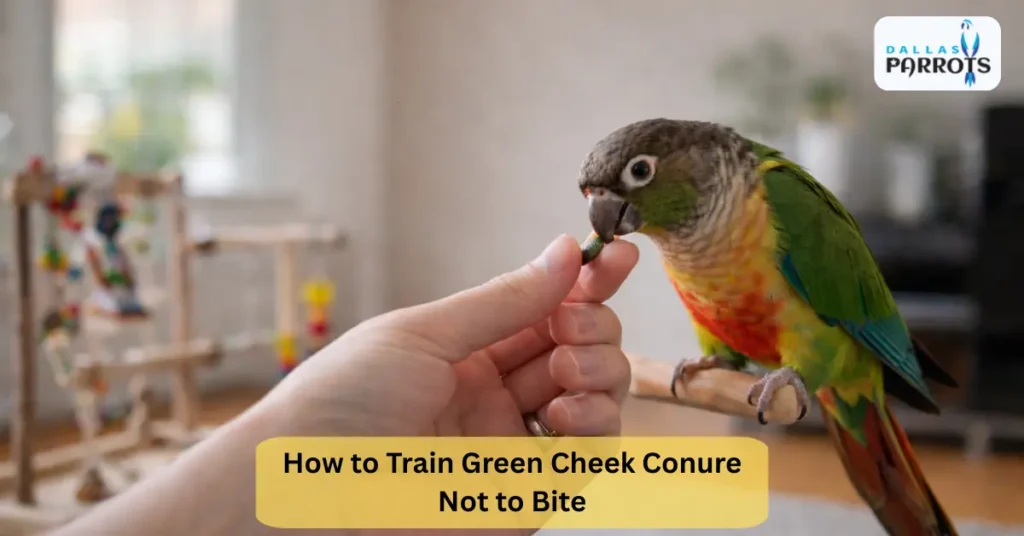
Rewards make the bird want to repeat good behavior. Find treats your conure loves like small pieces of millet nut or favorite fruit. Hold the treat in your fingers but only give it when the bird acts calm. If the bird stays gentle with its beak say good and offer the treat right away. Reinforce soft touches or no bite at all. For conure step up command hold the treat just out of reach so the bird steps up onto your finger to get it. Praise softly every success. Training and treats link calm actions to good things. Never give treats after a bite even by accident. That teaches the wrong lesson. Use hold the treat close to encourage gentle approach. Over time the bird learns that calm hands bring rewards not chomp.
Clicker Training Basics
Green cheek conure clicker training marks exact good moments. Get a simple clicker or use a consistent sound like tongue click. Click the second the bird does something right like touch your finger softly or step up without bite. Follow the click with a treat every time. The click tells the bird yes that was perfect. Practice short sessions. Start with easy things like target touch. Use parrot target training with a stick or finger. Touch the target get click and treat. This builds focus without pressure. Clicker training speeds up learning because it is clear. Soon the bird connects calm beak use to rewards. Positive reinforcement with click makes training fun for both of you.
Teaching Gentle Beak Behavior
Teach the bird to use its beak softly. During calm moments offer your hand slowly. If the bird touches gently with beak click or say good and give treat. If pressure gets too hard pull hand away quietly without drama. Wait a moment then try again. Bite pressure training means reward only light touches. Say gentle or soft as you do it. Scritches on the head work great for practice. Let the bird preen your finger lightly and reward calm. Don’t bite hard becomes clear through repetition. If the bird wants to bite redirect to a toy or stable perch. Interrupt the behavior early. Positive non biting gets all the attention. With lot of training the green cheek learns beak equals gentle fun not pain. This creates trust so the bird feels safe around hands and stops biting for good.
7 Day Training Plan to Stop Biting
Follow this simple 7 day plan to help your green cheek conure learn gentle behavior and stop conure biting fast. Each day builds on the last. Use positive reinforcement parrot methods with short calm sessions. Keep treats ready and watch body language every time. Stay patient because time and patience make the biggest difference. If the bird starts biting pull back quietly and try again later. This plan uses treat training conure green cheek conure clicker training and parrot target training to teach positive non biting actions. By the end your green cheek should feel safe around hands and don’t bite hard anymore.
Day 1 – Observation and Bonding
Spend the first day just watching and being near the bird. Sit quietly close to the cage without putting hands inside. Talk softly and offer treats through the bars. Notice what makes the bird calm or tense. Look for body language signs like relaxed feathers or curious head tilts. Let the conure come to the front on its own. This starts to establish trust without pressure. No handling yet. Goal is to make you feel safe and normal to the bird. End the day with the bird eating treats near you happily.
Day 2 – Hand Familiarization
On day two introduce your hand slowly. Hold a treat outside the cage near the cage door. Let the bird approach and take it gently. If it stays calm click or say good and give more. Move your hand a little closer each time but pull away if the bird looks tense or opens its beak to chomp. Reward only when the bird touches your finger softly or ignores it completely. Try not to react to light nips. This teaches the bird that hands bring good things not danger. Keep sessions short five to ten minutes twice a day.
Day 3 – Target Training
Start parrot target training with a stick chopstick or finger as target. Hold the target near the bird and when it touches with beak click and give treat right away. Practice this inside the cage first. Move the target around slowly so the bird follows. Reward every touch. This builds focus and shows the bird how to use its beak gently without pressure. Positive reinforcement here teaches control. If the bird lunge or gets nippy stop and go back to day two steps. End when the bird reliably touches the target for treats.
Day 4 – Step Up Training
Teach the conure step up command now. Hold your finger or stable perch at chest level outside the cage. Say step up hold a treat just above so the bird has to step up onto your finger to reach it. Click or praise when it does and give the treat. Practice near the cage first then move farther. If the bird hesitates or tries to bite back off and try again later. Reward calm steps every time. This gives the bird a clear way to move without feeling trapped. Green cheek conure recall training ideas start here too by calling the bird to your hand for treats.
Day 5 – Reducing Fear Responses
Focus on fear triggers today. Practice slow approaches to the cage. Open the cage door gently and offer your hand with treat. If the bird lunge or shows fear pull back without drama. Reward calm looks or steps forward. Work on hand away if the bird gets overexcited. Let it fly around a safe room then call it back with treat for calm landing. Interrupt the behavior early before actual biting. Use bite pressure training by rewarding only very light touches. This day helps the bird feel less defensive around hands and people.
Day 6 – Building Trust Through Play
Make playtime fun and gentle. Offer toys in his cage or outside for chewing. Interact with toys together so the bird sees hands as part of good times. Give scritches or gentle scritch on the head if the bird accepts. Reward calm preening or playful nibbles that stay soft. Practice green cheek conure shoulder training for short moments if the bird stays relaxed. Use training and treats to reinforce quiet perching on you. If any nip happens end the session calmly. This builds a strong bond so the bird chooses gentle contact over bite.
Day 7 – Testing Bite Free Interaction
On the last day test what the bird learned. Try normal handling like put my hand in the cage for food and water or putting him back in his cage. Ask for step up and offer shoulder training or play. Watch closely for any tension. Reward every calm moment heavily. If the bird stays gentle without bite or hard chomp celebrate the progress. If a nip slips through go back to earlier days for a bit. Most birds show big improvement by now. Keep practicing daily to make without biting the new normal. Your green cheek conure now trusts hands more and you both enjoy time together safely.
What to Do During a Bite Incident
When your green cheek conure bites or starts biting stay calm right away. The goal is to stop the moment without making it worse. Quick calm reactions teach the bird that biting does not get big attention or control. Use positive reinforcement parrot ideas even in tough spots. Never yell shake the hand or hit back. Those things scare the bird more and often make nippy behavior stronger later. Handle the incident smoothly so the bird learns gentle ways win every time.
How to React Without Reinforcing Behavior
The second the beak connects pull your hand away slowly and quietly. Say ouch in a normal voice not loud or dramatic. Turn your body slightly away or walk off for a few seconds. This removes attention without big drama. Try not to react with screams or fast jerks because those reward the bite by giving strong feedback. Give the bird a short break then come back calm. Offer a treat or scritches only when the bird calms down and shows soft body language. Interrupt the behavior early next time by watching signs before the chomp happens. This keeps you safe and stops the bird from learning that bite gets results.
Mistakes to Avoid After a Bite
Do not put the bird back in the cage right after a bite as punishment. That teaches putting him back in his cage means bad things happened. Avoid staring down yelling or chasing the bird around. These make fear grow and more lunge or defensive bites later. Never ignore safety by forcing handling again too soon. Give space then restart with easy steps like target training. Skip rough discipline because conures respond better to kindness and clear rules. Do not stop all interaction for the day. Short calm sessions after help rebuild trust fast. Stay away from punishing the bird with no treats or no play. That confuses the bird and slows progress.
Staying Calm and Consistent
Keep your voice steady and your movements slow no matter what. Birds read emotions quickly so if you stay calm the green cheek usually settles faster. Stick to the same reaction every single time a nip or hard bite happens. Consistency shows the bird what works and what does not. Breathe deep count to five if you feel upset then respond. Time and patience matter here more than quick fixes. Work on positive non biting moments right after with treats and praise. Over days the bird sees calm hands bring good things not pain or fear. This builds a pattern where the bird chooses gentle touch instead of actual biting.
Signs Training Is Working
You will notice clear changes as training moves forward. The bird acts calmer around hands and people. Watch daily for these good signs. They show positive reinforcement and training tips are sinking in. Celebrate small wins because they add up fast.
Reduced Aggressive Posture
The green cheek conure stops showing tense body language like pinned eyes fluffed feathers or raised foot when you come near. No more lunge at hands or quick head turns to warn you off. The bird stays relaxed on its perch or stable perch even when you open the cage door. Less territorial aggression inside the cage means real progress. The bird might even lean toward you instead of away. This shows fear drops and trust rises.
Improved Trust and Bonding
Your parrot comes closer willingly seeks you out for scritch or play and accepts step up onto your finger without hesitation. Green cheek conure shoulder training gets easier and the bird stays calm there longer. The bird preens near you or lets you preen gently without sudden nip. Establish trust shows when the bird eats treats from your hand softly or follows you around the room. Green cheek conure recall training works better too. The bird wants to be with you more and inclined to bite much less.
Gentle Beak Use
The beak becomes a tool for soft touch instead of hard chomp. The bird preens your finger lightly or gives gentle exploratory touches without pressure. Bite pressure training pays off when nips stay very soft or stop completely. The bird uses beak to play with toys more and hands less aggressively. During handling the beak stays closed or barely brushes skin. This gentle beak behavior means the bird learned hands are safe and fun not something to bite hard. Keep rewarding these soft moments to lock in the change for good.
Contact US
If you have questions about how to train green cheek conure not to bite dealing with nippy behavior bite pressure training green cheek conure clicker training parrot target training conure step up command green cheek conure recall training green cheek conure shoulder training treat training conure or any other part of conure behavior training feel free to reach out. We can share more training tips explain positive reinforcement parrot methods help with fix aggressive conure issues or suggest ways to build trust so your bird doesn’t bite anymore.
- Address: 2608 Long Prairie Rd Suite 201 Flower Mound TX 75022
- Phone / WhatsApp: 469 706 0972
Conclusion
Training your green cheek conure not to bite takes steady work but the results make it worth every minute. Start by watching body language closely so you catch signs before a nip or chomp happens. Use positive reinforcement parrot methods every day with green cheek conure clicker training parrot target training treat training conure and clear commands like conure step up command. Build trust slowly so the bird feels safe around hands and stops inclined to bite. Keep sessions short fun and consistent.
FAQs
How to train green cheek conure not to bite is a common question because many of these birds go through nippy stages that can hurt. The key is calm consistent positive methods that teach the bird gentle ways instead of punishment. Use treat training conure green cheek conure clicker training and parrot target training to reward soft behavior. Teach conure step up command and practice green cheek conure recall training to give clear directions. Work on green cheek conure shoulder training slowly so the bird stays relaxed on you. Positive reinforcement parrot works better than scolding. Watch body language to stop bite before it happens. With time and patience and steady training tips most birds learn to stay gentle. This stops hard chomp and makes time with your parrot safe and fun again.
Your conure bites hard when it feels scared or pushed. Sudden hands in the cage or fast moves make it defend itself. Hormones during certain times turn mild birds protective. Too much play or handling leads to overstimulation and a strong chomp. Territorial aggression shows when you reach near its space. Attention seeking biting grows if every nip gets a loud reaction. The bird uses its beak to say stop or back off. Body language like pinned eyes or quick turns warns you first. Calm handling and rewards for soft touches reduce the force over time.
Green cheek conures often act bitey especially when young. They explore with their beak and give light nips during play. Pineapple green cheek conure shares this habit. Many owners find them nippy compared to other parrots. It comes from curiosity energy and testing limits. With positive reinforcement and clear training and treats most calm down. Conure behavior training videos show how others handle it. They stay playful but learn softer touches when trust builds.
Most conures have a biting phase that starts young. Babies and juveniles use their beak to check everything like kids touch objects. This peaks from six months to a couple years. Hormones add extra moodiness later. Light nips turn harder during excitement or play. The phase fades with good guidance. Early bite pressure training and rewards for gentle beak use shorten it. Positive non biting moments get praise so the bird chooses calm ways.
You can train your green cheek conure not to bite you with simple steps. Watch triggers first then avoid them when possible. Use clicker training to mark calm hand touches. Reward soft beak contact or no bite. Practice step up command slowly outside the cage. Pull away quietly from nips without big fuss. Offer scritches when the bird stays gentle. Consistent short sessions build trust fast. Your bird will learn hands mean good things not pain.
Train your green cheek conure not to bite other birds by keeping introductions slow and separate. Start with cages side by side so they see each other without contact. Reward calm looks at the other bird with treats. If lunge or bite happens separate them right away. Teach recall training to call your bird back to you. Supervised short meetings with positive reinforcement help. Some birds stay territorial so always watch closely. Patience and clear rewards teach peaceful sharing.
Training works the same for any human. Reward gentle touches on every hand that offers treats. Practice step up with different people so the bird learns all hands stay calm. Use clicker training to mark soft beak moments no matter who holds it. Stay consistent across family or friends. The bird soon sees every person brings rewards not threats. This stops biting everyone equally.
Train in a quiet familiar spot like near the cage or in a safe room. Start close to the cage where the bird feels secure. Move to open space once calm. Use a stable perch for practice. Avoid busy noisy areas at first because stress raises biting. Home works well for most steps. Pick one consistent place to help focus. Short calm sessions there bring steady progress.
You should train your green cheek conure not to bite you. Ignoring it lets hard bites become habit and can draw blood. Early work with positive reinforcement parrot prevents worse problems. It makes handling safe and strengthens your bond. Training tips like target training and rewards turn nippy birds gentle. Do not wait for it to stop alone. Steady effort gives better results and happier time together.