
So you’re thinking about getting a quaker parrot. Or maybe you already brought one home and you’re wondering if you’re doing this whole thing right. Either way this quaker parrot care guide walks through what actually matters without the fluff.Here’s the thing. Quakers aren’t like other small parrots. They’re bolder louder funnier and weirdly good at talking for their size. But they need specific care to live their best life. Plain and simple. Get the basics right and you’ll have a feathered best friend for the next 20 to 30 years.
Written by Moaz at Dallas Parrots
Hi I’m Moaz. I’ve spent over 3 years working hands-on with parrots at Dallas Parrots and quakers are some of my favorite birds in the flock. I handle daily feeding training and behavior work across a range of species of parrots. Everything in this article comes from real experience. Not copy-pasted blog posts. I’ve watched first time owners go from nervous to confident and I’ve seen what actually works for a healthy happy pet quaker parrot.
- 3+ years hands-on parrot care
- Works across multiple parrot species including quakers
- Focus on handling and well-being of pet birds
What Is a Quaker Parrot
A quaker parrot is a small green parrot from South America. You’ll also see them called the monk parakeet or quaker parakeet. Their scientific name is Myiopsitta monachus and they come from parts of Argentina Brazil Paraguay and Bolivia.They grow to around 11 inches from beak to tail and weigh between 3 and 5 ounces. That makes them a small parrot but don’t let the size fool you. These birds are very intelligent and have personalities that feel way bigger than their bodies.Quakers are the only parrot species that builds actual nests out of sticks. Most parrots nest in tree holes. Quakers weave theirs from scratch. That’s one reason they’re so fun to watch.
| Attribute | Detail |
|---|---|
| Scientific name | Myiopsitta monachus |
| Other names | Monk parakeet quaker parakeet |
| Native range | Argentina Brazil Paraguay Bolivia |
| Adult size | 11 inches |
| Weight | 3 to 5 ounces |
| Lifespan | 20 to 30 years |
Quaker Parrot Temperament and Personality
Let me tell you what the quaker parrot temperament is really like. These birds are playful and curious and bold in a way that surprises most first time owners. They act like they run the house even when they’re sitting on your shoulder.Quakers form strong bonds with their owners. And honestly one of the cool things about quakers is they tend to build strong bonds with their owners that last decades. They’ll pick a favorite person but stay friendly with the whole household when socialized young.They can be territorial around the cage especially during hormonal seasons. That’s normal. A quaker protecting its nest area is just doing what quakers do.One thing I tell new owners. These birds need real social interaction every single day. Not just 10 minutes. A quaker left alone for long hours gets bored fast and bored quakers find creative ways to tell you about it.
Quaker Parrot Talking Ability
Quaker parrots are known for talking. A lot. For such a small bird they punch way above their weight when it comes to vocabulary.Most quakers learn to speak 50 to 100 words. Some reach 200 or more. They start picking up words around 6 months old and keep learning for years. They mimic voices whistles and even phone ringtones if you let them.The truth is not every quaker talks. A few just prefer whistles and environmental sounds. So if talking is your only reason for getting a quaker talk to your breeder about the bird’s early habits before you buy.
Quaker Parrot Lifespan
The quaker parrot lifespan runs 20 to 30 years with proper care and attention. In the wild they average around 15 years. In a home with a good diet steady routine and regular veterinary checkups they often hit the upper end of that range.That’s a long commitment. Way longer than a dog or cat.
| Factor | Impact on lifespan |
|---|---|
| Balanced diet | Adds 5 to 10 years |
| Regular avian vet visits | Adds 3 to 5 years |
| Proper cage size | Adds 2 to 4 years |
| Daily mental stimulation | Adds 2 to 3 years |
| Seed-only diet | Cuts 5 to 10 years |
Cage Size and Setup
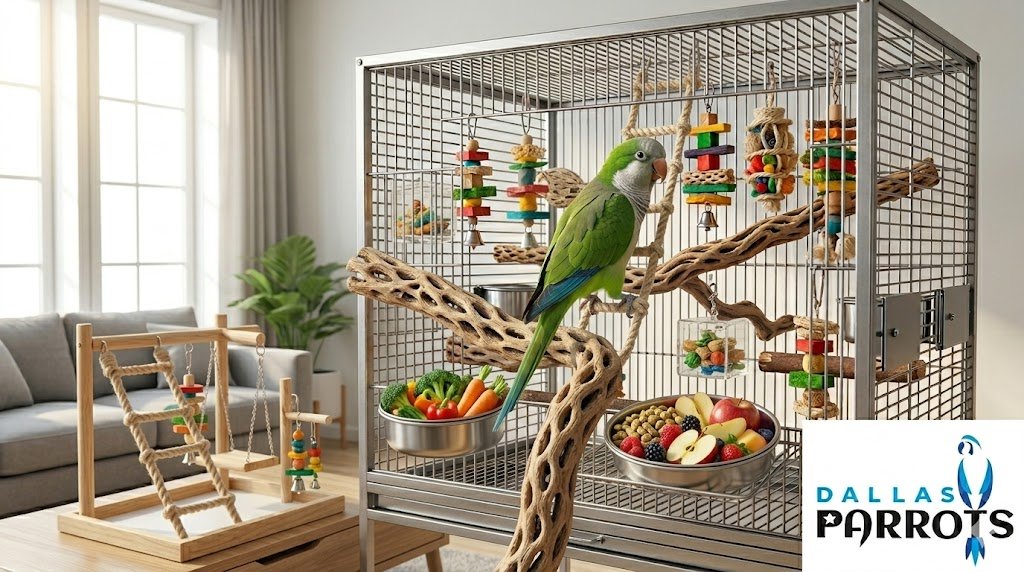
Here’s where people go wrong. They pick a bird cage that looks nice in the living room instead of one that actually fits the bird. Quaker parrot cage size matters more than almost anything else in this whole article.Minimum cage size for one bird is 20 by 20 by 24 inches. That’s the floor not the goal. Get the biggest cage you can afford because quakers need room to fully extend their wings climb and move around. Bar spacing should sit between half an inch and five eighths of an inch.Inside the cage you want a few perches at different heights and made from safe natural wood with varied thickness. That helps the bird exercise its feet. Add a variety of toys including chew items foraging puzzles and shreddable stuff so the bird stays busy.You’ll also want stainless steel food and water bowls because plastic holds onto bacteria over time. Keep the cage away from direct sunlight and drafts from windows and doors because quakers are sensitive to temperature extremes. For more on setup our quaker parrot cage requirements article has the full breakdown.Quakers are sensitive to temperature so room temp between 65 and 80 degrees works best. Not next to the AC vent. Not right by a heater either.
Daily Care Routine
Quakers do best with a predictable daily rhythm. Here’s what a solid day looks like for one quaker in a regular household.
- Morning means fresh water and food and a quick hello to start the day
- Mid morning brings 1 to 2 hours of time outside of their cage on a play stand
- Afternoon is a 10 minute training session plus foraging toys for independent play
- Evening means family bonding time and a light snack of fresh food
- Night covers the cage with 10 to 12 hours of dark uninterrupted sleep
When you let your bird out supervise closely. Quakers are curious and will chew cords houseplants or anything shiny. Allow your quaker parrot plenty of safe time for your quaker to explore but keep an eye out. Take your quaker back to the cage for rest breaks too because they need downtime.
Mental Stimulation and Enrichment
A quaker without mental stimulation is a quaker heading for trouble. These birds need puzzles new experiences and reasons to think every day.Rotate puzzle toys weekly so nothing gets stale. Hide treats in foraging toys so they have to work for food which mirrors what they’d do in the wild. Teach a new word or trick every couple weeks. Play music or leave a radio on when you’re out. Small changes keep their brain busy.A quaker parrot that gets to forage daily and play with a variety of toys stays mentally sharp for decades. That’s the part most people miss.
Common Health Problems in Quaker Parrots
Quakers run into a few common health issues that every bird owner should know about. Most of them trace back to diet stress or missed vet visits.The big ones include fatty liver disease from high-fat foods feather plucking from boredom or stress respiratory infections from drafts and a condition called quaker mutilation syndrome where the bird self-harms during hormonal or stressful periods. Catching any of these early makes a huge difference.Find a real avian veterinarian before you ever need one. Not a dog or cat vet. An avian vet who works with parrots regularly. Annual veterinary exams catch problems early when they’re still fixable.Watch for these warning signs at home. Fluffed feathers for hours.
Sitting on the cage floor. Loss of appetite. Weird dropping patterns lasting more than a day. Tail bobbing when breathing. Any of these means call your vet.Weigh your bird weekly on a small kitchen scale. Sudden weight loss is often the first sign of trouble and birds hide illness until they can’t anymore. For more on health issues across species read our post on common parrot health problems.Direct sunlight for short periods helps with vitamin D but full day exposure through a window can overheat the bird because glass traps heat. A few minutes of filtered direct sunlight from an open window is fine. Hours of it isn’t.Wing clipping is a personal choice. Some owners do it to prevent escape through open windows and doors. Others let the bird stay flighted for exercise. Talk to your avian vet about what fits your setup.
Legality of Quaker Parrots in the USA
Before you buy a quaker check your state. Monk parakeets are illegal or restricted in 10 US states because escaped birds have formed wild colonies that damage crops and power lines.
| Status | States |
|---|---|
| Illegal | California Connecticut Georgia Hawaii Kansas Kentucky Pennsylvania Tennessee Wyoming |
| Permit required | Maine New Jersey Ohio Virginia |
| Legal | Texas Florida New York and most other states |
Always verify current state laws before buying because regulations update from time to time.
Quaker Parrot Price in USA
Quaker parrot price USA ranges from 250 to 750 dollars depending on color mutation age and breeder reputation. Standard green quakers cost the least. Blue quaker parrot price runs higher because the mutation is rarer.
| Type | Price range |
|---|---|
| Standard green quaker | 250 to 450 dollars |
| Blue quaker parrot | 450 to 750 dollars |
| Cinnamon quaker | 500 to 800 dollars |
| Pallid quaker | 600 to 900 dollars |
| Albino quaker | 800 to 1200 dollars |
| Adult rehome | 100 to 300 dollars |
The bird itself is just the start. First year costs for cage food toys and vet visits add another 800 to 1500 dollars. Budget for that upfront and the whole experience goes smoother. If you want to buy quaker parrot options or see current blue quaker parrot availability check our pages.
Quaker Parrot Food and Diet
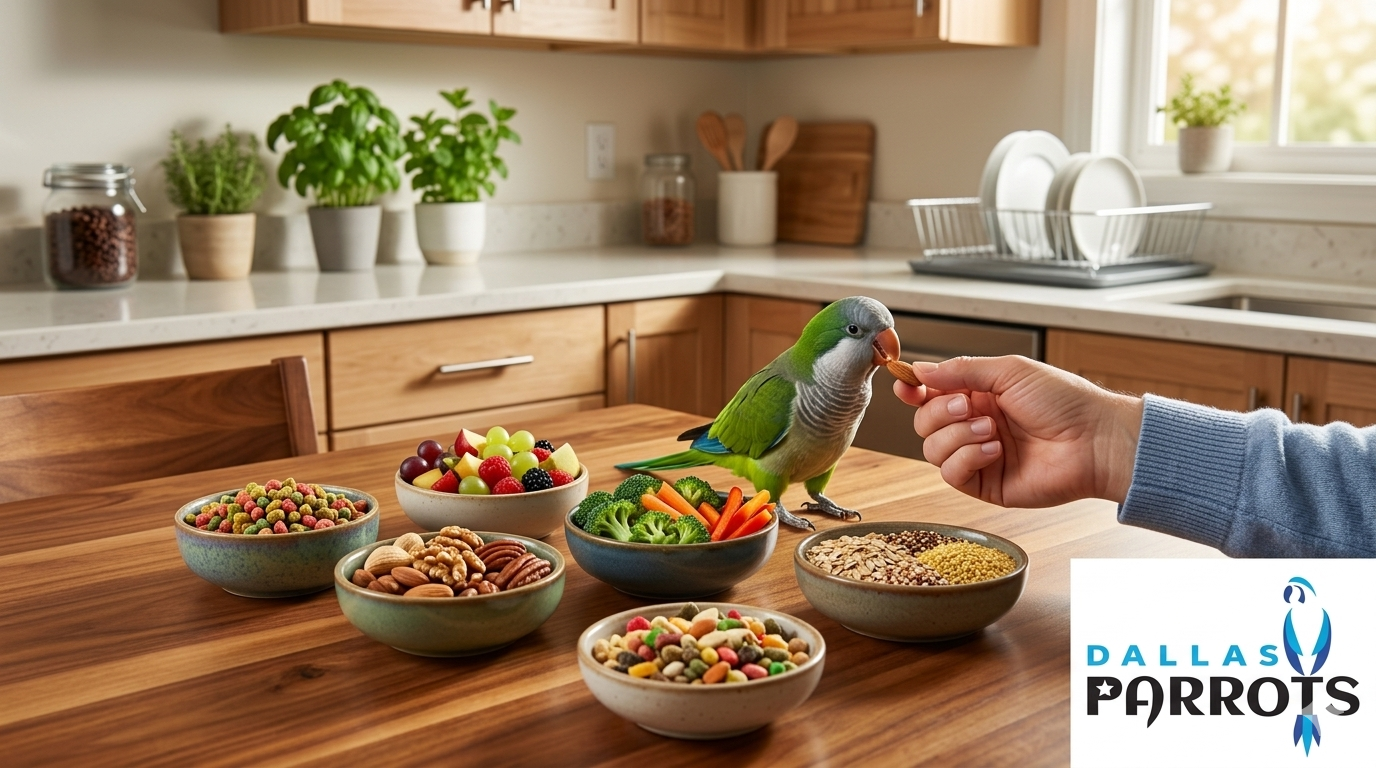
Diet is where I see the most owner mistakes. People grab a seed bag and call it done. That kind of high-fat foods approach leads straight to obesity and fatty liver disease which quakers are already prone to obesity with.A proper diet for your quaker parrot looks like this. Pellet makes up about 60 to 70 percent of daily food. The rest comes from fresh fruits and vegetables with the occasional seed or nut as a treat. Quaker parrot food should be varied because quakers get bored eating the same thing every day.Here’s a daily feeding plan that works.
| Food group | Daily amount | Examples |
|---|---|---|
| Pellet | 2 to 3 tablespoons | Harrison’s Zupreem or Roudybush |
| Fresh vegetables | 2 tablespoons | Kale broccoli bell peppers carrot |
| Fresh fruit | 1 tablespoon | Apple berries papaya |
| Cooked grains | 1 teaspoon few times a week | Quinoa brown rice |
| Seeds and nuts | Small pinch twice a week | Almonds walnuts sunflower |
Give them a variety of fruits and a variety of fresh fruits rotated through the week so they get different nutrients. Things you should avoid feeding include avocado chocolate caffeine onion and garlic. Avocado is especially toxic to birds and can kill a small parrot within hours.Wash food and water bowls daily to prevent bacterial growth. I rinse mine in hot water every morning before refilling. Fresh water goes in twice a day minimum. If any fresh food starts to look old toss it. For more on parrot nutrition generally check our parrot food guide.
Common Mistakes New Owners Make
A few patterns show up over and over.
- Feeding only seeds which leads to obesity and fatty liver disease
- Buying a cage that’s too small for a bird this active
- Skipping the first avian vet visit
- Using Teflon or nonstick cookware nearby which releases fumes that kill parrots fast
- Ignoring hormonal nest building behavior that fuels territorial biting
- Leaving the bird alone all day with no social interaction or toys
The nonstick pan thing is huge. Most new owners don’t know. A single overheated pan can kill a bird before you smell anything. Switch to stainless steel or cast iron when you have parrots in the house.
Pro Tips From Dallas Parrots
Small habits that make a big difference over the years of owning a quaker.
- Mist bathe your bird two to three times a week for healthy feathers
- Schedule the first avian vet exam within 30 days of bringing your quaker home
- Offer a new toy or puzzle weekly to keep things fresh
- Cover the cage at the same time every evening so sleep stays consistent
- Talk to your bird throughout the day even when you’re not handling them
For more training help our article on how to train a parrot is a good starting point.
Why Choose Dallas Parrots
We’re not the biggest breeder out there and that’s by design. We focus on doing right by every bird we raise and place.
- Hand fed and fully weaned before placement
- Avian vet health checked before they leave us
- Socialized chicks ready for family life
- Transparent pricing and clear communication
- Lifetime care support
- Verified breeder track record with quakers
Getting a quaker from a trusted source matters because early care shapes the bird’s whole life. We don’t ship unweaned chicks. We don’t rush placements. And we stay available after the sale.
Benefits of Working With Us
- Care sheet and diet notes go home with every bird
- Transition support for the first two weeks
- Avian vet referrals nationwide
- 30 day health guarantee
- Access to rare mutations like blue quaker parrot
- Ongoing training consults when you need them
Check our current quaker parrots for sale near me page for availability.
Real Owner Stories
Our blue quaker Pixel learned over 40 words in 8 months. Dallas Parrots walked us through every step of setup diet and training. Couldn’t ask for better support. Sarah M. Austin Texas
First time bird owner here. Their care sheet made setup painless and the team answered every dumb question I had. Loki is thriving. James T. Phoenix Arizona
Adopted an adult rehome quaker from them after losing my older bird. Their team helped me work through some behavior issues in the first few months. She’s my best friend now. Rachel K. Denver Colorado
Stories like these are why we keep doing this work.