Introduction
So you have decided you want a hand fed African grey and honestly, it is one of the best decisions a serious bird owner can make. This bird is widely considered the most intelligent companion parrot in the world. With a vocabulary exceeding 1,000 words and the emotional complexity of a five-year-old child, it is genuinely unlike anything else in the pet world. However, owning one is a serious commitment stretching across 45 to 60 years in captivity. Furthermore, not every buyer fully understands what daily life actually looks like before bringing one home. Therefore, this guide covers everything honestly including personality, talking ability, diet, and care so you walk in fully prepared and completely confident from the very first day.
What Makes This Bird So Special
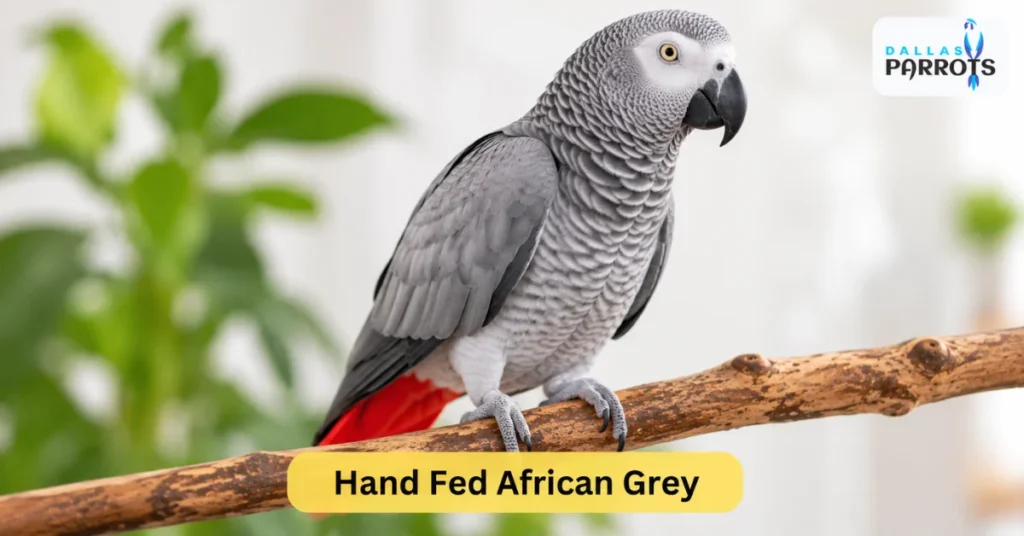
The hand fed African grey (Psittacus erithacus) is native to the rainforests of West and Central Africa. There are two subspecies every buyer should know about. The congo african grey is larger at about 13 inches long with a bright red tail and silver-grey plumage. The timneh african grey is smaller, darker, and widely reported to begin talking earlier in life. Furthermore, both subspecies are famous for their extraordinary african grey talking ability and are capable of learning complex vocabulary and understanding context during conversations. Additionally, demand for the african grey parrot for sale market grew by 18 percent in North America in 2026 alone. Consequently, their combination of intelligence, emotional depth, and talking ability makes them the most sought-after companion parrot available anywhere in the world today.
Hand Fed African Grey vs Parent Raised
This is the most important distinction every buyer must understand before spending anything. A hand fed African grey is raised entirely by humans from two to three weeks old. Every feeding and every handling session involves direct human contact during the most critical developmental window of their lives. Furthermore, this early bonding shapes the bird’s entire perception of people for life. It sees you as family from the very first day in your home. Additionally, parent-raised birds can become tame with patient consistent effort but it takes significantly longer and requires much more experience to achieve. Moreover, hand fed birds adjust to new homes faster and display far less stress-related behavior during the transition period. Consequently, for most buyers especially those without years of large parrot experience, this starting point is the only sensible choice for a bond this significant and long-lasting.
African Grey Talking Ability What to Realistically Expect
The african grey talking ability is the single biggest reason most buyers fall in love with this species first. A well-socialized bird can develop a vocabulary exceeding 1,000 words with consistent daily training and interaction. Furthermore, they do not just repeat words mechanically. They use them contextually and many owners report their grey asking for specific foods, greeting family members by name, and commenting on household events accurately. Additionally, the congo african grey typically develops a larger vocabulary than the timneh african grey over time. Moreover, most birds begin showing real vocabulary between 12 and 18 months of age naturally. Short daily training sessions of ten to fifteen minutes produce the best results consistently over time. Consequently, patience and daily voice interaction from day one are the two most important factors in unlocking this bird’s full talking potential throughout its remarkable long life with you.
Best Diet for Your Bird
African greys are vulnerable to both calcium and vitamin A deficiencies as well as obesity. This makes diet one of the most critical daily responsibilities from day one of ownership. Start with high-quality fortified pellets making up 60 to 70 percent of their daily food intake. Pellets deliver balanced nutrition that seeds simply cannot match on their own. In addition, offer fresh vegetables daily including leafy greens, carrots, broccoli, sweet potato, and bell peppers. Offer fruits like pomegranate, mango, apple, and berries in moderate daily portions. Furthermore, calcium-rich foods like kale, almonds, and broccoli are especially important for this species specifically. Additionally, never feed avocado, chocolate, onion, or caffeine as all are toxic to these birds without exception. Remove uneaten fresh food within a few hours daily to maintain hygiene inside the cage at all times.
Cage Setup and Daily Enrichment
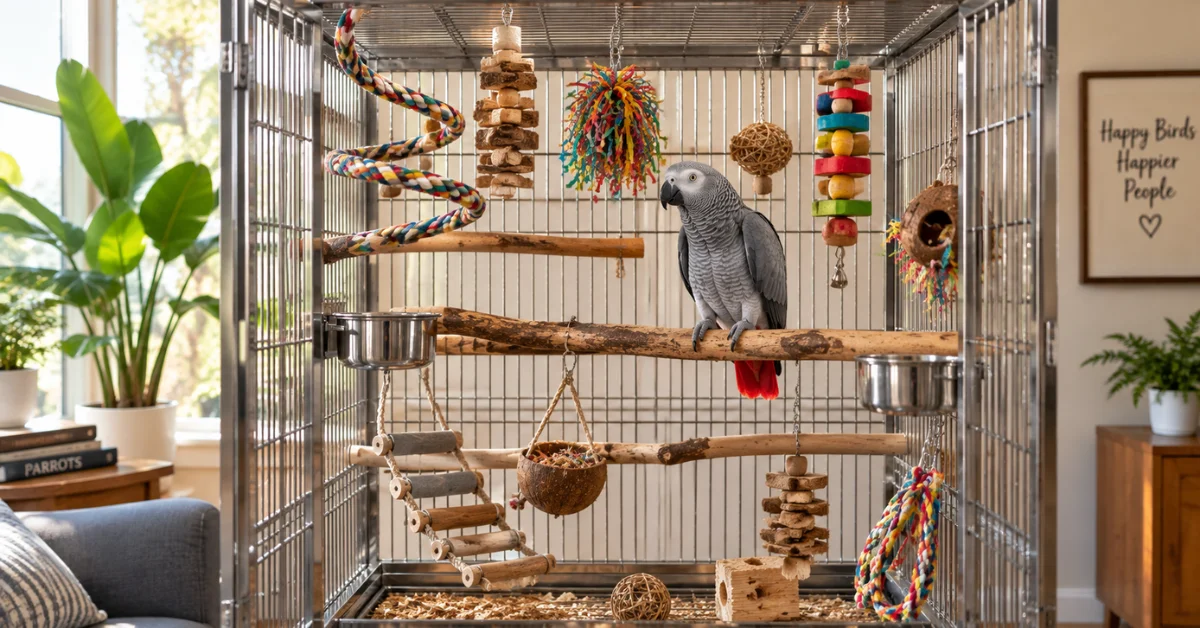
Setting up the right environment is one of the most important investments you will make as an owner from day one. The minimum recommended cage size is 36 x 36 x 60 inches with powder-free stainless steel horizontal bars for climbing. Larger is always the better choice for a bird of this level of intelligence. Furthermore, the cage must contain multiple perches at different heights, foraging toys, puzzle feeders, and shreddable items that change regularly throughout the week. African greys form deep bonds with their owners and have a strong need for consistent daily routine in their lives. Therefore, a predictable schedule for feeding, playtime, and sleep is absolutely essential for their emotional wellbeing every single day. Moreover, out-of-cage interaction of at least two to three hours daily in a bird-proofed space is non-negotiable for a bird of this emotional complexity and intelligence.
Common Health Issues to Watch For
African greys are generally robust birds but several health concerns demand every owner’s proactive awareness throughout ownership. Calcium deficiency is the most common nutritional problem and is almost always caused by seed-heavy diets without adequate fresh food supplementation. Feather plucking develops when this bird experiences boredom, loneliness, or routine disruption over extended periods of time. Psittacine Beak and Feather Disease is a serious viral condition that weakens the immune system and damages feather growth permanently over time. Furthermore, respiratory infections develop from poor ventilation, damp environments, or household chemical exposure inside the home. Additionally, Proventricular Dilatation Disease affects African greys and requires immediate avian vet attention when detected early. Therefore, annual avian vet checkups and daily health monitoring of droppings, feather condition, and eating habits are non-negotiable parts of responsible ownership throughout the bird’s entire long life.
Is a Hand Fed African Grey Right for You
Before you commit, this question deserves the most honest answer you can give yourself. A hand fed African grey is not a beginner bird at all. These birds are emotionally sensitive and pick up on household stress remarkably quickly. Furthermore, their 45 to 60 year lifespan outlasts careers, children growing up, and multiple living situations. Additionally, they need an owner who is home frequently every single day. A bird left alone for most of the day develops serious behavioral problems over time. Moreover, the financial investment in cage, food, enrichment, and annual vet care adds up significantly every year. Consequently, for the right owner who is patient and genuinely passionate about intelligent birds, this companion delivers a depth of connection unlike anything else available today.
Contact Us
Thinking about bringing home a hand fed African grey? This decision deserves the right guidance from people who truly know these birds. At Dallas Parrots, every african grey parrot for sale is hand raised from infancy, socialized daily, and prepared to form a bond with your family that could last decades together.
We take this seriously because these birds deserve nothing less than the best possible start. Our team is passionate, knowledgeable, and always ready to answer every question honestly before you commit to anything at all.
Conclusion
The hand fed African grey is one of the most extraordinary living companions any person can share their life with over decades. Their african grey talking ability, emotional intelligence, and deep loyalty create a bond most pet owners never experience in a lifetime of keeping animals. They deserve an owner who fully understands the commitment including daily interaction, a balanced diet, a large enriching environment, consistent routine, and regular vet care across decades of shared life together. A bird from a reputable source steps into your home already trusting humans and ready to learn and bond from the very first week. At Dallas Parrots, every african grey parrot for sale is hand raised with love, expertise, and genuine daily care from infancy. Reach out today to check current availability and start your journey toward meeting your perfect bird right here.