
So you’re thinking about bringing home a cockatiel. Or you just got one and the blank stare from the cage is making you second-guess everything. Either way this cockatiel care guide walks you through what actually matters without the fluff. Plain and simple. Cockatiels are the second most popular pet bird in the USA for good reason.They’re gentle affectionate and pretty easy to care for once you know the basics. But there’s still a lot of bad advice floating around online. Here’s the thing. Everything you need to know about your pet cockatiel comes down to a few solid pillars. Diet. Cage. Toys. Daily interaction. Vet care. Get those right and you’ll have a feathered friend for 15 to 25 years.
Written by Moaz at Dallas Parrots
Hi I’m Moaz. I’ve spent 3+ years at Dallas Parrots working hands-on with cockatiels and other small parrots. That includes daily feeding training bathing and helping new bird owners settle their birds in for the first week. Everything in this cockatiel care sheet comes from real time with real birds. Not blog posts copied from other blog posts.
- 3+ years hands-on parrot care at Dallas Parrots
- Works daily with cockatiels and other pet parrot species
- Partners with avian veterinarians for health screening
Cockatiel Overview
A cockatiel is a small crested parrot. Scientific name Nymphicus hollandicus. They’re native to Australia specifically the dry inland regions and they’re actually members of the cockatoo family which surprises a lot of first time bird owners. Cockatiels grow to 12 or 13 inches from beak to tail and weigh around 2 to 4 ounces. Their lifespan runs 15 to 25 years in captivity with proper care. The oldest recorded cockatiel lived 36 years.
| Attribute | Detail |
|---|---|
| Scientific name | Nymphicus hollandicus |
| Native range | Australia (inland dry regions) |
| Adult size | 12 to 13 inches |
| Weight | 2 to 4 ounces |
| Lifespan | 15 to 25 years |
| Popularity | 2 most popular pet bird in USA |
You’ll find cockatiels in several color mutations these days. Normal grey with the classic orange cheek patch is still the standard. Then there’s lutino which is mostly yellow and white pied with patches of grey and white pearl with a speckled look cinnamon with softer brown tones and whiteface which removes the orange cheek entirely.
Cockatiel Personality
Cockatiels are generally sweet affectionate and curious. Their personality tends toward gentle which is why they make such good beginner birds.Most cockatiels bond closely with their main person but stay friendly with the whole household when socialized young. Cockatiels are highly social and they crave company. A single bird left alone all day gets lonely fast.Here’s a small thing I’ve noticed over the years. Male cockatiels tend to whistle more and bond harder with one person. Females are often quieter and more even-tempered with the whole family. Both raise their crest when alert curious or startled which gives you a built-in mood meter.These birds show affection with head bobbing whistling and leaning in for head scratches. Cockatiels need daily human interaction to stay emotionally healthy. Ignore that and you start seeing behavior issues fast.
Cockatiel Lifespan
So how long can a cockatiel live? The short answer is 15 to 25 years. The longer answer depends on you.A well-cared-for pet cockatiel easily hits 20. Diet quality regular avian vet visits proper cage size and daily interaction all play a role in whether your bird lands at the high end or the low end of that range.
| Factor | Lifespan impact |
|---|---|
| Balanced pellet diet | Adds 3 to 7 years |
| Regular avian vet checkups | Adds 2 to 4 years |
| Proper cage size | Adds 2 to 3 years |
| Daily interaction | Adds 2 years |
| Seed-only diet | Cuts 5 to 10 years |
That’s a 20 year commitment for a bird you can hold in one hand. Plan for it before you buy.
Cockatiel Cage Setup and Habitat
Let’s talk about the bird’s cage because this is where most owners go wrong. Minimum cockatiel cage size is 24 by 18 by 24 inches for one cockatiel. Bar spacing should be half an inch to five-eighths so the bird can’t end up getting its head stuck between the cage bars. Provide the largest habitat you can fit in your home because cockatiels need horizontal space to flap their wings more than tall narrow height.Inside the cockatiel’s cage you want three perches at different heights and thicknesses. Skip sandpaper perches because they wear down the bird’s feet. Natural wood perches are better. A removable grate at the bottom of the cage keeps droppings separate from the bird which helps with cleanliness.
| Spec | Minimum | Recommended |
|---|---|---|
| Width | 24 inches | 30+ inches |
| Depth | 18 inches | 20 inches |
| Height | 24 inches | 30 inches |
| Bar spacing | 1/2 inch | 5/8 inch |
Clip a cuttlebone to the cage bars for calcium. Add stainless steel food and water dishes since plastic holds onto bacteria. Keep the cage away from the kitchen because fumes from nonstick cookware can kill a cockatiel fast. Also keep it away from drafty windows because cockatiels are small parrots that struggle to regulate body temperature in sudden cold drafts.Cover your bird’s cage at night with a light cage cover so your bird gets 10 to 12 hours of dark sleep. A consistent bird’s cage at night routine helps with hormone balance too. For more cage ideas our cockatiels parrot page has setup photos.
Cockatiel Diet and Best Food for Cockatiels
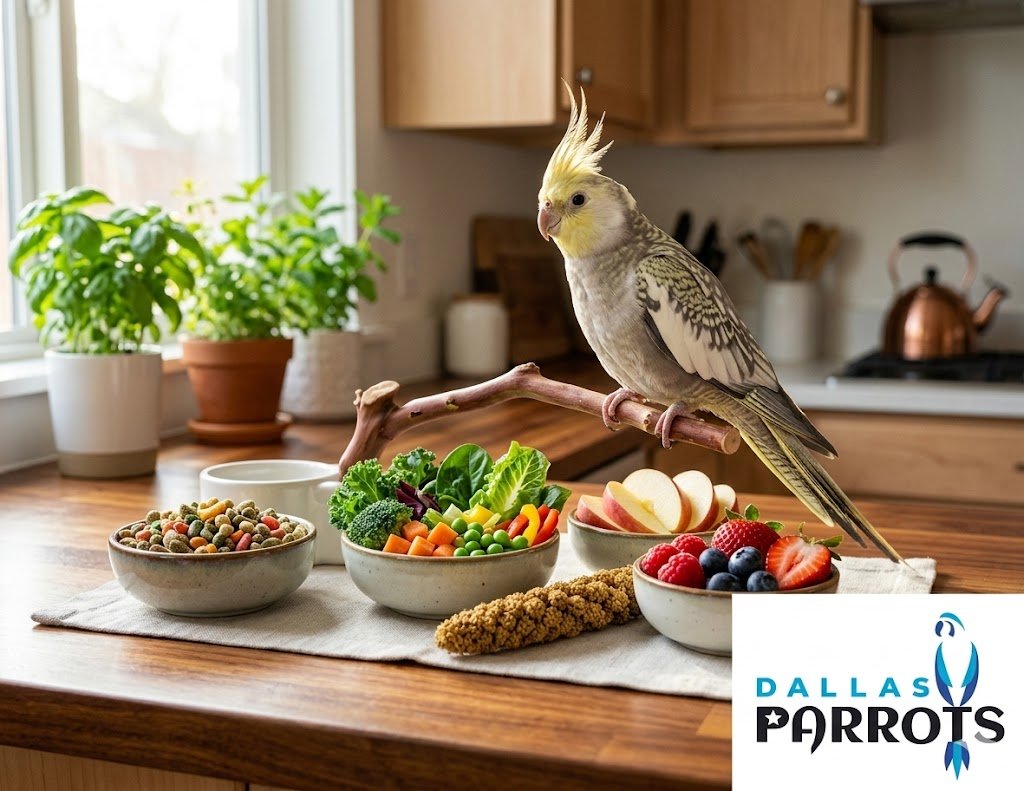
Diet is where I see the most owner mistakes. People grab a bag of seed and call it good. That kind of diet leads straight to fatty liver disease and vitamin A deficiency.The best food for cockatiels is a mix. About 60 to 70 percent of the cockatiel’s diet should be a high-quality pellet. The rest comes from fresh vegetables fruits cooked grains and a small amount of seeds or millet as treats. A varied diet is how you give your bird the nutrients and vitamins and minerals they need to thrive.
| Food group | Daily portion | Examples |
|---|---|---|
| Pellet | 1.5 tbsp | Harrison’s Zupreem Roudybush |
| Vegetables | 1 tbsp | Kale broccoli carrot bell peppers |
| Leafy greens | 1 tbsp | Dandelion spinach romaine |
| Fruit | 1 tsp | Apple berries papaya |
| Cooked grains | 1 tsp few times a week | Quinoa brown rice |
| Seeds and millet | Small pinch | Millet spray as treat |
| Cuttlebone | Always in cage | For calcium |
Foods to keep far away from your bird include avocado chocolate caffeine onion and garlic. Any of those can be fatal.Leafy foods like kale and dandelion greens offer real nutrient value. Rotate fresh fruit and veggies through the week so your bird gets variety. Fresh water should go into the water dishes twice daily. Wash food and water dishes every morning to keep bacteria from building up. For more on parrot diets generally our best food for parrots article is worth a read.
Cockatiel Toys and Mental Stimulation
A bored cockatiel is a cockatiel heading for trouble. These birds need mental stimulation every single day.A good variety of toys keeps them busy and happy. That includes foraging puzzles chew toys shreddable paper items small bells wooden blocks and swings. Offer them a chance to forage for treats hidden inside cardboard rolls or foraging balls because that mirrors what they’d do in the wild.Rotate toys every 7 days so nothing stays boring. Avoid mirrors in a single bird cage because they can trigger hormonal issues and confused bonding behavior. Enrichment is one of the biggest factors in long-term cockatiel health and happiness.One quick thing. Small parrots like cockatiels often love cheap DIY toys. A toilet paper roll stuffed with millet and shredded paper is a bigger hit than most 20 dollar pet store gadgets.
Cockatiel Singing and Whistling
Cockatiel singing is honestly one of the best parts of owning one. Male cockatiels are the better whistlers and can learn 5 to 10 full tunes plus simple words. Some pick up the Andy Griffith theme. Some learn the Star Wars theme. It depends on what they hear most.Females are quieter and mostly chirp. They can whistle too but don’t usually develop the same vocabulary. Cockatiel talking ability is limited compared to larger parrots. Short phrases like hello and pretty bird are about the ceiling for most birds.Morning and sunset chirping is natural flock behavior and there’s no way to fully eliminate it. That’s just cockatiels being cockatiels.
Cockatiel vs Parakeet
New bird owners mix these two up all the time. Both are small parrots. Both are beginner-friendly. But cockatiel vs parakeet comparisons matter because the differences affect your daily experience.
| Feature | Cockatiel | Parakeet (Budgie) |
|---|---|---|
| Adult size | 12 to 13 inches | 7 inches |
| Weight | 2 to 4 ounces | 1 ounce |
| Lifespan | 15 to 25 years | 7 to 15 years |
| Price range | 100 to 300 dollars | 20 to 50 dollars |
| Noise level | Moderate whistling | Higher-pitched constant |
| Talking ability | Limited | Often better talkers |
| Personality | Calm cuddly | Active hyper-social |
Cockatiels are bigger calmer and live way longer. Parakeets are cheaper louder and often learn to talk more clearly. Both make great pets. It just depends on your home and what you want from the bird.
Cockatiel First Week Home Step by Step
The first week home sets the tone for years. Here’s how I walk new cockatiel owners through it.
- Set up the bird’s cage food and water toys and bath dish before the bird arrives so day one feels calm
- Day 1 and 2 let the bird settle in the cage without reaching in or handling which reduces fright
- Day 3 and 4 sit near the cage and talk softly so your cockatiel gets used to your voice
- Day 5 offer a favorite treat like millet through the cage bars to build trust
- Day 6 and 7 open the cage door and allow the bird to come out on its own terms with supervised out-of-cage time
- Schedule an avian vet checkup within the first 30 days for a baseline health screening
- Keep the routine consistent for the first 2 weeks to help your cockatiel settle
Consistency matters more than anything else that first week. Same wake time same feeding time same bedtime. For a solid training starting point check out our how to train a parrot article.
Bathing and Feather Care
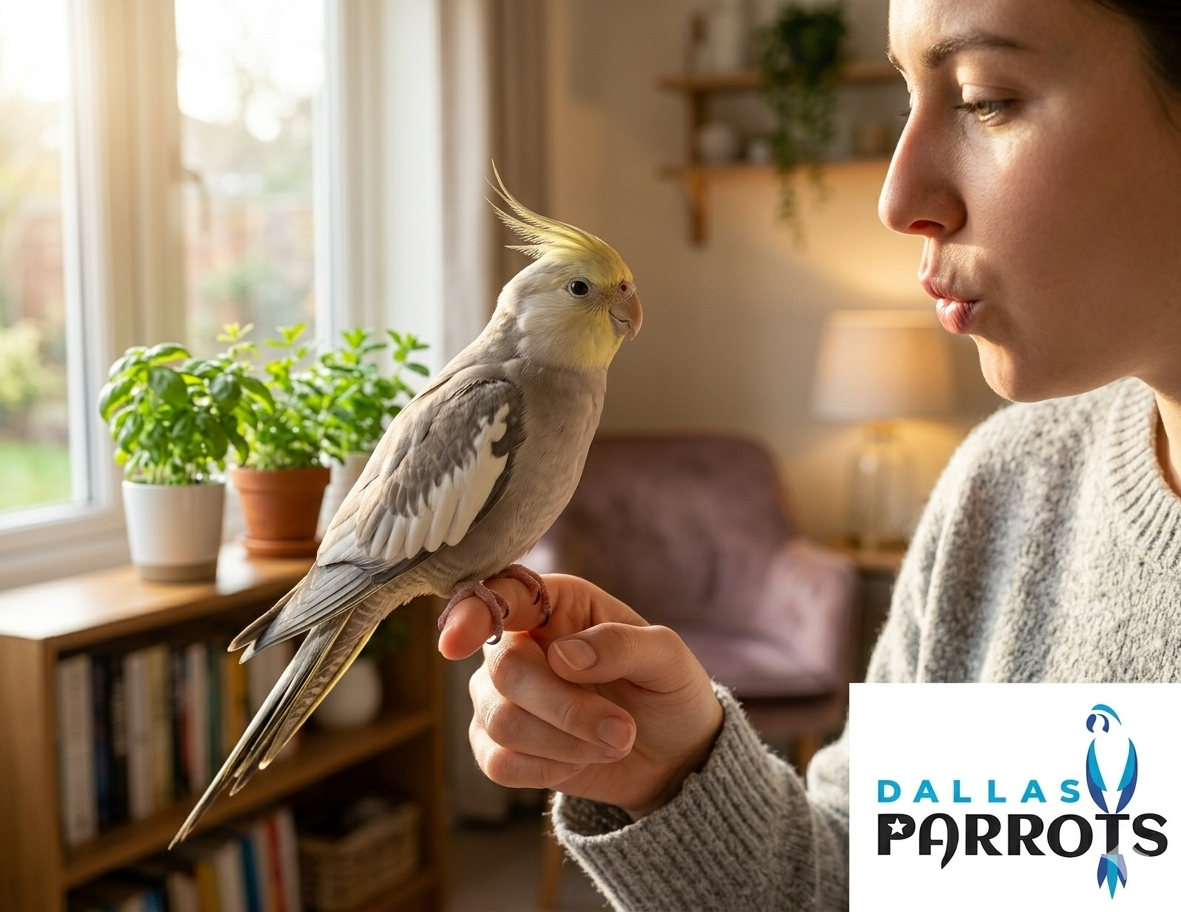
Cockatiels need a bath two to three times a week. Regular bathing keeps feathers clean prevents dust buildup and helps with skin health.You’ve got a few bathing options. A shallow bird bath dish set on the cage floor works for most birds. A light mist from a spray bottle works for birds that don’t like dishes. Some cockatiels even like a shower perch for a quick rinse. Never use soap or bird shampoo unless your avian veterinarian specifically recommends it.Feather plucking is one of the first signs something’s wrong. Common causes include boredom stress poor diet or skin issues. If you notice bald patches or broken feather shafts book a vet visit fast. Don’t wait it out.Nails should be trimmed when they start getting sharp or curved. Some birds wear them down naturally on rough perches. Others need a trim every few months from an avian vet or experienced groomer. Don’t try to do the first trim yourself unless you’ve been shown how.
Common Mistakes New Cockatiel Owners Make
A few patterns show up over and over.
- Feeding only seeds which leads to fatty liver disease and vitamin A deficiency
- Buying a cage too small or with bar spacing that risks getting its head stuck
- Using nonstick cookware near the bird (the fumes are fatal within minutes)
- Skipping the first avian vet visit
- Keeping the bird isolated in a back room away from family life
- Leaving mirrors in a single bird setup which causes hormonal issues
That last one surprises a lot of first time bird owners. A cockatiel staring into a mirror thinks it’s bonding with another bird and that can lead to a female trying to pass an egg without the nutrition to back it up.
Pro Tips From Dallas Parrots
Small habits that make a huge difference over the years.
- Mist bathe or offer a bath dish two to three times a week for healthy feather condition
- Start target training in week two once the bird is settled
- Rotate toys weekly to keep mental stimulation fresh
- Cover your bird’s cage at night at the same time each evening
- Keep a weekly weight log because sudden weight drops are the first sign of illness
Small steady care beats big occasional efforts every single time.
Why Choose Dallas Parrots for Your Cockatiel
We hand feed and fully wean every cockatiel before they go home. That’s non-negotiable here.
- Hand raised by experienced breeders from day one
- Avian vet health checked before placement
- Variety of color mutations available including lutino pied pearl and whiteface
- Transparent pricing
- Lifetime care support after the sale
- Verified breeder reputation
You can see what we currently have available on our cockatiel for sale page or check pricing details on our cockatiel price breakdown.
Benefits of Buying Your Cockatiel From Dallas Parrots
- Full cockatiel care sheet and diet notes go home with every bird
- First two weeks transition support
- Avian vet referrals across the USA
- 30 day health guarantee
- Access to rare color mutations
- Ongoing training consults when behavior questions come up
Want more on the breed? Our cockatiel facts article has extra background info that complements this care guide.
Real Customer Stories
Our cockatiel Biscuit whistles the Andy Griffith theme song every single morning. Dallas Parrots made the adoption process easy and Biscuit came home healthy and fully socialized. Rachel W. Dallas Texas
First time bird owner here. Their care sheet walked me through the first week home step by step and Peaches bonded with us in under 10 days. Marcus B. Atlanta Georgia
We adopted a rehome cockatiel after our older bird passed. Their team helped us with the transition and she’s the sweetest little thing now. Linda H. Seattle Washington
Stories like these are why we keep doing this work.