Introduction
If you have never considered a plum head parakeet before, you are genuinely missing out on one of the most visually spectacular and underrated pet birds available today. Native to the Indian subcontinent, this medium-sized parakeet carries a plum-purple head, vivid green body, and a long elegant tail that turns heads the moment anyone sees it. Beyond the looks, the plum head parakeet is calm, manageable, and surprisingly well-suited for owners who want beauty and personality without extreme noise or demanding behavior. However, like any bird, it comes with specific care requirements that every buyer should understand fully before committing. Therefore, this guide covers everything — appearance, temperament, diet, housing, health, and buying tips — so you walk into ownership with complete confidence from day one.
What Is a Plum Head Parakeet
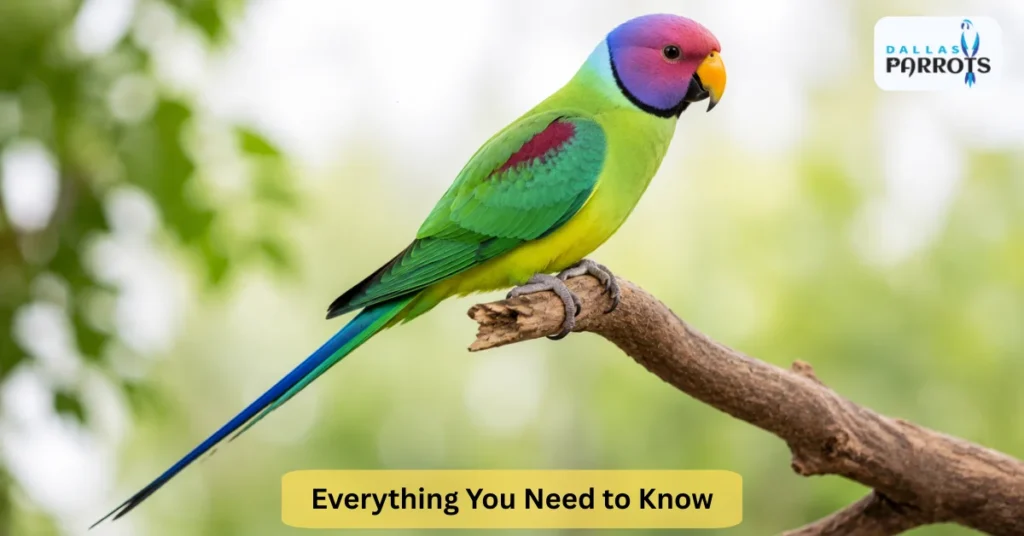
The plum head parakeet (Psittacula cyanocephala) belongs to the Psittaculidae family and originates from the woodlands and open forests of the Indian subcontinent — found across India, Sri Lanka, Pakistan, and Bangladesh. Adults grow to approximately 13 inches in length, with nearly two-thirds of that made up by their long, elegant tail. Furthermore, this species is one of the few parakeets that displays clear sexual dimorphism — meaning males and females look distinctly different. Males carry the iconic bright plum-purple head with a narrow black neck collar edged in green and a red shoulder patch. Females, on the other hand, have a softer bluish-grey head with a yellow collar and no red shoulder patch. Additionally, juvenile birds start with a plain green head and only develop their full adult colors after about one year of age. Overall, the plum head parakeet is one of the most visually striking medium birds available in the pet trade today.
Plum Head Parakeet Temperament and Personality
One thing that surprises most first-time buyers is how calm and composed the plum head parakeet actually is. Unlike some parakeet species that are hyperactive or highly demanding, the plum head parakeet carries a naturally relaxed and gentle demeanor that makes daily interaction feel easy and enjoyable. They are curious, intelligent, and observant — always watching household activity with bright, alert eyes. Furthermore, they bond steadily with their owners through consistent daily interaction and patient training rather than through immediate clinginess. However, one important thing to know upfront is that plum head parakeets generally do not enjoy being cuddled or overly handled the way some parrots do. They prefer companionship on their own terms — sitting near you, watching you, and interacting during play rather than being restrained in hands. Additionally, they can become slightly territorial during breeding season. Overall, they are a rewarding bird for owners who respect their independent nature.
Plum Head Parakeet as an Indian Ringneck Parakeet Alternative
Many buyers searching for a medium Asian parakeet first consider the Indian ringneck parakeet before discovering the plum head. The plum head parakeet for sale is a genuinely compelling alternative for several reasons. Both species share similar origins, size, and care needs — but the plum head is consistently reported as calmer, less nippy, and easier to manage during taming. Furthermore, the plum head parakeet’s talking ability, while not as strong as the Indian ringneck, is still present — they can mimic short whistling tunes and some words with consistent patient training. Additionally, they tend to be less demanding of constant attention, which suits working households with moderate interaction time available. Moreover, their striking appearance rivals — and many would argue surpasses — that of the ringneck in terms of sheer visual impact. Consequently, for buyers who want a beautiful, manageable Asian parakeet without the ringneck’s more challenging personality traits, the plum head is an outstanding choice worth serious consideration.
Best Diet for a Plum Head Parakeet
Getting the diet right for a plum head parakeet is one of the most important responsibilities of ownership. Start with a high-quality pellet and seed mix specifically designed for medium parakeets or small parrots — this forms the nutritional foundation of their daily meals. In addition, offer fresh fruits and vegetables every single day — leafy greens like spinach and kale, carrots, broccoli, and bell peppers all work excellently. Fruits such as apples, mangoes, berries, and pears make great additions in moderate portions. Furthermore, plum head parakeets particularly enjoy cracking open nuts — almonds, walnuts, and pecans with cracked shells are excellent enrichment treats. Occasional cooked foods like rice, cooked beans, or corn are also well received as dietary variety. Additionally, provide a flat shallow dish of clean water for bathing regularly — plum heads are naturally clean birds that enjoy bathing to maintain healthy feathers. Always remove uneaten fresh food within a few hours and provide fresh clean drinking water daily without exception.
Cage Setup and Housing Requirements
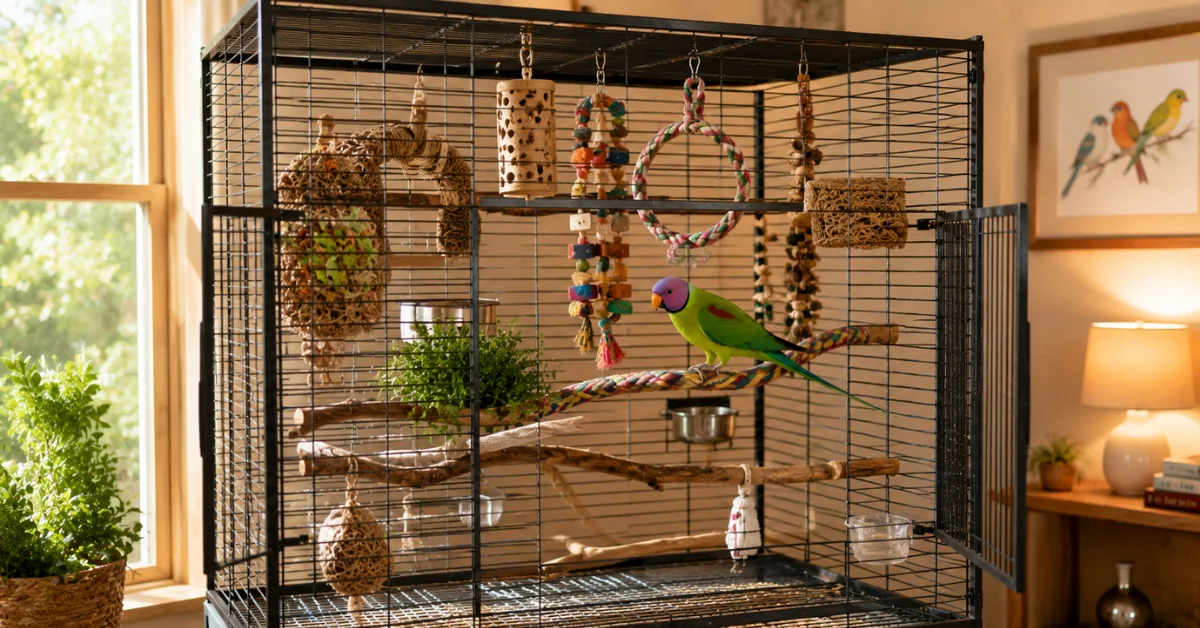
Setting up the right home for a plum head parakeet matters enormously because these birds are fast, agile flyers in the wild. The minimum recommended cage size is 24 x 24 x 36 inches, with horizontal bars for climbing and bar spacing of around three-quarters of an inch. However, a larger flight cage or aviary setup is always the better option since plum heads need room to stretch their wings and move actively. Inside the cage, include several wooden perches at different heights, foraging toys, swings, chewable items, and ladders. Furthermore, out-of-cage free flight time in a safe bird-proofed room is strongly recommended daily. Plum head parakeets confined to cages for long periods without exercise can develop listlessness, apathy, and stress-related health issues. Additionally, place the cage in a social area of your home where household activity provides passive daily enrichment without isolation. Rotate toys regularly to keep their intelligent minds engaged and prevent boredom throughout the day.
Plum Head Parakeet Lifespan and Health
The plum head parakeet lives between 15 and 20 years in captivity with proper care, diet, and regular avian vet attention. Some well-cared-for individuals have reportedly exceeded 20 years, making this a meaningful long-term commitment for any buyer. Furthermore, they are generally considered a hardy species compared to some more delicate parrots. However, several health issues still require every owner’s awareness and proactive attention. Respiratory infections are among the most common concerns — usually triggered by damp environments, poor ventilation, or exposure to household chemical fumes. Nutritional deficiencies develop quickly in birds fed seed-only diets without fresh food supplementation. Feather plucking can appear as a behavioral symptom of boredom, stress, or insufficient social enrichment. Additionally, bacterial or fungal infections can develop in birds kept in unclean cage conditions over time. Therefore, annual avian vet checkups, a balanced and varied diet, daily monitoring of droppings and feather condition, and a clean living environment are all non-negotiable parts of responsible plum head parakeet ownership.
Tips for Buying a Plum Head Parakeet
When you are ready to buy, the source you choose matters just as much as anything else in this guide. Always prioritize reputable breeders who allow visits, show you the parent birds, and provide health documentation for the baby. Hand-tamed birds that have been socialized consistently from a young age adjust to new homes far more smoothly than untamed aviary birds. Additionally, ask whether the bird has been DNA sexed — this is especially helpful with plum heads since juveniles of both sexes look identical in their first year. Avoid sellers who cannot answer basic care questions or keep birds in overcrowded, stressful conditions. Furthermore, always observe the bird in person before committing — a healthy plum head should be alert, active, eating well, and showing clean smooth feathers with bright clear eyes. Rescue organizations occasionally have plum head parakeets available, and adoption is always a rewarding option worth exploring. Take your time, ask questions, and never rush this decision.
Contact Us
Interested in bringing home a plum head parakeet? We would love to help you find the right bird for your home and lifestyle. At Dallas Parrots, every bird is hand-raised with care, properly socialized, and ready to become a cherished part of your daily life.
Our team takes the time to understand what you are looking for before making any recommendation. We believe every family deserves the right bird — not just any bird. Get in touch with us today and we will respond as quickly as possible.
Conclusion
The plum head parakeet is genuinely one of the most beautiful and underappreciated birds in the pet trade today. Their striking plum-purple heads, elegant long tails, calm temperament, and manageable care needs make them an outstanding choice for a wide range of owners — from experienced bird keepers to dedicated first-timers willing to put in the effort. They are not a cuddly velcro bird, and they will not scream for attention all day. Instead, they offer quiet companionship, visual beauty, and a steady growing bond that deepens the more time and patience you invest. With a lifespan of 15 to 20 years, a plum head parakeet is a long-term commitment that pays back in decades of joy. At Dallas Parrots, our birds are hand-raised with genuine care and ready to find their forever families. Reach out today to ask about current availability.