
Walk into any pet store and you’ll see 30 brands of bird food on the shelf. Half of them are mostly sugar and dye. A few are actually worth your money. And most bird owners have no real way to tell which is which. So this article cuts through the noise. The best parrot food brand for your bird depends on species health needs and budget.But after 3 years of feeding birds across 20+ species at DallBest Parrot Food Brands Compared in 2026as Parrots I can tell you that a few brands rise above the rest every time.Plain and simple. A healthy parrot food brand can add 5 to 10 years to your bird’s life. The wrong one shortens it. That’s the part most people miss when they grab a cheap seed mix off the shelf.
Written by Moaz at Dallas Parrots
I’m Moaz and I’ve spent over 3 years feeding parrots daily at Dallas Parrots. Hands-on with everything from a small bird like a cockatiel up to a macaw. I’ve tested most of the major bird food brands myself. Everything in this parrot food review 2026 comes from real experience. Not sponsored content. Not affiliate hype.
- 3+ years feeding 20+ parrot species daily
- Manages diet conversion and gradual food switching for adopted birds
- Works with avian veterinarians on bird nutrition planning
Why Brand Choice Matters for Parrot Diet and Nutrition
The right food brand affects your bird’s health more than almost anything else you control. Cheap seed mixes lack vitamin A calcium and balanced protein. They’re high in fat and low in actual nutrient value. That’s how birds end up with feather plucking obesity and a shortened life.Quality bird food works because it tries to mimic what parrots eat in the wild. Wild birds forage across dozens of natural foods every day. They eat fruit seed nut leaves and the occasional insect. Pet birds can’t replicate that on their own. So brand quality matters.What to look for in any food includes vitamin A and calcium fortification no artificial dye or preservative protein levels matched to species size and a clean ingredient panel without unnecessary additive content. Reputation among avian veterinarians counts too. If your vet hasn’t heard of the brand that’s usually a red flag.
Parrot Diet Pellets vs Seeds – The Real Debate
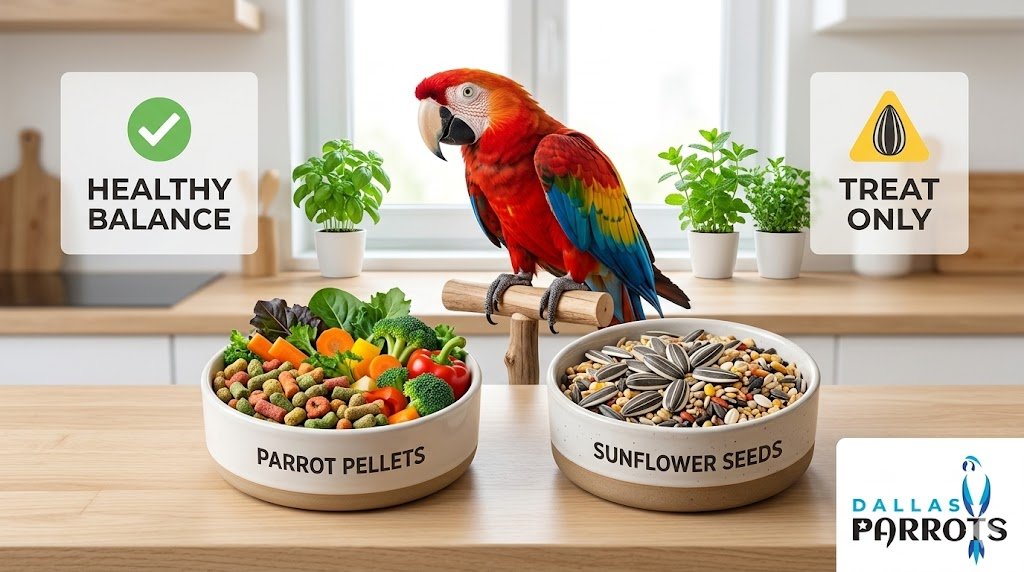
This question comes up more than any other in the bird world. So let me break it down.Pellets are the foundation of a healthy parrot diet because they pack balanced nutrition into every bite. A formulated pellet has the vitamins minerals protein and fiber your bird needs. Seeds alone don’t. A seed-only diet causes vitamin A deficiency obesity and fatty liver disease. Most board-certified avian vets recommend 60 to 70 percent pellet diet with the rest from fresh foods and a small seed treat allowance.
| Factor | Pellets | Seeds |
|---|---|---|
| Nutritional balance | Complete | Incomplete |
| Vitamin A content | Adequate | Very low |
| Fat content | Moderate | Very high |
| Protein | Balanced | Variable |
| Best use | Daily diet base | Treats only |
| Risk if overused | Low | Obesity fatty liver |
Wild parrots eat plenty of seed but they also fly miles every day. They forage they socialize they exercise. Pet birds in cages don’t burn those calories. So the same seed mix that keeps a wild parrot lean turns a pet parrot into a couch potato. That’s the part most people miss.
Best Parrot Pellets – Top Brands for 2026
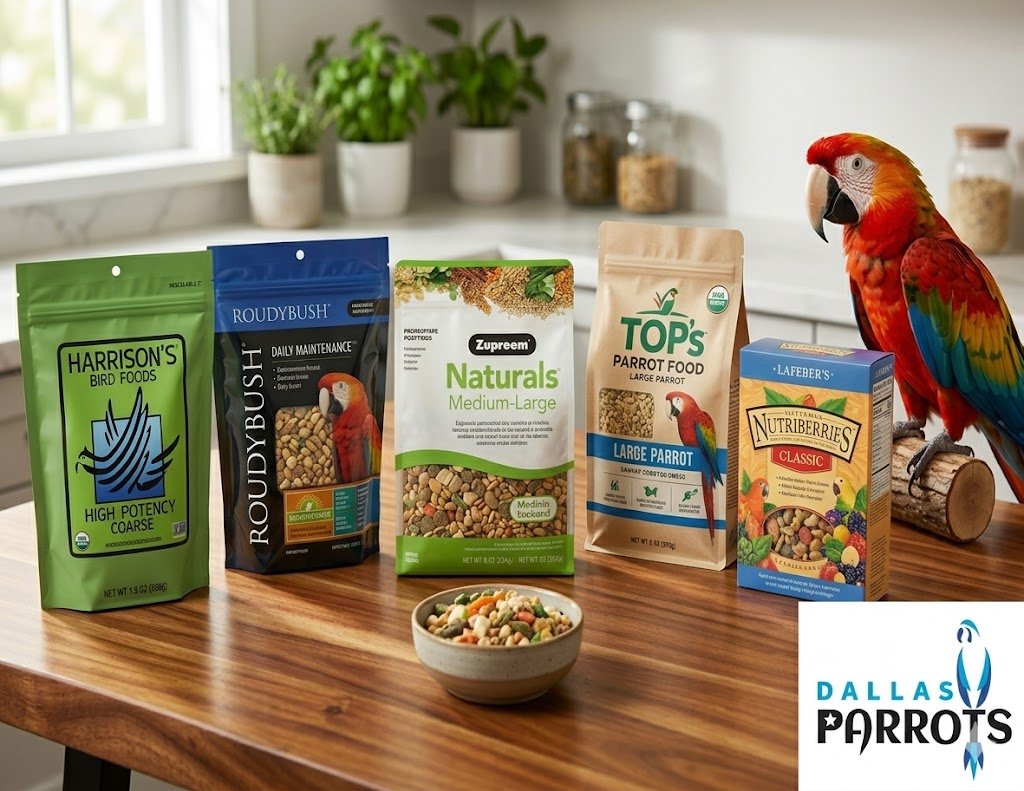
Let me run through the four pellet brands worth your money in 2026.
Harrison’s Bird Foods
This is the one most avian vets recommend if you ask them straight up. Harrison’s is USDA certified organic which means no synthetic pesticides and no GMO grains. They’ve got several lines including Adult Lifetime High Potency and Coarse versions for different bird sizes and life stages. Pricing runs 30 to 60 dollars per 5 lb bag which is more than most. Pickier birds sometimes need a slow gradual conversion to accept Harrison’s because the smell and look are different from supermarket food. But once they’re on it the results show up in feather quality and energy fast.
Roudybush Daily Maintenance
Roudybush pellets are my go-to recommendation for everyday feeding. They’re affordable they’re widely available and the formula has been around long enough to prove itself. Pricing sits at 25 to 45 dollars per 5 lb bag. Roudybush comes in different pellet sizes from crumble for a parakeet up to large for a macaw. Most birds accept Roudybush pellets faster than Harrison’s which makes them a good starting point if you’ve never fed pellets before.
Zupreem Naturals and FruitBlend
Zupreem is the most widely available pellet brand at pet stores. The FruitBlend line is the colorful one with artificial dye that I tell people to avoid. The Zupreem Naturals version skips the dye and uses natural ingredients which is way better. Pricing runs 20 to 35 dollars per 3.5 lb bag. Zupreem is the best budget option but it’s not certified organic and the protein levels run lower than Harrison’s or Roudybush.
TOPs Parrot Food
TOPs is the cleanest organic brand on the market. USDA certified organic no GMO ingredients no synthetic vitamins and fully cold-pressed which preserves more of the natural nutrient content. Pricing runs 35 to 50 dollars per 4 lb bag. If you want a fully organic bird food and you’re willing to pay for it TOPs is hard to beat.For more on day-to-day parrot diets check our parrot food and best food for parrots articles.
Zupreem vs Harrison’s Parrot Food
People ask about zupreem vs harrison’s parrot food more than any other brand-to-brand comparison. So here’s the honest breakdown.Harrison’s wins on quality. It’s certified organic vet-recommended and the formula targets long-term bird’s health and wellness. Zupreem Naturals wins on price and availability. You can buy Zupreem at almost any pet store. Harrison’s usually requires ordering online or visiting a specialty bird shop. Pickier birds tend to accept Zupreem Naturals first because the texture is softer and the pretty bird factor is higher.
| Factor | Harrison’s | Zupreem Naturals |
|---|---|---|
| Certification | USDA Organic | None |
| Artificial dyes | Never | None in Naturals line |
| Price per lb | 6 to 8 dollars | 4 to 5 dollars |
| Vet endorsement | Strong | Moderate |
| Availability | Specialty stores online | Most pet stores |
| Acceptance rate | Lower at first | Higher at first |
For most pet bird owners I recommend Harrison’s if budget allows. If not Zupreem Naturals is a solid second. Just skip the FruitBlend version with the dye.
Best Seed Mix for Parrots – When Seeds Are Appropriate
Seeds shouldn’t be the main diet but they have a place. The best seed mix for parrots works as a treat or supplement next to a quality pellet base.The top seed brands include Volkman Avian Science Super Parrot which is a premium variety with veggies and grains mixed in Higgins Vita Seed which is fortified with vitamins and minerals Kaytee Forti-Diet Pro Health which is the widely available middle ground Hari Tropican which costs more but uses high-quality ingredients and Goldenfeast which is gourmet seed and nut mix for special occasions.Look for a seed mix with low sunflower seed percentages added vegetable bits and zero artificial colors or preservatives. Sunflower is high in fat and birds will pick it out and ignore everything else if you let them. A mix with peanut almond pecan and walnut bits offers more variety though nuts should still be a small share of the bowl.
Nutriberries Review – Are They Worth It?
Lafeber Nutriberries are weird in the best way. They’re round seed-pellet hybrid balls that combine the foraging fun of seed with the nutrition of a pellet diet. Most parrots love them which makes them useful for picky eaters or birds going through a slow conversion off seed.They aren’t a complete diet replacement on their own. Lafeber recommends using them as 20 to 30 percent of total food intake alongside pellets and a variety of fresh foods. The texture and shape encourage natural foraging behavior. They’re great for travel days or as a backup if your pellet bag runs out.Pros and cons. The pros are high acceptance rate foraging engagement multiple species-specific formulas and a long shelf life. The cons are higher cost per pound some formulas have added sugar and they aren’t a full pellet substitute. For my own pet bird I keep Nutriberries on hand as a treat option but the pellet diet still does the heavy lifting.
Organic Parrot Food – Is It Worth the Price?
Organic parrot food is worth the cost if you can afford it. Certified organic brands like Harrison’s and TOPs avoid synthetic pesticides GMO grains and artificial vitamins. Many use ingredients that meet human consumption standards which says a lot.The tradeoff is 30 to 50 percent higher cost than standard pellets. For some bird owners that’s a deal-breaker. For others especially owners with a sensitive species like an african grey or a bird already dealing with feather plucking the upgrade pays off in long-term wellness.When organic makes the most sense includes situations where the bird has chronic health issues the owner already buys organic for human consumption a sensitive species like african grey or eclectus or a long-term breeder bird. For a budget feeder a regular pellet plus fresh produce still beats a seed-only diet by a huge margin.
Parrot Food Comparison Table for 2026
Here’s the master parrot food comparison for 2026 with pricing and ratings based on hands-on testing.
| Brand | Type | Organic | Avg Price/lb | Best For | Rating |
|---|---|---|---|---|---|
| Harrison’s | Pellet | Yes | 6 to 8 dollars | Health-focused owners | 9.5/10 |
| Roudybush | Pellet | No | 4 to 5 dollars | Daily everyday feed | 9/10 |
| Zupreem Naturals | Pellet | No | 4 to 5 dollars | Budget feed | 8/10 |
| TOPs | Pellet | Yes | 7 to 9 dollars | Fully natural diets | 9/10 |
| Lafeber Nutriberries | Hybrid | No | 8 to 10 dollars | Foraging supplement | 8.5/10 |
| Volkman Avian Science | Seed | No | 3 to 4 dollars | Treat seed mix | 8/10 |
| Higgins Vita Seed | Seed | No | 3 to 4 dollars | Fortified seed treat | 7.5/10 |
| Kaytee Forti-Diet | Seed | No | 2 to 3 dollars | Backup treat | 7/10 |
The healthiest parrot food brand on this list is Harrison’s followed by TOPs. The best value daily option is Roudybush. The best budget pellet is Zupreem Naturals. The best foraging supplement is Lafeber Nutriberries.
How to Switch Your Parrot to a New Food Brand
A new pellet brand can’t be dropped in the bowl on day one. Most birds need a gradual switch. Here’s the process I walk every Dallas Parrots customer through.
- Mix 25 percent new food with 75 percent old food for the first 4 days
- Move to 50/50 for the next 4 days while watching droppings and bird daily weight
- Shift to 75 percent new food for another 4 days
- Switch fully to the new brand by day 14
- Weigh your bird daily and watch for refusal or weight loss
- Offer favorite veggies or chop nearby to encourage the new food
- Call your avian veterinarian if the bird refuses food for more than 24 hours
Make chop a part of the daily bowl during the switch. Chop is just finely chopped fresh fruit and vegetable mix that adds variety and helps your bird stay interested in food during the change.
Parrot Food Brands by Species Including African Grey
Different species need different pellet sizes and formulas. Matching the food to the bird makes a real difference in whether they thrive.
| Species | Recommended Pellet | Notes |
|---|---|---|
| African grey | Harrison’s Adult Lifetime | Calcium-fortified |
| Macaw | Zupreem Naturals Large | Big pellet size |
| Cockatoo | Harrison’s High Potency | Higher protein |
| Conure | Roudybush Mini | Small pellet |
| Cockatiel | Zupreem Small | Easy to pick up |
| Quaker | Roudybush Maintenance | Balanced for medium birds |
| Parakeet | Roudybush Crumble | Tiny crumbs |
African grey parrots specifically need calcium-fortified pellets like Harrison’s Adult Lifetime Coarse or Roudybush Daily Maintenance because they’re prone to calcium deficiency. Macaws thrive on larger pellet formulas because they have stronger beaks and bigger appetites. Conures and cockatiels do better on small pellet sizes that match their beak.For a wider look at parrot diet basics our parrot diet guide covers what to feed across species.
Common Mistakes Bird Owners Make
A few patterns I see over and over.
- Feeding only seed mixes long-term thinking the bird is fine because it’s still alive
- Buying brightly dyed pellets thinking the bird needs visual variety
- Switching brands cold turkey instead of doing a gradual conversion
- Ignoring expiration dates on pellet bags
- Storing pellets in warm humid spots which causes mold and rancid oils
- Adding too many high-fat nuts as treats every day
That last one trips up a lot of new bird owners. Almond peanut walnut and pecan are healthy in small amounts. Daily handfuls cause weight gain fast in a small bird.
Pro Tips From Dallas Parrots
- Buy smaller bags more often for freshness
- Store food in airtight containers in a cool dry spot
- Mix two pellet brands once your bird accepts pellets to add variety
- Add fresh fruit and vegetable daily even with quality pellets
- Replace pellet stash every 2 to 3 months whether the bag is empty or not
For ingredient-level deep dives check our article on 5 important bird food ingredients your pet needs.
Why Choose Dallas Parrots for Your Bird’s Diet Setup
Every parrot we place comes home on a quality pellet diet from day one. We don’t just sell birds. We help you keep them healthy.
- Birds raised on quality pellet diet from the start
- Diet transition support included with every bird
- Free pellet sample with new bird placement
- Avian veterinarian referral network nationwide
- Lifetime nutrition consults
- Hands-on testing of every major pellet and seed brand
You can browse currently available birds on our parrots for sale page.
Benefits of Working With Dallas Parrots
- Custom diet plan with every bird placement
- Brand recommendations matched to your species
- Care sheet covering food storage and rotation
- Lifetime support for diet questions
- Connection to trusted avian vet network
- Discounted starter pellet bag with new birds
We treat bird nutrition like nutritionist-level work because that’s what your bird deserves.
Real Customer Stories
Dallas Parrots got our african grey off seeds and onto Harrison’s in three weeks. Coco’s feathers look better than they have in years. Megan T. Charlotte North Carolina
I bought my first conure from them and the diet sheet they sent home walked me through every step. Loki eats his pellet mix without complaints and his energy is amazing. Devon W. Tampa Florida
Switched my macaw from a cheap supermarket seed bag to Roudybush after their team recommended it. Big improvement in his energy and feather quality within a month. Aaron R. Phoenix Arizona
These outcomes are why we keep doing this work.
Wrapping Up
The best parrot food brand for most bird owners is Harrison’s for organic quality Roudybush for everyday value Zupreem Naturals for budget shoppers and TOPs for fully natural feeding. Pellets do the heavy lifting and seeds work as treats. Add fresh fruit and a variety of fresh veggies daily and you’ve got a real bird nutrition setup that helps your parrot thrive for decades.