Introduction
If neighbor complaints or thin apartment walls have stopped you from getting a bird, you need to know about the quietest parrots available today. Not every parrot screams at 120 decibels. In fact, several quiet pet birds for apartments exist that are so calm your neighbors may never even know you have one. From tiny parrotlets to gentle cockatiels and laid-back Senegal parrots, the world of low noise parrot species is far bigger than most people realize. However, choosing the right one takes more than just picking the prettiest option. Therefore, this guide breaks down the quietest parrots species by species — covering personality, noise level, and who each bird suits best — so you can make a confident, well-informed decision.
Why Some Parrots Are Quieter Than Others
Before diving into specific species, it helps to understand why some parrots are naturally quieter. Noise level in parrots is linked closely to their wild habitat and natural flock behavior. Large parrots that lived in open savannas needed to call across vast distances and evolved louder voices as a result. Smaller parrots from dense forested regions developed softer, more contained calls instead. Furthermore, body size plays a direct role — smaller birds simply cannot produce the same volume as larger species. Additionally, temperament matters enormously in determining daily noise output. Calm, gentle species tend to vocalize less frequently and at lower intensity than high-energy excitable ones. Moreover, even the best quiet parrots for beginners can become noisy when their social and environmental needs go unmet. Consequently, a content and well-stimulated parrot is always a significantly quieter parrot regardless of species.
Cockatiels the Gentle Champion of Quiet Parrots
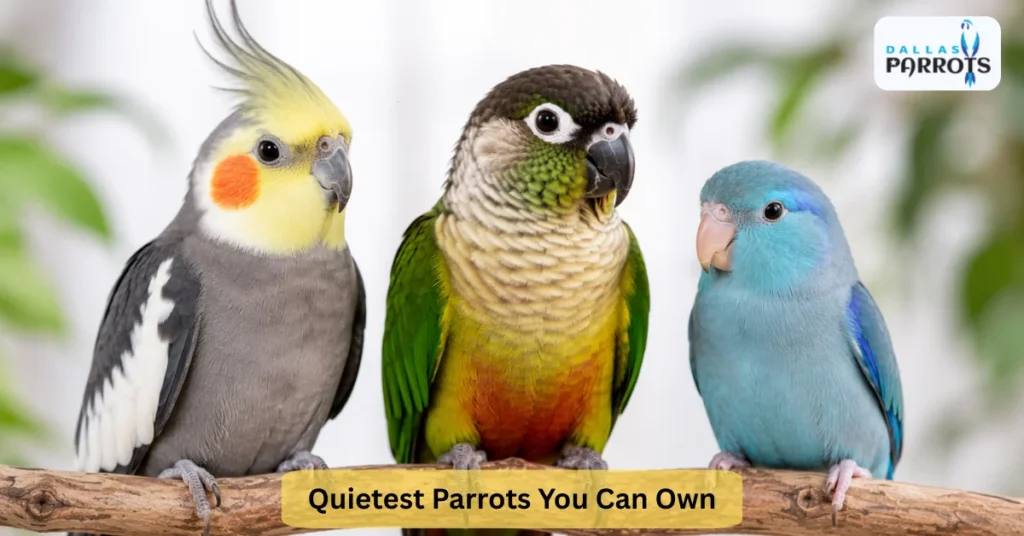
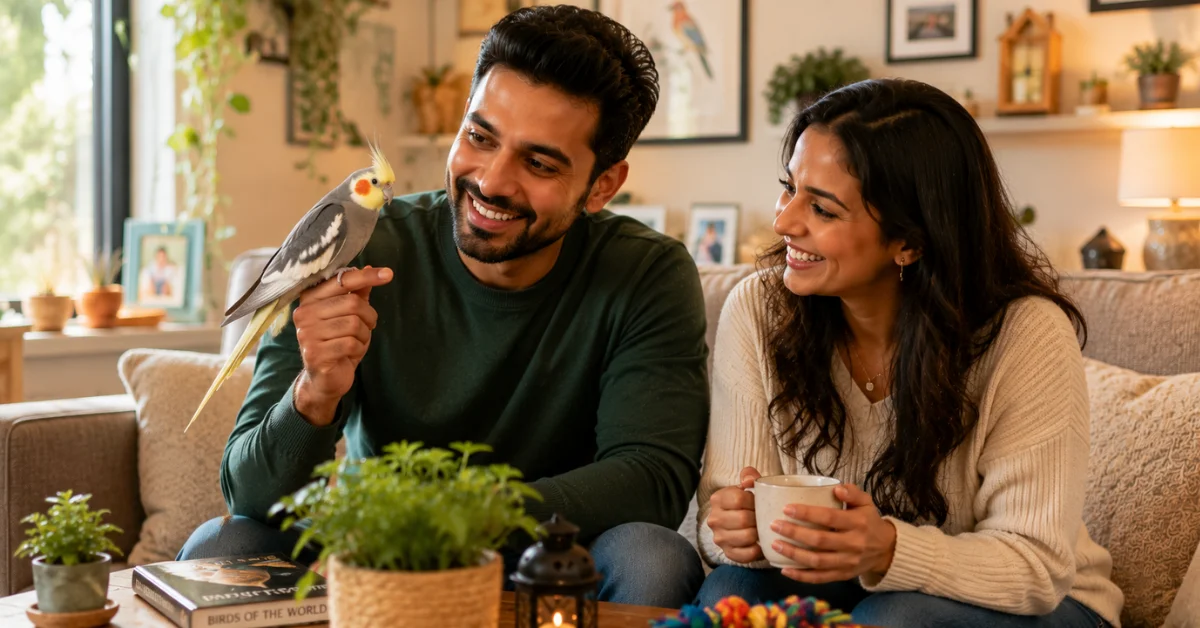
When people ask about the quietest parrots, the cockatiel almost always comes up first — and for very good reason. Cockatiels typically vocalize at around 65 to 70 decibels, roughly the same level as a normal human conversation. Their sounds consist mostly of soft whistles, gentle chirps, and occasional mimicry of household sounds. Furthermore, female cockatiels are noticeably quieter than males, making them excellent quiet pet birds for apartments with thin walls and close neighbors. They are affectionate, social, and bond deeply with their owners over time. Additionally, cockatiels are one of the most popular quiet birds that talk — males can learn tunes, whistle melodies, and mimic simple words with consistent patient training. They do not demand constant attention the way some parrots do. Consequently, cockatiels remain one of the most widely recommended birds for apartment living and first-time bird owners across the world today.
Parrotlets the Tiny Bird With a Surprisingly Quiet Voice
Do not let the bold personality fool you — parrotlets are genuinely among the best small quiet parrots you can own. These tiny birds measure just 4 to 5 inches in length and produce soft chirps and gentle chattering that rarely carries beyond the room they are in. Furthermore, their small size physically limits the volume they can produce even at their most excited moments. Pacific parrotlets are the most popular variety and are known for being playful, curious, and surprisingly feisty for their size. They bond closely with their primary owner and enjoy daily handling and direct interaction. Additionally, they make excellent quiet pet birds for apartments because their voices simply do not penetrate walls or disturb neighboring units. However, they do need daily socialization — a lonely parrotlet can become nippy and noticeably more vocal over time. Overall, parrotlets deliver enormous personality in an impressively quiet and compact package that suits almost any living situation.
Green Cheeked Conures the Quietest of the Conure Family
Among all conure species, the green-cheeked conure stands out clearly as the best low noise parrot species in its family by a significant margin. While sun conures and nanday conures can hit 120 decibels, green-cheeked conures typically stay between 65 and 75 decibels during normal daily activity. They chirp, whistle, and chatter softly throughout the day without producing the piercing screams their louder cousins are famous for. Furthermore, they are naturally shy and reserved compared to other conures, preferring quiet interaction over constant loud vocalization. They are affectionate, playful, and form strong bonds with patient and consistent owners. Additionally, green-cheeked conures are among the best quiet parrots for beginners because their manageable size and gentle temperament make daily handling easy and enjoyable. Moreover, they come in several beautiful color mutations — turquoise, cinnamon, and yellowside being the most popular. They represent one of the best overall options for someone wanting personality without volume.
Senegal Parrots the Calm and Collected Medium Bird
If you want a medium-sized parrot that stays genuinely quiet, the Senegal parrot deserves serious consideration. Senegals are native to West Africa and have a naturally calm, laid-back temperament that sets them apart from most other parrot species available today. They vocalize with soft whistles, quiet chattering, and occasional mimicry — but they rarely scream or produce piercing sounds without a specific trigger. Furthermore, Senegals rank among the most popular low noise parrot species for households that want a medium bird without excessive daily noise. They are highly intelligent and bond deeply with their primary owner, often becoming quiet shadows that follow you calmly around the home throughout the day. Additionally, they adapt extremely well to apartment living and structured daily routines. However, they can become territorial with strangers if not socialized broadly from a young age. Overall, the Senegal parrot is one of the most underrated gems in the world of quiet pet birds for apartments and smaller homes.
Pionus Parrots the Overlooked Quiet Giant
Most people have never heard of the Pionus parrot — and that is honestly a shame because it deserves far more attention. These medium to large birds are consistently ranked among the quietest parrots in the world, yet they remain largely overlooked in favor of louder more popular species. The blue-headed Pionus is the most commonly kept variety and produces only occasional soft squawks and gentle vocalizations throughout the day. Furthermore, Pionus parrots are considered exceptional small quiet parrots in terms of noise-to-size ratio — they are significantly larger than cockatiels but produce far less noise than most birds of their size. They are affectionate once bonded but are not clingy or overly demanding of attention. Additionally, they tolerate being alone for reasonable periods better than many other parrot species. They do produce a slight wheezing sound when startled, which is completely normal and not a health concern. Consequently, for anyone wanting a larger quiet bird, the Pionus is one of the most genuinely excellent and underrated choices available.
Tips for Keeping Any Parrot Quieter Day to Day
Even the quietest parrots can develop louder habits if their environment does not consistently meet their daily needs. Therefore, a few practical habits make a significant difference in keeping noise levels low regardless of species. Establish a consistent daily routine — parrots that know when to expect feeding, playtime, and sleep are significantly calmer and quieter throughout the day. Furthermore, provide plenty of foraging toys and mental enrichment to prevent boredom — the biggest trigger for unnecessary vocalization. Never reward screaming with immediate attention, as this directly teaches the bird that noise produces results. Additionally, ensure your parrot gets adequate out-of-cage time daily in a safe bird-proofed space for physical exercise. Moreover, cover the cage partially at night to signal sleep time and regulate their active waking hours naturally. A content and well-stimulated parrot will always be a noticeably quieter parrot every single day.
Contact Us
Looking for a quiet parrot that fits perfectly into your home or apartment? We are here to help you find exactly the right match. At Dallas Parrots, we know that every household is different — and we take the time to understand your lifestyle before recommending a bird.
Our team genuinely enjoys helping both first-time owners and experienced parrot lovers find their perfect bird. Reach out today and we will get back to you as quickly as possible.
Conclusion
The quietest parrots are also some of the most rewarding birds you can ever own. Cockatiels, parrotlets, green-cheeked conures, Senegal parrots, and Pionus parrots all offer genuine companionship, personality, and beauty without the wall-shaking screams that put so many people off bird ownership entirely. These low noise parrot species prove that you do not have to sacrifice personality to get a peaceful home. However, remember that no parrot is completely silent — every bird has a voice and will use it. The real difference lies in frequency, intensity, and what triggers their vocalizations daily. Meet their needs consistently — quality diet, enrichment, social interaction, and routine — and even naturally vocal species settle into manageable and predictable patterns. At Dallas Parrots, we help every buyer find the right bird for their specific home and lifestyle. Reach out today and let us guide you to your perfect quiet companion.