Introduction
If you have been searching for a small parrot with big personality, the turquoise conure price is likely one of the first things on your mind. Typically, a turquoise conure costs between $350 and $600 from a reputable breeder, though prices can go higher for hand-fed babies or rare color combinations like turquoise cinnamon or turquoise yellowside. Beyond the purchase price, you also need to factor in cage setup, food, toys, and vet visits. So before you fall in love with those striking blue-green feathers, it helps to understand the full picture. In this guide, we cover everything — price, lifespan, temperament, diet, and care — so you can confidently decide if this bird is the right fit for your home and lifestyle.
What Is a Turquoise Conure?
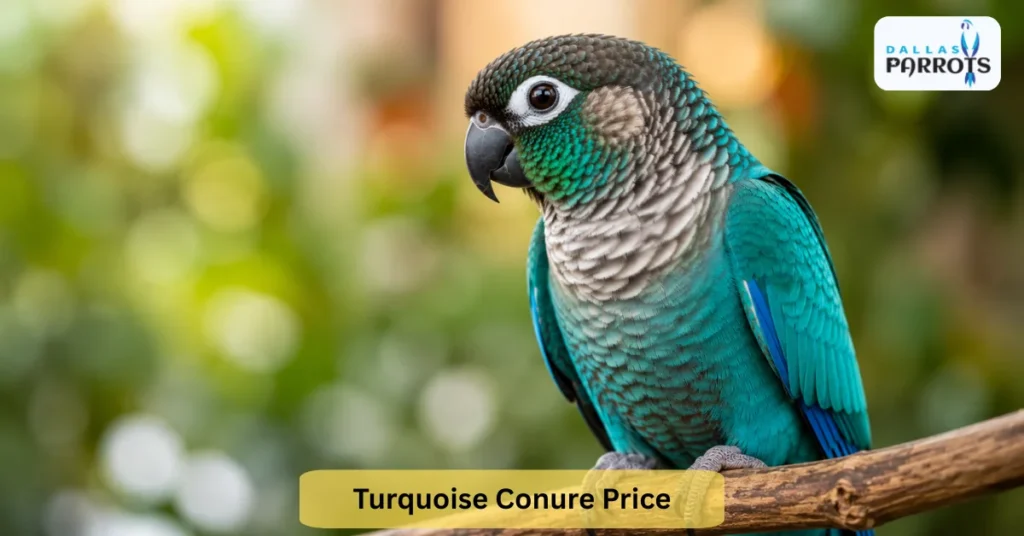
The turquoise conure is not a separate species. It is actually a color mutation of the green-cheeked conure (Pyrrhura molinae), native to South America. Instead of the usual bright green plumage, these birds display a stunning mix of turquoise, blue, and soft green tones across their wings, chest, and tail. Because of this, they stand out beautifully among other small parrots. They grow to about 10 inches in length and weigh between 60 and 80 grams. Furthermore, their size makes them very manageable, especially for first-time bird owners. Their compact frame does not mean a small personality, though — these birds are lively, curious, and surprisingly bold for their size. Overall, the turquoise mutation is one of the most visually striking varieties in the green-cheeked conure family.
Turquoise Conure Price: How Much Do They Cost?
This is where most buyers start, and for good reason. The turquoise conure price typically falls between $350 and $600 for a standard hand-fed baby from a trusted breeder. However, prices can vary quite a bit depending on several factors. For instance, a turquoise cinnamon or turquoise yellowside mutation often sells for $500 to $700 because those combinations are rarer. Pet stores may charge slightly less, but the birds are not always hand-tamed. Additionally, breeders who health-test their parent birds and provide a vet certificate naturally price their babies higher. You should also budget for the initial setup — a quality cage can run $150 to $300, toys add another $50 to $100, and an avian vet checkup typically costs $75 to $150. Therefore, the true first-year cost is closer to $800 to $1,200 when everything is included.
Turquoise Conure Lifespan
One of the best things about bringing home a turquoise conure is their impressive lifespan. In the wild, these birds live around 10 to 12 years. However, in captivity with proper care, they can live 20 to 25 years — and some well-cared-for individuals have reached close to 30 years. This is a significant commitment, so it is important to think long-term before buying. Their longevity means you will build a deep, lasting relationship over decades. Consequently, routine vet checkups, a balanced diet, and daily interaction all play a major role in reaching that upper end of their lifespan. Males tend to live slightly longer than females, largely because females go through hormonal changes throughout their lives. Either way, a turquoise conure is a decades-long companion — not just a short-term pet.
Temperament and Personality
Honestly, this is where turquoise conures really shine. They are gentle, affectionate, and tend to bond very closely with their owners. Unlike larger parrots that can be demanding or aggressive, turquoise conures are generally calm and sweet-natured. They love sitting on shoulders, snuggling into hands, and being part of daily life around the house. Moreover, they are quieter than most conure species, which makes them a great option for apartment dwellers. They can still vocalize and whistle, but they rarely scream the way sun conures or larger parrots do. They are also intelligent enough to learn simple tricks and can mimic a few sounds or short words. Furthermore, they thrive on social interaction and need at least one to two hours outside the cage every day. A bored turquoise conure will become nippy or feather-destructive, so daily engagement is non-negotiable.
Best Diet for a Turquoise Conure
Feeding your turquoise conure correctly is one of the most important parts of keeping them healthy. Start with high-quality pellets, which should make up roughly 60 to 70 percent of their daily food intake. Pellets deliver balanced nutrition that seeds simply cannot match. In addition, offer fresh vegetables daily — spinach, broccoli, carrots, green beans, and kale all work excellently. Offer fruits like apples, berries, mango, and pear as treats a few times a week. Furthermore, cooked egg or legumes make great occasional protein sources. Use seeds and nuts sparingly — treat them as training rewards rather than staple food. Always provide fresh clean water daily and remove uneaten fresh food within a few hours. A seed-only diet remains one of the leading causes of nutritional deficiency and shortened lifespan in conures, so never rely on seeds alone.
Cage Setup and Housing Requirements
Getting the cage setup right matters more than most new owners realize. For a single turquoise conure, the minimum cage size is 24 x 24 x 24 inches, but bigger is always better. Bar spacing should be between half an inch and three-quarters of an inch to prevent injuries. Inside the cage, include several wooden perches at different heights, foraging toys, chewable items, and at least one cozy sleeping hut. Turquoise conures are natural climbers, so ladders and rope swings are great additions too. Additionally, place the cage in a social area of the home — these birds do not do well in isolated rooms. Rotate toys regularly to prevent boredom. Furthermore, clean the cage at least once a week and wash food and water dishes daily. A well-set-up cage directly supports both mental and physical health.
Common Health Issues to Watch For
Turquoise conures are generally hardy birds, but they are still vulnerable to a few health concerns that every owner should know. Psittacine Beak and Feather Disease (PBFD) is a viral condition that affects feathers and weakens the immune system — it can be detected through regular vet testing. Aspergillosis is a fungal lung infection that often results from damp environments or poor air circulation. Nutritional deficiencies are common in birds fed seed-heavy diets and can lead to feather problems and weakened immunity. Additionally, feather plucking is a behavioral issue that typically signals boredom, stress, or insufficient social interaction. Therefore, scheduling annual checkups with an avian vet is strongly recommended. Early detection makes a huge difference in outcomes. Monitoring weight, droppings, feather condition, and eating habits daily allows you to catch changes before they become serious problems.
Tips for Buying a Turquoise Conure
When you are ready to buy, choosing the right source is just as important as knowing the turquoise conure price. Always prioritize reputable breeders over pet stores or unverified online sellers. A good breeder will let you visit, show you the parent birds, and provide a health certificate for the baby. Hand-fed babies that have been socialized from a young age adjust to new homes much more easily. Additionally, ask whether the parents have been tested for common avian diseases. Avoid sellers who cannot answer basic care questions or keep birds in poor conditions. Rescue organizations are also worth considering — adopting one is both rewarding and often more affordable. Whether you buy or adopt, make sure the bird is alert, active, eating well, and has clean feathers before you bring them home.

Contact Us
Have questions about our turquoise conures or want to check current availability? We are here to help. At Dallas Parrots, every bird is hand-raised with love, socialized from a young age, and ready to become part of your family.
Whether you are a first-time bird owner or an experienced parrot lover, our team is happy to guide you through the process. Reach out to us today and we will get back to you as soon as possible.
Conclusion
The turquoise conure is genuinely one of the most rewarding small parrots you can own. They are beautiful, affectionate, relatively quiet, and capable of forming deep bonds that last two decades or more. The turquoise conure price of $350 to $600 is very reasonable when you consider the years of companionship ahead. That said, the real investment is your time, attention, and commitment to proper care — a balanced diet, a spacious cage, daily interaction, and regular vet visits. If you can provide all of that, a turquoise conure will repay you with loyalty, playfulness, and more personality than you ever expected from a bird under a pound. At Dallas Parrots, we raise our conures with love and care from day one — feel free to reach out to learn about our available birds.
Folow Our Social Accounts: